

How Supermergers Revolutionise the Future of Law with Ashurst Perkins Coie’s Ian Bagshaw – S10E35
“Always work on making people the best version of themselves and giving them the power
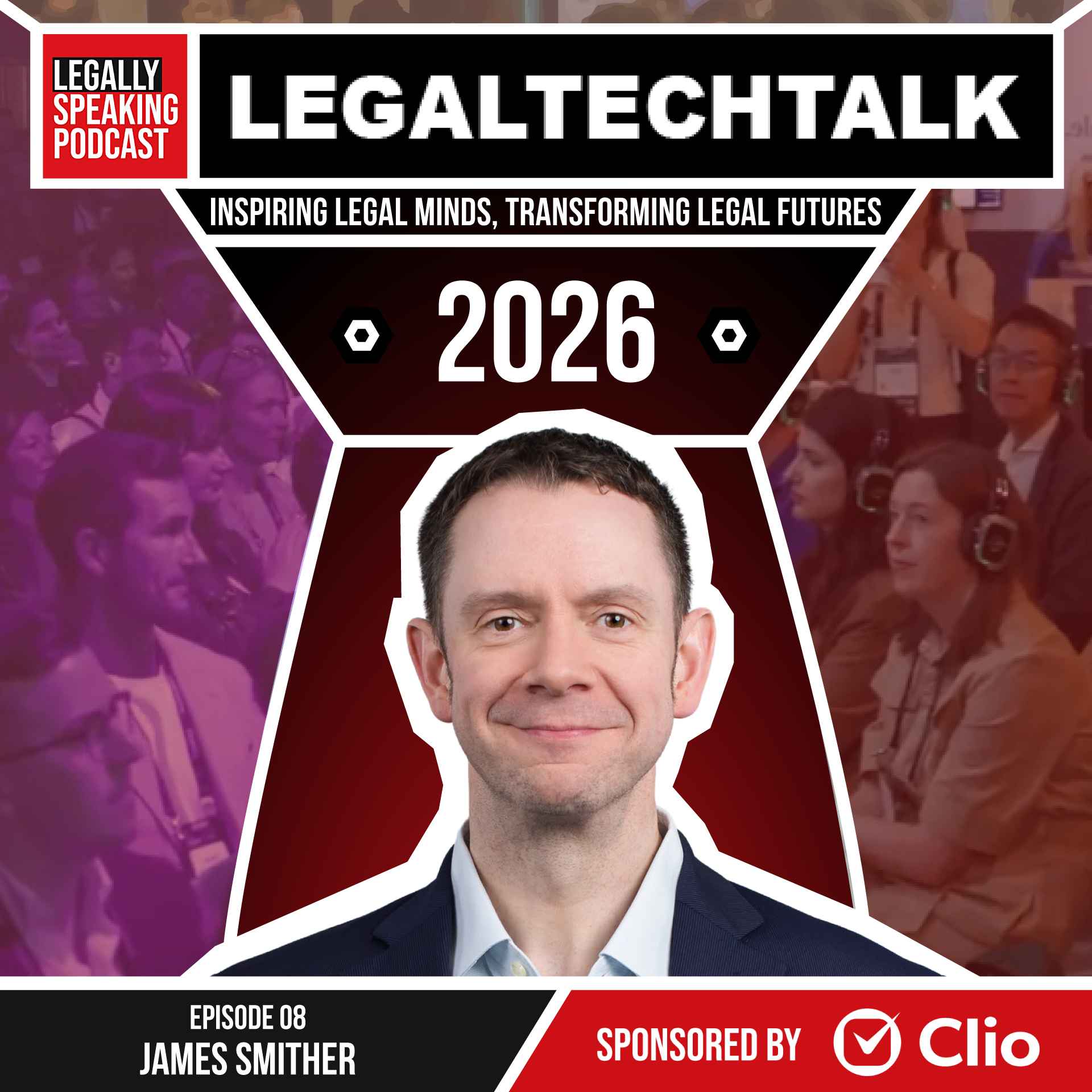
What happens when the brightest minds in legal, technology, and innovation come together to shape the future of our profession? Welcome to the Legally Speaking Podcast Legal Tech Talk 2026 miniseries. As the UK’s number one legal podcast and show ranked in the top 1% of podcasts globally, we’re delighted to be returning as the official media partner for Legal Tech Talk for the third time. Having supported this event since the beginning. We’ve witnessed firsthand how it has become Europe’s largest legal technology conference, bringing together the people, ideas, and innovations transforming the legal industry. Across this special series, we’ll be speaking with some of the world’s leading legal professionals, founders, technologists, change makers to explore what’s next for law. Because our mission remains the same. Inspiring legal minds, transforming legal futures. Let’s get into it.
We get to meet James Smither in this minisode. James is the global head of risk management at Freshfields. In the conversation, he comes across as thoughtful and practical, with a strong focus on how legal careers are changing and how firms should adapt. He’s especially interested in measuring value, dealing with the impact of AI on judgment and basic skills, and making sure people around the table are aligned. He also points people to LinkedIn for more updates.
You can hear Rob and James discussing:
AI Transformation Being Unavoidable
Insight From Data Being Valuable
Intellectual Independence Matters Most
Emotional Intelligence Drives Leadership
Resilience: Organisational, Not Individual.
https://uk.linkedin.com/in/jamessmither
What happens when the brightest minds in legal, technology, and innovation come together to shape the future of our profession? Welcome to the Legally Speaking podcast Legal Tech Talk 2026 miniseries. As the UK’s number one legal podcast and show ranked in the top 1% of podcasts globally, we’re delighted to be returning as the official media partner for Legal Tech Talk for the third time. Having supported this event since the beginning.
We’ve witnessed firsthand how it has become Europe’s largest legal technology conference, bringing together the people, ideas, and innovations transforming the legal industry. Across this special series, we’ll be speaking with some of the world’s leading legal professionals, founders, technologists, change makers to explore what’s next for law. Because our mission remains the same. Inspiring legal minds, transforming legal futures. Let’s get into it.
Hello everyone and welcome to the Legally Speaking podcast sponsored by Cleo recording live here at Legal Tech Talk 2026 in London. Joining me now is another fantastic guest. So to begin with, please could you kindly introduce yourself, name, title, and organisation. Hi Bob. ⁓ great to be here. I’m James Smither, I’m the global head of risk management at Freshfield. You absolutely are, and we’re very kindly connected by Patrick McCann, who we’re big fans of Within Industry. ⁓ look, everyone here is talking about the big shift, transformation.
In your view, what’s the single biggest shift happening in the legal industry right now that people can no longer afford to ignore? ⁓ no prizes for guessing. ⁓ given it’s a the massive theme across the conference ⁓ today and tomorrow, it’s AI and its wider application of transformation and what the legal industry looks like in six months, twelve months, five years, it’s anyone’s guess. But as a risk professional, it’s couldn’t be more exciting to be in the middle of. And absolutely, and I love how you take it on the exciting opportunity.
side of things. just before we get deeper into that, I to talk about Legal Tech Talk because it’s become very much a signature event, very much on the calendar now for everyone in year three. Some of the most influential people in the round the world of law here. What brought you specifically to Legal Tech Talk and what’s been the best conversation or highlight that you’ve garnered from being here thus far? Yeah, I mean I was invited to be on a panel. I got it out of the way early doors. I was on at 9.30, so you know that now that’s out of the way, the the shoulders are down and it’s relaxed mode.
⁓ I think, you know, the conversation this morning was about the transformation of a legal career in light of all of that’s going on with technology, some really interesting insights from that. But I just came out of a panel on well being and I think you mentioned opportunity, you know, a lot of focus on the downside of AI, but one of the interesting things coming out of that was if we can move away from an hours based measurement of what value looks like, that could have a really positive well being impact as well. So that was interesting.
Yeah, no, definitely. And former guests that we’ve had as part of the series as well have also been highlighting that point on the wellbeing side. ⁓ you spend a lot of time at the forefront of the industry. I know looking from a risk perspecti perspective, but what’s one legal problem or challenge you’re most passionate about solving right now and why does it matter? Oof, that’s a good question. I mean, I I I wouldn’t want to spend too long in the wellbeing area. It’s not my day job, that’s more of of a side hustle. But I think in terms of yeah, how we measure value is
That’s never been a paradigm that’s opened up before. I think, you know, long before I joined the profession and I only joined it in twenty nineteen to be clear, I’m not a lawyer. The the death of the billable hour has been foretold ⁓ often incorrectly. But we are at a flection point now where we’re already having clients asking us, you know, is is time still the appropriate unit of measurement for what you guys are doing for us anymore. ⁓ and I think we know that that’s it’s probably not going to be the only measurement, but we still don’t know what value is going to look like and how we deliver value in a
high stakes litigation or a massive deal transformation. that hasn’t really been determined yet and I think that’s where the sort of i the inflection point of opportunity and risk is really coalescing at the moment. So that’s something I’m very interested in how we solve. And I think we’ll have to solve that in the next five years. Yeah and obviously the work that you’re doing is is is fantastic. And one thing that will resonate with you is the human impact because we’re hearing a lot about technology, innovation, automation of course. But if we get this right, what is the real human impact? How does this improve life for lawyers, legal professionals?
clients and society overall. ⁓ okay. I mean let’s work our way back through those different layers. I think, you know, we’ve touched on the well being point and I think the opportunity there to take people away from what lawyers might call the judge work, the kind of repetitive high volume, high intensity tasks into the real value, adding human, interacting, judgment based end of things. That’s got to be a win for everyone. It’s a win for the client in terms of efficiency and pricing. It’s a win for the junior lawyers in terms of where they can immediately start feeling
Like they’re adding to the equation and obviously it’s a win for the the partners who can maybe make more profit out of it as well. So I think that’s exciting a across the board. ⁓ but the wider angles of how how we interact, how we work with our clients, how we work with tech providers and partnerships, all of this is new, right? And then sort of the partnerships and interactions angle, I think that’s very new as well. Yeah.
And again, very candid. let’s look forward now. Difficult question perhaps, but looking over the next few years, what will seem completely obvious in say twenty thirty that many league professionals are perhaps still ignoring? yeah, I I kinda got answered a similar question this morning. I I I like this question because at the start of the AI journey, people like me who are let’s say ⁓ only on middle age
you heading towards the toilet, we thought we were the endangered species. It was going to be the bright young things who aren’t sort of the tech that that took all the that took all the toys. I I’ve changed my view on that actually because I’ve been been doing quite a lot of reading about cognitive atrophy and the sort of AI native generation not developing its own judgment, not developing those basic skills. So I actually think what will seem obvious in twenty thirty that maybe doesn’t seem obvious now is that you have to invest in your brain not just inve invest in your tech upskilling and protecting your judgment, protecting your ability to discern information, derive
insight from raw data and from white noise is actually gonna be a really valuable skill and the people who end up leading our law firms aren’t gonna be people who write the best prompts, that’s gonna become a a barrier to entry and then a baseline expectation. It’s gonna be the people who can still ex ex express opinion, exercise judgment and make a a snap decision for things that machines can’t do in a deal room, across the arbitration table, whatever it is. So I think protecting your intellectual independence is actually what I would commend young lawyers to be thinking about now.
Sage advice and I agree with you. Okay, action focused question now. If you had the attention of every global managing partner, law firm leader, law firm owner, general counsel, legal operations professional, you name it, listening or watching right now.
What’s one action they should take in the next ninety days to prepare for a better future? One action. One action. I think it’s get everyone round the table together and make sure you’re aligned up. You know, there there’s a lot of danger and exp experimentation and excitement all going on and people playing with different products and trying different stuff. You have to get aligned. And it’s it’s all good sandboxing and it’s all good experimenting, but so much risk and I mean the opportunity side of it as well as the potential pitfalls exists in the the silos and the failure of conversations.
As yeah, align on strategy and make sure you’re clear about where you want to be in five years and what you need to do to work backwards from that vision now, because now’s the time to invest to get there in five years. Yeah, well said. Okay, what’s one belief about the legal profession, legal technology, or the future law that you hold that most people will disagree with?
That one. I mean, I I guess a personal topic that I find quite passionate is the resilience question. I think a lot of organizations in our world think resilience is a muscle you have to build. And I see that much more as an organizational characteristic. If if we make an environment in which our people can thrive and follow different career paths and have spiky profiles and different skills, then we won’t have to tell them that they have to cope through adversity. We’ll remove adversity from the equation. And as I’ve mentioned, I think AI and efficiency and removing highly repetitive
Time consuming task actually gives us an opportunity to build organizational resilience that can reduce the dependence on individual resilience that perhaps the industry has defaulted to a little bit too much in its history. Well said. Okay, before I let you go, the legally speaking podcast, all about inspiring minds, transforming legal futures. So my final question is this: what skill, mindset, or behaviour
Do you believe will separate tomorrow’s leaders from everyone else? I mean I’ve already said the intellectual independence and I think emotional intelligence goes along with that. We’re in a profession where technical excellence is rewarded. The baseline, as I’ve said, of technical excellence is rising and machines will do more and more of the sort of basic work. So it’s the exercise of judgment, it’s the building of relationships, and it’s the understanding of the people in your team on the other side of the table, on your client side that will set the leaders apart. As I said, the best coder or the person who writes the best prompts isn’t going to be the leader of the tomorrow, it’s the person who has that.
That magic dust that makes a relationship happen or makes a deal spin on a critical moment. They’re the leaders of the future. So don’t neglect that. Don’t just focus on the tech. Yep, agreed with you. Okay, finally, if you want to know more about yourself or indeed your organization, feel free to tell us where they can go. Any websites, any social media handles, we’ll also share this episode for too. Brilliant, yeah, I I’m mainly on LinkedIn, so follow me on LinkedIn, James Smith at Freshfields. ⁓ I should mention my side hustle. I’m a co-founder of an organisation called the Legal Neurodiversity Network.
We’re very focused on making the legal profession a more welcoming and accommodating place for people whose brains work differently, so people with autism, ADHD, dyslexia, dyspraxia. It’s actually a great industry for minds that work differently. I’ve already said why I think the future will be kind to people who think a bit differently and don’t just rely on core skills. So yeah, check out the L and N as well. Perfect. Well it just leads me to say thank you so much, James, for joining me here live at Legal Tech Talk on the Legal Stream Podcast sponsored by Cleo, wishing you lots of continued success with your own career. But for now for all of us.
Over and out. Thank you for listening to this week’s episode. If you like the content here, why not check out our world leading content and collaboration hub, the Legally Speaking Club, over on Discord? Go to our website, www.legallyspeakingpodcast.com. There’s a link to join our community there. Over and out.
You may also tune in on Goodpods, Apple Podcasts, Spotify, or wherever you get your podcasts!
Give us a follow on X, Instagram, LinkedIn, TikTok and Youtube.
Finally, support us with BuyMeACoffee.
🎙 Don’t forget to join our Legally Speaking Club Community where we connect with like-minded people, share resources, and continue the conversation from this episode.
Sponsored by Clio – the #1 legal software for clients, cases, billing and more!
💻 www.legallyspeakingpodcast.com
📧 info@legallyspeakingpodcast.com
Disclaimer: All episodes are recorded at certain moments in time and reflect those moments only.
“Always work on making people the best version of themselves and giving them the power
“The organisations that will thrive in 2027 will not be the ones with the most
“If you can see me, you can be me.” – Elaine Banton What happens

“They will be the ones who see the trends just before everyone else does.” –
On today’s Legally Speaking Podcast, I am delighted to be joined by Ruben Miessen. Ruben

Run the same contract through the same AI system 20 times. Should a lawyer expect the
