
Legally on the Move: Professional Training – Peter Riddleston – E02
Welcome to the first episode of Legally on the Move: Professional Training, our brand new miniseries

On today’s Legally Speaking Podcast, I’m delighted to be joined by Wendy Jephson. Wendy is the CEO and co-founder of Let’s Think. She is a dual qualified lawyer, business psychologist and serial tech entrepreneur.
Wendy co-founded a fintech using behavioural science to detect financial crime, which was acquired by NASDAQ in 2017. She created and led NASDAQ’s research and ideation function, developing behavioural science led products to help financial services firms detect anomalous behaviour.
So why should you be listening in?
You can hear Rob and Wendy discussing:
– That Partners May Not Have Immediate Answers
– How to Encourage Deeper Thinking
– The Importance of Listening to Experienced Users
– High Cost of Training Lawyers
– Technology’s Role in Improving Efficiency
Connect with Wendy Jephson here – https://uk.linkedin.com/in/wendyjephson
Your partners don’t always have the answers immediately, so how do they know? Somebody can sit down with our tech, it asks questions, so it’s like the opposite of chat GPT. It asks the questions and gets people thinking and dives down into getting that information out of their head in a useful way to get them thinking. We’ve got proprietary models to analyse what they’ve said to start to really pull out and highlight what is the test at knowledge? When can people have those opportunities to start to think more deeply? That’s the beauty about automation, you’ve got more time. You can think more deeply. can take the time to unpack that value in your head and think more carefully about how you can share it with somebody else.
On today’s Legally Speaking podcast, I’m delighted to be joined by Wendy Jepson. Wendy is the CEO and co-founder of Let’s Think. She is a dual qualified lawyer, business psychologist and serial tech entrepreneur.
Wendy co-founded a fintech using behavioral science to detect financial crime, which was acquired by NASDAQ in 2017. She created and led NASDAQ’s research and ideation function, developing behavioral science led products to help financial services firms detect anomalous behavior. So a very big warm welcome to the show, Wendy. Hey Rob, really great to be here. Thank you for having me.
it’s an absolute pleasure to have you on the show. Before we dive into all the amazing things that you’ve been getting up to, we do have a customary icebreaker question here on the Least Dream podcast, which is what is your favorite beverage and what is your preferred choice of footwear on a typical work day? Interesting. Well, coffee, obviously. That’s happening. And if it’s not that, it’s espresso martini if it’s the other end of the day. Also coffee. Footwear, interesting.
I mean socks if I’m at home and comfy white trainers obviously if you’re walking the streets of London. There we go, like that. So coffee and white trainers gets us through. Don’t want to spill it mind. No. Without going into too much of a rabbit hole, let’s talk all about you. So to begin with, would you mind telling our listeners a bit about your background and career journey? Sure. So started out as a lawyer.
decided about 12, that’s what I wanted to be. So went off into the big smoke trade in, trained in London in what was Riches Butler is now Reed Smith, but quite early went in-house. So I went in, had as a comment to Xerox, went in-house as I qualified and then to Lilly’s Pharmaceuticals where I was for most of my career. ⁓ And that’s why I got so interested in ⁓ decision-making and judgment in real world practice.
because law is all about risk, that I decided to go off and study that in depth. So went back to university, did a psychology degree and a master’s in occupational organizational psychology, so business, really focused on how to make decisions, people make decisions in the workplace and how could you help make them better. ⁓ And technology is a great way of thinking about doing that. And this is 20 years ago. So technology, data, people, understanding how people make decisions.
sort of in its infancy, although there’s a huge amount. mean, so computer science and behavioral science goes back 50 plus years clearly in these fields. But 20 years ago, it was, you know, much, much harder than it is today. So roll forward, come out, looking at financial decision making first, because actually there’s loads of data to measure decisions and you want to know you’re going to make them better if you’re trying to intervene. Looking at asset management, there was a pivot there in that we were doing some great stuff looking at
decision makers or fund managers. And the head of compliance then, the client that we were working with said, look, if you’re looking at how people make decisions, I want that from a compliance perspective too. So I want to be able to defend them. They’re actually doing what they should be doing and beating the market. And I want to get them out if actually they’re doing something wrong inside of trading. And that was a product that took off, led to an acquisition by NASDAQ in 2017, which was great.
There I was head of research, I up the research and ideation function. So pulled together behavioral scientists, data scientists, technologists, the business people working with their clients to really tackle some of the really challenging problems there by digging into the problem space. And then finally left there with a decision to go and do it in the startup mode again, a bit faster and with a great team of people at Let’s Think.
which is where we’re really trying to think about technology to help the people of the world think brilliantly. So great goal. And starting in law because lawyers are thinkers and you know, how do you support that decision and judgment in the world of AI in a law firm? Yeah. And that’s perfectly where I wanted to go next actually. Let’s think, because you are the CEO and co-founder of that. So can you talk us through the process of actually building Let’s Think and
What inspired you to actually co-found the software company with a vision to help the people of the world, which I love? Yeah. So it really was, there’s lots of technology out there that I love. So it’s like a passion and a frustration in a sense that I love thinking and using technology, but also it gets in the way of thinking quite a lot. So I felt that there was something that if you could design it better, could actually help you think more productively.
in a better way, in a rich way, like experts, because those are the people we’ve been studying. How could you get to that faster and design technology to help somebody and fit it into the workplace? So there’s lots of technology designed generally like Microsoft and Google. And then there’s lots of work specific technologies. We wanted to actually have a combination of the two. How do you actually really understand people and how they really think in the workplace? And then of course you have a layer on top. So what does it lawyers specifically need? What might accountants specifically need?
And then it’s about who do you do it with? Isn’t it? It’s a hard thing. As you will know, it’s a hard thing setting up a company for nothing, especially being something new. You know all of that. You’ve got to do it with the people that you want to run that journey with. And my co-founder Anna Leslie, who worked with me in ASDAC, is the best behavioral scientist on the planet. You should have her on the podcast.
And I kind of left Naz, she left Naz, at the same time as I did. And I said, look, I’m going to set up this thing. There’s no guarantees in it. There never are. And so people who want to be able to want to come and work with me and I want to work with them. And so it’s a free choice to everyone except for Anna. Anna had no choice. She had to come and do it with me.
But every and so there was Anna festival Claire Fisher who’s also our CEO who’s also amazing She got us our B Corp, which is you can see it behind me and any D that I worked with before as well Victoria Raffi who is also fantastic is actually having that structure, you know, it’s a Wisdom and structure and governance is really important when you’re a messy hack stage and then Mike’s our CTO who has got fantastic background
⁓ in data science and technology, has been in healthcare, done lots of cool things with AI. And you need the right kind of person, again, as a tech person who can get that rolled their sleeves up and start building and can cope with all the ideas that are flying around. So, you know, that core team was really important and continues to be as we kind of forge our way forward. So that’s kind of let’s think.
And we have other members of the team who are also fractional who are also brilliant, obviously. And fractional is a growing trend and it makes a lot of sense for businesses as well. And you know, that team is important. We is greater than me, isn’t it? And I think the more you can kind of bring all these great minds and great experience and come together in gel, it’s brilliant. You talked about behavioral science, let’s get a little bit deeper because let’s think it’s a very different approach from the traditional legal AI tools out there. So can you explain to our listeners how your behavioral science AI actually works?
Yes, absolutely. And that is ⁓ the most frequent comment we get when we show people our tech is, I haven’t seen anything like that before. so it starts from, and the behavioral science methodology that we use has been proven in multiple domains. Over the past, we’ve been applying it for 20 plus years with a kind of, the evidence base is at least 40 years old now, but it’s been manually done. So it’s people interviewing and eliciting, using different methodology
to pull information out of experts’ heads, the stuff that makes them really good at what they do, but actually at that point, it’s hard for them to articulate it. So it’s that stuff that’s hard to write down. And there’s various different methods. You you can’t, people go, well, what questions do you ask? But it’s a method rather than a set of questions because you have to know how to ask, when to ask, it’s quite a difficult thing to do, which is why I leave it to Anna most of the time.
But we’ve used it to great effect. She’s used it in government law enforcement intelligence agencies. I’ve used it in financial services. It’s been used in health care and the military and aviation, high risk industries where if you get it wrong, people die. And what it’s really good at, if you think about ⁓ kind of person-centered design, design thinking.
At the problem space analysis end, it gives you the tools on steroids to go and really understand that domain and the problems and how the experts navigate that usually quite well, but they can’t tell you. And the junior person doesn’t know what they don’t know, so they definitely can’t tell you. ⁓ So it’s really good. that’s what made us successful, Anna in government, me designing technology, because you get amazing requirements from it.
in a way that you can understand how to fit it into somebody saying they can use it, whether they’re an expert or a junior. And that’s the point. You have to be able to support somebody without interrupting them when they know what they’re doing, but give the scaffold of support to somebody who’s junior. That methodology is a manual process. It’s really slow. It takes an age to analyze the data you collect. So along come LLMs and we think, can we automate ourselves and what we do?
So it’s not identical. We get people in a room and interview them for two hours on work that they’ve done. Not practical, hard to get at. Takes us days to analyze what they say. So we thought, OK, can we train LLMs to ask the questions and provide the memory prompts and probes that we would do in order to help them remember things, to dive deeper into what is it they know and what they were noticing via an LLM in a 10 to 15 minute chat.
And that’s what we’ve designed at one end. So somebody can sit down with our tech and it asks questions. So it’s like the opposite of chat TBT. It asks the questions and gets people thinking and dives down into getting that information out of their head in a useful way to get them thinking. And then it can analyze it. So again, then we’ve got proprietary models to analyze what they’ve said to start to really pull out and highlight, what is the tacit knowledge? What are the cues in each moment that they’re paying attention to?
speaking to somebody today and it’s like, you know, a partner, they can be on a client call and they know exactly what to pay attention to and what clients saying. A trainee’s desperately scribbling notes and has no idea what they’re listening to because they just haven’t viewed into it. So that’s what you can start to reveal. So it’s about revealing what is it that somebody knows and what are the important things about what they know that make them effective. And then you can turn that into
useful artifacts and knowledge assets like a file note or a learning guide or your, can make you sort out your SRA competence records, trade, you know, all sorts of materials like billing narratives can all come out the same reflective session. So you can start to, you know, use that content in multiple different ways, which of course is what we do as a human. have the content in your head and then you reframe it. It’s just right now you have lots of point solutions that do that.
Whereas if we can get the content out in the right way, we can also reframe it into lots of different useful things. Super powerful and super interesting. So thanks for sharing that. I want to talk about investment in AI now, because there’s been a real significant growth in global investment in AI, especially in legal services. We’ve seen some huge headlines in recent months, even sort of coming off the blocks in 2026. So when did you realize the biggest risk isn’t that AI will actually fail, but it succeeds in the wrong way?
that’s a really interesting question. I’m going to ask you to say a bit more about that. you said investment first and then you said… Yeah, like there’s been significant investments in legal services, particularly. Firstly, do you have a viewpoint on that and some of those sort of investments generally? Yes. Well, I suppose it’s been an industry like many professional services that’s been massively under invested in in terms of technology. So the fact that there is this influx
means the industry can change rapidly and on mass. the fact, one of the key things about trying to get innovation and transformation is nobody wants to go first. And the fact that they’ve kind of been dropped on is like, well, okay, we’ve all got to do this, haven’t we? I mean, what is it? There’s a clear status, it? It’s that 96 % of law firms are engaging with AI. So everyone’s doing it. that’s, know, everyone’s okay to do it then, aren’t they? So that’s one part of it.
And then the risk, I think, of it is, and this is where I suppose we see the risk particularly is, the massive focus you will have seen is on automation. So what happens about developing people’s cognitive skills? That’s where the real risk is. And there’s lots of research anyway about what the impact it has in terms of your cognitive functioning and development and different ways you can address that. But what we’d already seen from hybrid working in COVID is,
this lack of transfer of experiential know-how and knowledge from partners to juniors that’s been going on for centuries, isn’t it? I sat in the room with a partner and tried to think what’s going on. But that had already been noticed. And you’re at risk of that happening even faster. Because lots of these AI products make it look super easy to come to a conclusion as if it was always done. Whereas most of the valuable work in law is figuring it out.
And there’s an awful lot of invisible thinking that you need to get access to if you’re going to learn that your partners don’t always have the answers immediately. So how do they know? In fact, I was speaking to a partner today and she said something she finds useful is often you come to a conclusion really quickly and then you have to actually take a few steps to figure out how have I reached that conclusion. that’s what unpacking your own expertise is quite hard when you haven’t got somebody. And that’s what she likes using our tech for.
is to actually go, okay, so I know what to do, but how do I know what to do? And what are the steps that actually have got me there? Let me unpack that. And then I can see it written out and that’s quite useful because I can use it as an explainer to a client as well. And that’s the value bit that actually sits on top of the automation piece. So that’s the biggest risk, I think, is that you’re automating away the opportunity to develop your future partners. Yeah. And that was exactly where, you know, I thought you would
sort of highlight, and I you’ve talked about that and just going a bit more on automation, because many law firms, you know, have embraced AI. We talked about that stats, you know, to improve their speed and efficiency. But what are the consequences when automation is introduced without considering how lawyers learn and develop judgment? Exactly. Well, so judgment is always about making decisions under risk or under uncertainty, which means that you are trying to understand what do I know? What don’t I know?
And actually I can’t cover all risks, you never can. So which one can I live with and which ones am I not going to? And how do I explain that to the client? Because I’m not making the decision as a lawyer, I’m handing that to my client. And that’s what I felt when I was in-house. That’s what was interesting is that I was always advising the clients within the business of what they could go and do and where the lines were and where the gray was.
and they then had to take on the risk. that’s what was interesting in seeing how different people cope with that. So actually, and so often you just kind of go, well, here’s the answer. Well, how did you get to that? What is it I really need to take into account? What am I likely to hit up against? And what was interesting, so we, as we were obviously, we’re licensing with law firms. So we needed an agreement to do that. You know, I could have written that myself, but I thought this is a much better idea to get.
somebody who’s currently practicing to do this, to write this and give me help on how am going to negotiate with law firms? Because clearly they’re quite good at this, aren’t they? And so they gave me the usual, here’s your contract. I’ve put some comments in the side and that came over to me. And then I asked them to use Artek as well to think about what they’d done. That was the most useful piece of information. Clearly I’m biased, but it was a really good test because what I got from them were, okay,
Before it was, have you just taken the precedent and just tweaked it a bit? And how much am I paying for that? And by the way, you’ve got two lawyers on here. We’ve got a technology lawyer and a data protection lawyer. Why have you got two? Why can’t one do it? Both of them kind of thought, spoke aloud to the tech and pulled out what they’d been thinking about. And they hadn’t written that stuff down to me. So what I then got was actually the technology lawyer had been really thinking strategically about me and my, power, the position of let’s think at the moment compared to law firms.
where I was going to have to negotiate with and what the law firm is going to be thinking about in terms of covering their risks and how I could deal with that, where I could go with that. And the data protection lawyer was really, you know, technically thinking about the detail because it’s all in the devil’s image, each other wording, isn’t it? And so that actually to me, you for them both using it for five, 10 minutes each was massively valuable. It made me think, actually, I could go and have a conversation with them again. I, you know, I’d
I would want to do that and I’m okay paying their bill now as much as anyone’s happy paying a bill. So and that’s the challenge, isn’t it? I think that’s the real challenge right now is it’s so easy. It’s like doctors Google moment, isn’t it? Hello, doctor. I’ve Google my symptoms. Can you prescribe me X, Y and Z? And people are talking to a CIO yesterday saying, clients are saying, look, our fees are going to come down, aren’t they?
you’re using AI, so you must be faster. It’s not all about being faster. So I can produce the asset, you know, the document quicker, but actually my thinking time is probably still going to be what you want, and that’s what you’re really paying for. And that’s still going to be in the mix. that’s how do you explain that though?
Well, yeah, remember people saying to me, look, Rob, we’re drowning in information, but we’re craving wisdom. And it’s those years of wisdom, isn’t it, that we’re looking for that expertise. We touched on this, but sort of adopting AI early, you know, there are adopters reaching sort of 18, 24 months since implementation. So what are some of the consequences now of, you know, that becoming more visible versus positive versus negative? What have you been seeing generally for those early adopters? I think
I think it’s an appetite to try as much as anything. It’s, okay, this stuff is in my workplace now and I will see what it can do. And that’s the hardest thing, especially with super busy people who’s every, you know, six minutes is accounted for. She asked getting somebody to go, let me, all right, then I’ll click on that thing. It’s pretty hard, isn’t it? So I think the acceptance that these
these tools are out there and some are better than others and they can be surprisingly good, I think. that, you know, the fact that there is that delight moment that some of this stuff does make your life better is really helpful. And the fact, the most powerful recommendation is your peers talking about it, isn’t it? You know, it’s not about companies, it’s not us lot going, this is brilliant, I’ll change your life. Because of course we’re going to say that and you shouldn’t listen to us.
You listen to the people who’ve actually used it, who do the job you do. Today’s Legally Speaking podcast episode is proudly sponsored by Clio. If your legal management software feels more frustrating than helpful, you’re not alone. Many solicitors across the UK delay switching because moving client and case data sounds like a headache. Clio makes it simple. As the intelligent legal work platform, Clio combines context aware,
AI with trusted legal research to power your practice. And when you switch, their dedicated migrations team supports you every step of the way, ensuring a smooth transfer of your data. You’ll also get award winning support 24 five via live chat, phone and email. So help is always there when you need it. Ready to leave frustration behind? Visit clio.com forward slash UK to learn more and discover why so many UK solicitors choose Clio.
Now back to the show. Once you see the result, your eyes light up, don’t they? You really get the buy in. You can genuinely believe this is going to save you time or make you a much better lawyer or whatever part of that workflow it is. And that that’s the key point and building capability where I want to go now, because you’ve shared and like this firms that use AI to build capacity rather than hollow it out will gain a real competitive advantage. So.
What does this look like in practice for junior lawyers and trainees? Yeah. And I think this is really key. mean, in professional services businesses where your people are your product, aren’t they? Yes, very much. competitive advantage is how do you make your people as good as they can be? And being as good as you can be in a way that you enjoy in the workplace, so you stay, so you don’t have the costs. I mean, is it two to $400,000 to train a lawyer? That’s a lot of money invested.
and then they get right them off because they haven’t enjoyed it or you haven’t got value out of them yet. So really important to think about how you get value out of them is get to quality quicker, as we like to say. And what so we start from the premise, having done a lot of work of how does expertise develop? And traditionally it’s in it’s always domain specific. You have to focus in on a specific area. So you can that’s why somebody can be brilliant in
You know, in sports, you’re brilliant as a ping pong player, but you’re terrible as footballer, it doesn’t transfer. And it’s the hours of practice you put in. So that’s where it comes from, doesn’t it? And same is true in knowledge work. ⁓ And the way it develops is by exposure to lots and lots and lots of different instances of the same thing. And, you know, that’s where the experiential work comes in. What we know from the science is that if you can get at the mental models for people who are experts who’ve had that exposure,
You can share that with juniors and they can learn faster because they start to get their eye in on what to look for. You know, it’s like, so I think in tennis that, when you’re the people who are on the receiving end aren’t looking at where the ball is thrown, they’re looking at hip movement and stuff like that because that tells you where the ball is going to go to much more than looking at the ball. ⁓ And it’s the same thing with lawyers, you know, what is it they’re paying attention to in a risky conversation? They’re tuned into it.
⁓ So if you can give them the mental models of what are the key things they’re looking for, then they can start to look for them. It’s the signal in the noise that you can help them with. So, and that’s what, you know, was being lost or not transferred. was, it was, that’s why there’s this kind of learning by osmosis supervisory models learn alongside, which has never been perfect. Cause you can have somebody use as good as a chocolate teapot as your supervisor, somebody else’s phrase again, which I liked. ⁓
So, you know, some people are better than others at explaining things, aren’t they? They’re not trained to be teachers. So, so it’s that premise. Well, can we get out examples that are really good from people’s heads in a way that helps them also see their own expertise, because experts aren’t to value what they know, but in a way that those juniors can start to see what those experts are seeing, see through their eyes, start to look at those, you know, those kinds of things that they’re looking at in client meetings in the work that they’re producing.
And if they see work as it plays out as well, they see how messy it is and where things go wrong and how people get tripped up without having to go through it in real time, which takes years. So you can build up that exposure to, this is what real work looks like. I can start to develop my own expert mental models because those lawyers of the future are not going to be like the ones today. They’ll work in a different way. They’ll use different technologies. They’ll think differently, but they still need to get exposure to, you know, those key signals that experts have reliably used.
to spot the risks in the first place. So it’s how do you get that out and transfer it over in the new way of working with the new technologies? Well, that’s it. You know, they are going to be different careers, you know, putting my legal recruiting hats on, know, nothing changes, nothing changes. They’re going to be a new evolution of, you know, new things that are to be out there and ways. And I’m excited for it. And let’s stick with the human then, the human and AI collaboration, because what does good human AI collaboration look like?
in a law firm and how should law firm leaders be thinking about redesigning workflows to maximize efficiency and expertise? Yeah, so we look at it and we very much look at, how do people currently think and work? Because that’s where we want to get in the support. So, and it’s quite hard to, you people have very, very days, don’t they?
So it’s not like you can go well, and the previous tech I designed, you had a compliance officer who’d sit down in the morning and they’d work through a list. you know, you see that was easy. You had a pretty structured workflow. It’s very different when somebody’s jumping from lots of tasks. So you’re really looking at the, okay, what are they thinking about in any moment in time? How do you make it as quick and easy to use for that sort of thing? But then it’s, okay, when do they think? You know, when is it that they are
perhaps they come up a call and they might have said certain things in the call that are captured in a transcript. So technology is great for capturing that, but they probably thought a few things without saying them that they actually want to kind of unpack in the risk. And that’s true in any meeting, isn’t it? Not everybody speaks, but they probably got quite a lot going on in their head. So again, how can you help support people to get that out of their head in a safe space for themselves, first of all?
document it in a nice, structured way, in a way they might then feel comfortable sharing it with somebody and discussing it with somebody. So I think it’s really thinking carefully about how does work really happen when you’re in a thinking environment? When does it happen? When, when can people have those opportunities to start to think more deeply? And that’s the beauty about automation. You’ve got more time. You can think more deeply. You can take the time to unpack that value in your head and think more carefully about how you can share it with somebody else.
We had again a conversation today with a partner who was saying, okay, so I actually now I’ve produced this. did a think-aloud because I wanted to unpack a knotty issue and I wanted to, like I say, get to, how did I get to that conclusion that I got to very quickly? Actually now I can turn that into a learning note and I could share that with my supervisory trainee before I go and meet with them and I could give them something to think about. Maybe that will improve our interaction. And that’s exactly what we want.
actually, can you get the kind of thoughts out in a better way? So instead of running to that meeting, and neither of you, you in the meeting, you’re trying to figure out what you’re talking about and structure it. You both become better prepared with better thoughts and you have a better conversation in that meeting. And I think that’s where the opportunity for technology can really lie in getting things ready faster. So you can, the person to person time is more effective.
Yeah, you’re enhancing the overall quality and you’re making it more efficient, aren’t you? And I think that what’s there not to like, we were, we were of touching on before around billable hours and client pressure, but you know, clients are increasingly questioning why they should pay for work that AI can allegedly do. So how do you see AI reshaping billing models and how can human expertise continue to add value to the client outcomes? Yeah. I mean, I think.
I’m still very much on it is amazing what AI can do. And then what any lawyer will always tell you is you ask them a question, they’ll say it depends, and then they want more information. And you can you can do that to an extent with these models for sure. But that is really where you’re paying for ⁓ the experts. Because what we know is, as I’ve said, lots of the stuff that they know has never been written down. It’s not in the model, you’re not going to get the answers from them.
And that’s, so that’s a real missing data set. that’s it. So it’s the differentiation. This is why people train and they practice this to actually be able to very quickly say, yeah, I know chat.tp might say that, but what it’s missed because it didn’t ask you the right questions or you didn’t put the right information in is X, Y, and Z. And this is what we’re going to deal with. And let me tell you the best way to do that. Cause I’ve seen that happen. And I’ve seen it play out in the environment you’re in.
And I know your best chances of success are going to be, you know, X, Y, and Z. And we might have to change our strategies as we go along with new information comes in, but this is what we’re going to do now in your time and your budget and that kind of stuff. And you have to start explaining, unpacking that in a better way, because before now you’ve just gone, here’s your product without having to explain it. And all of that stuff has still happened. It still happened in the lawyer’s head. They’ve just not explained it.
And until you explain it, then that’s when, you know, the lay person will kind of can take a step back and go, well, that’s what you do. That’s what I’m paying for. That’s why I can’t do it. And actually, I don’t want to do that. I want to leave you to do that because you clearly know what you’re talking about. And that’s the realm you want to get in. It’s the, trust you because you absolutely are the expert in your field. And I’m not. And I want to get on with the bit that I’m good at.
leave you to it. And it’s that, you know, you’ve got to reestablish that line, haven’t you? Because you can now think you can do what a lawyer can do, but you’ve never tried. I mean, we all think that somebody else’s job is easier than ours because we’ve never done it. And it, you know, but we haven’t suffered the consequences. and we haven’t done that 10,000 hours like other people have to become those experts. And to your point, you know, it’s about that.
clarity in the communication so the end receiver really understands it and can see, okay, this is really going to transform things for me. You know, we talk a lot about careers on the show, you know, it’s one of the main focuses of the show and, one in three junior lawyers fear AI becoming the biggest career threat. So from your perspective, Wendy, should lawyers be fearing AI? I don’t, I absolutely don’t think so. And I think it’s, if you can use it in the right way and there is, there’s a, can I get this?
to do something for me that is useful for me to do. But I understand it and I know where I join in and I know the consequences. So can I think for myself first and develop my own skillset and expertise? Because once you become an expert, you look at any expert in a room, in any meeting that they’re in, and they are engaged. They are on it because they’ve honed into the things that matter and they’re thinking ahead and they’ve got, know, so.
Whereas somebody who’s not in that scenario, just, you they’re lost and it’s knackering and it’s dull and, you know, so, but to become an expert is a fabulous thing. So that’s where you want to get to. And what we want is to get people there faster and with quality and scaffolding structure around them to enable them to get there safely. So I think the route to that ability to answer the really hard questions, which is, you know, there’s a lot of smart people in law who love answering the hard questions.
who want to move justice forward, who want to achieve for their clients. You want to be in those rooms with the cool people in the businesses driving it forward, don’t you? Making it happen. You’d have to develop the neural muscles to get to that point. and technology will be the answer to get that, getting it there faster, but with the input from the experts who’ve done it already and can feed into that in the best way and technology that can help you think.
And powerful combination with the two, you know, that’s really, really, really strong. And so from again, a career development perspective, what areas should junior lawyers listening to this be focusing on for their career development? Are there a few things you would be sort of saying for them to double down on? So they’ve got to understand how the tools work, don’t they? But again, they have to combine it with the best way they can get at experts and how they think about things.
Because until then, otherwise you can’t, you kind of got to marry the two for them to learn, but where’s the edge? You know, where’s the limitations of this stuff? Because what we know, it looks so convincing and so good. It’s very easy to go, well, that’s the only thing I can do. So what they need to seek out is how do I get an expert to tell me what they see about it? What would they do differently to challenge it? And that’s the hard thing because those senior people are really busy.
And that’s part of, know, that’s where we come into play. We’re trying to help get that information out so you can share it and the junior can look and see it in an easier way. And they can ask stupid questions of the tech that’s got that partner’s data in it, and then go and have a smarter question, you know, conversation with the partner. But you really have to look at how do experts do this stuff and not just solely rely on the tech. The tech is a brilliant, but you know, base, isn’t it? It’s a really brilliant base. So you, and everyone is playing with it and they are.
already. So you’ve got to be capable of knowing how to use it. It’s then finding out when’s the best time to use it. you tell us some of the factors law firms should be considering when adopting AI responsibly? Yeah, that’s a really good question. mean, fundamentally, you’ve got to look at, clearly the easiest thing you can possibly measure is has this saved some time?
So that’s super easy. The trouble with that is, is you’re not looking at what impact is, what’s the unintended consequences and what are you losing? So it really is that. So if I speed this up, what impact does that have on somebody learning or having a conversation with somebody or what’s the quality of it, obviously? I mean, all the other stuff about, you know, is it safe and secure and how are they using the data? I mean, they’re obvious. I don’t need to say them. They’re in all the, in the questionnaires anyway, aren’t they?
But it really, I think it really is questioning what’s it replacing? What’s the impact of what it’s replacing? How are we going to explain its usage to clients? That sort of thing. It’s a workforce multiplier. I’ve seen mentioned before with AI. So that is the impact. you know how to use it, you know what you’re doing, you know, can be hugely, hugely impactful, of course, and you can pass on all that value and benefit to your.
securing clients and also within the internal perspective as well, keep your people happier and move a lot of the drudgery. Okay. This has been fascinating conversation. Really enjoyed learning about your journey. Let’s think it’s super technical, super interesting. And I know you’d have lots of hard days, but what you’re producing is really high quality. So finally, what do you believe success will look like for law firms who adopted AI correctly and what will distinguish them from those who did not? Good question.
So I think it’s the ones that not only speed them up, it’s the ones that give them the ability to expand their cognitive capabilities, because really doubling into the expert advice that they give and it’s the how they do it. We always call it, it’s not know how, it’s know what, when, why, who, how. It’s all of the elements of that so that they can really dig into that for their domain and their specific area.
Those are the people that are going to stand out. They’re the ones that even when you’ve lost the case, the clients still want to come back and use you and pay your fees and refer, recommend you. It’s those, those are the firms that know how to manage their clients, care, you know, take them on the journey, deliver the, ⁓ what that client needs isn’t necessarily what they want, ⁓ in the right timeframe and budget and things like that. Those are the ones that are going to make the difference and technology will play a part in every single step of that.
Yeah. And that trust and reputation will be kept. Like you said, you you will continue to get that work or other great things will come about from it. And this has been brilliant. mean, I’m sure lots of people are going to get inspired and want to learn more. So if they want to follow you or indeed learn more about Let’s Think, where can they go to find out more? Feel free to share any websites, any social media handles. We will also share them with this very special episode for you too. Brilliant. So obviously it’s www.let’sthink.com. We’re on LinkedIn.
⁓ if you want to get me on email, it’s wendy.deffin.com. It’s been really thought provoking this conversation. I’ve thoroughly enjoyed it. Lots of things to be thinking about. So thank you so much, Wendy. It’s been an absolute pleasure having you on the Leelys Leaving podcast sponsored by Clio today. Wishing you lots of continued success with your career and indeed Let’s Think. But for now, from all of us, over and out. Thank you for listening to this week’s episode. If you like the content here, why not check out our world leading content and collaboration of
The Legally Speaking Club over on Discord. Go to our website www.legallyspeakingpodcard.com. There’s a link to join our community there. Over and out.
You may also tune in on Goodpods, Apple Podcasts, Spotify, or wherever you get your podcasts!
Give us a follow on X, Instagram, LinkedIn, TikTok and Youtube.
Finally, support us with BuyMeACoffee.
🎙 Don’t forget to join our Legally Speaking Club Community where we connect with like-minded people, share resources, and continue the conversation from this episode.
Sponsored by Clio – the #1 legal software for clients, cases, billing and more!
💻 www.legallyspeakingpodcast.com
📧 info@legallyspeakingpodcast.com
Disclaimer: All episodes are recorded at certain moments in time and reflect those moments only.
Welcome to the first episode of Legally on the Move: Professional Training, our brand new miniseries
Welcome to the first episode of Legally on the Move: Professional Training, our brand new miniseries

On today’s Legally Speaking Podcast, I’m delighted to be joined by Ahmed Elnaggar. Ahmed is the
In today’s rapidly changing legal landscape, understanding how technology, personal branding, and innovative training pathways impact
On today’s Legally Speaking Podcast, I’m delighted to be joined by George Hannah. George is a
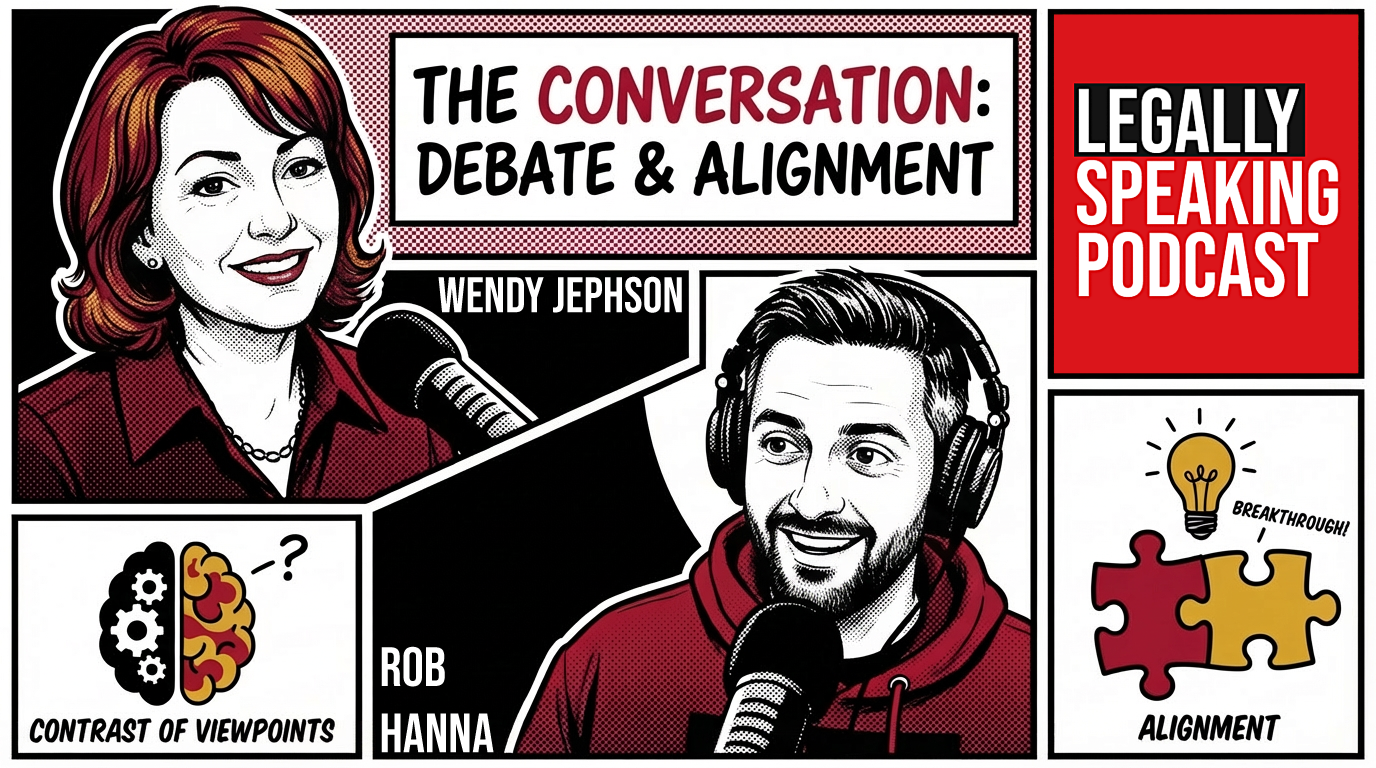
Ever wondered how technology is reshaping the way law firms operate and develop their lawyers? With

*DISCLAIMER* All episodes are recorded at certain moments in time and reflect those moments only. The podcast does not support or associate itself with any inappropriate behaviour or actions that may have occurred after recording.