

Legally on the Move: Professional Training – Peter Riddleston – E02
Welcome to the first episode of Legally on the Move: Professional Training, our brand new miniseries
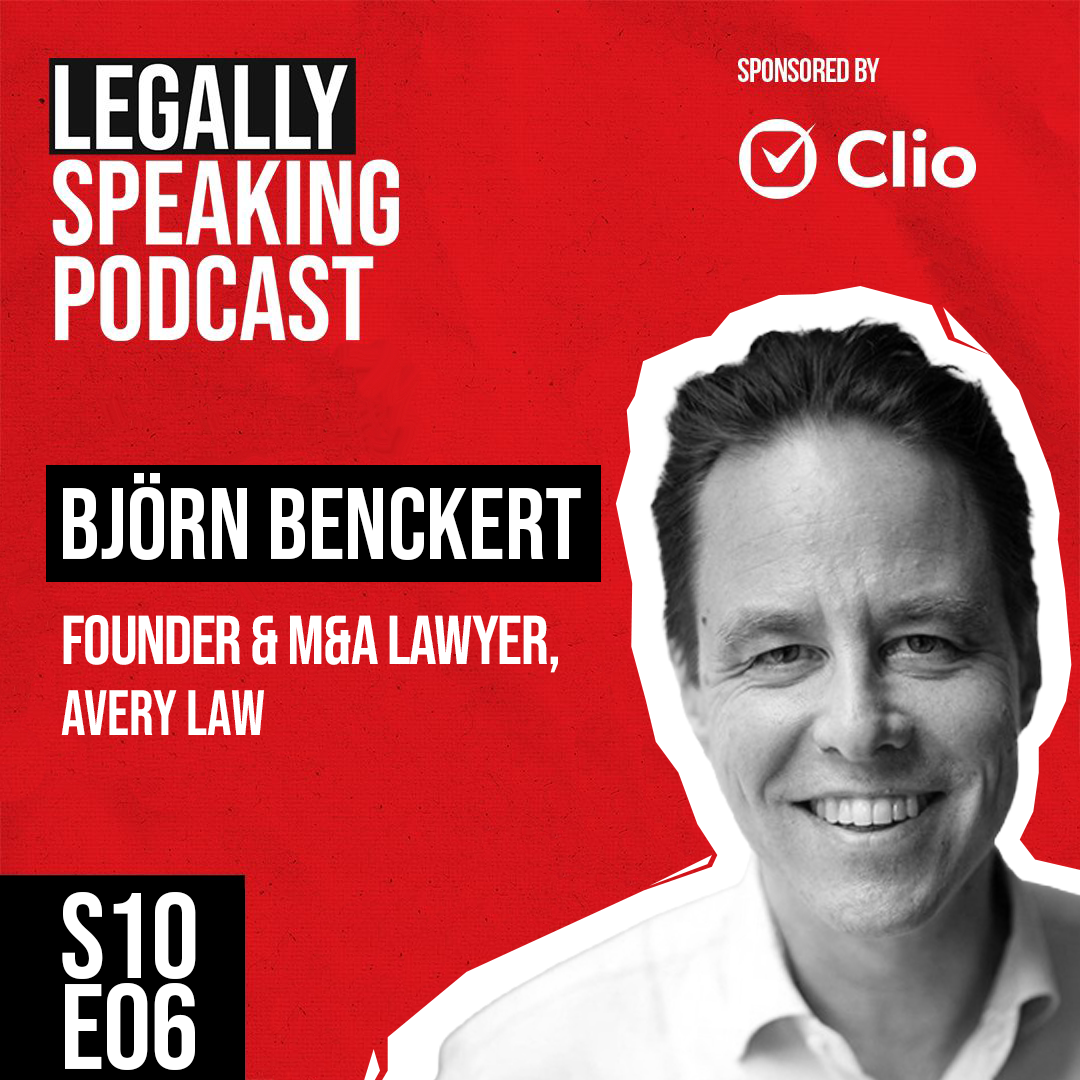
On today’s Legally Speaking Podcast, I’m delighted to be joined by Björn Benckert. Bjorn is the Founder and Managing Partner of Avery Law. He is a corporate lawyer, specialising in M&A transactions. Björn trained at Norton Rose Fulbright and worked at Dewy & LeBoeuf LLP, before founding Avery Law in 2012. Bjorn built the firm to “provide the kind of clear, strategic and practical legal support fast-growing businesses truly need’.
So why should you be listening in?
You can hear Rob and Björn discussing:
– How Involvement in Every Part of the Business is Crucial
– Focus on Two Main Things for Success
– Emphasising a More Commercial and Client-Focused Approach
– Tasks That Took an Hour and a Half That Can Now Be Done in Five Minutes
– Doing this can lead to earning more money and greater career satisfaction.
Connect with Björn Benckert here – https://uk.linkedin.com/in/jonathan-wearing-8ab2821a
Legally Speaking Podcast sponsored by Clio (00:00)
We need to get involved in every part of the business. When you’re in a small firm and you don’t have the brand behind you, you’re much more exposed because suddenly you need to convince people that what you are delivering is actually worth something as opposed to just your brand that will underwrite your work product. And that’s the challenge that comes with that. It’s all about getting along with the other side, even negotiating difficult.
points. It’s all about getting that compromise and also managing your clients expectations. It’s really important. today’s Legally Speaking podcast, I’m delighted to be joined by Bjorn Bankett. Bjorn is the founder and managing partner of Avery Law. He is a corporate lawyer specializing in &A transactions. Bjorn trained at Norton Rose Fuelbright and worked at Julian LeBouf LLP before founding Avery Law in 2012. Bjorn built the firm to provide the kind of clear strategic and practical legal support
fast growing businesses truly need. So a very big warm welcome to the show, Bjorn. Thank you very much. Glad to be here. Thank you very much for having me. we’re absolutely delighted to have you on the show today. And before we get into your impressive career and all the great things you’ve been doing in and around the world of law, we do have a couple of customary icebreaker questions. One, what is your favorite beverage and what is your preferred choice of footwear during a work day?
My favorite beverage is L’Arte actually, I’m a big fan of coffee so it gets me through the day. Any lawyers, of key drink to perform. yeah, my footwear, yeah, it’s probably some brown leather shoes actually, quite comfy. I do quite a lot of walking into office so they need to be quite comfy but still kind of, I suppose, stylish hopefully.
Nailing it, brown shoes with the latte into work we go. And with that, we’ll talk all about you and your journey. So would you mind telling our listeners a bit about your background and career journey? Yeah, I came to England to study. from Sweden. So I came here in 96. Studied ⁓ history of politics. And then I went to do the conversion at Nottingham Law School. And then I started off with
I got a training contract with Norton Rose Fulbright. I spent ⁓ four years there in total. Then I got an offer from an American law firm called ⁓ Dewey and LeBuff. I was there for two years. ⁓ And then after that, I wanted to see different challenge, wanted to see something different than kind of big law. So I took a position with a family office here in London.
I worked for about eight to 10 years. then Wildstair, we kind of branched out and then founded Avery Law. That’s what we’ve been working on ever since really. Yeah, absolutely. And there’s a lot to unpack there. So going back to the academic side of things, you mentioned obviously history and politics at Warwick, then sort of studying modern English history at University of Oxford. What inspired you to pursue a career in the law in the first place? Good question. Well, I mean, I have
My family, lawyers, my background, so it kind of came with the mother’s milk in that sense. ⁓ I mean, wasn’t hugely, know, many students, I wasn’t kind of massively passionate about that ⁓ side of things, but I just fell into it rather than anything, to be totally honest. It’s quite a natural thing if you do history, to go into law, and I got a great offer.
And I thought, well, kind of pursue this and see where it takes me really. So it was more curiosity ⁓ than anything else initially. To be there’s no kind of, no big kind of life plan as such. Yeah. But I think that’s a good point about, you know, look at speak to a lot of lawyers, obviously on the show and people around law and that curiosity point is so important actually, and quite crucial to being a good lawyer, which of
course you’ve gone on to be from the start of your career and with that you’ve mentioned you’ve worked some incredible law firms you know Norton Rose Fulbright as you mentioned sort of Julian Le Boeuf but what prompted to you touched on it before but what really prompted you to leave Big Law and move on to a sort of new venture was there at one moment was there certain things you were not getting or wanting to get? Yeah there was I think it was it felt quite stifling being in the Big Law firm obviously it was the long hours
which initially are okay because I think you learn a lot by doing working long hours because you do more work effectively. But at some point it just felt like you wanted to see the more the commercial side of ⁓ the clients. It felt like you were always kind of doing the same documentation without not really understanding the kind commercial rationale behind it, such as how clients are really thinking.
⁓ So for me, was just more of a build up over a couple of years of just wanting to kind of see different angle of things than anything else really. No, absolutely. And obviously all of that rich experience you gained come 2012, you mentioned it, you co-founded Avery Law. And you know, what gap in the market were you and David Turney, your colleague who has also been on the show, would encourage folks to go back and listen to his episodes in one of our earlier seasons. What problem or solution were you trying to address that traditional firms perhaps were not
focusing on when you’re thinking about launching Avery Law? Well, yeah, it’s a very good question. Yeah, there are many things really, it kind of grew out of being in house initially, it was not something that I initially thought of when I was in the big law firms myself. But it’s, it’s, well, it’s kind of the
lot of law firms are not client focused enough. is ⁓ too much process going on, processing. Law firms are sometimes more interested in, you know, protecting themselves than protecting the client. There is ⁓ not necessarily the incentives of ⁓ lowering fees. ⁓ You know, they’re more interested in kind of perfect documentation and high fees, which is not really aligning with the ⁓
clients interest. And I think for us, ⁓ having been in house and seen that, we thought, well, we can actually start a law firm that changes that, that’s more commercial, more client focused thing in a different way. it’s quite difficult in some respect to put your finger on it. But it’s question of almost the experience. think a lot of people having worked with law firms, they were probably
recognize and having this experience and recognizing these traits for dealing with big firms and I think that’s how we operate is different from that and I think that’s really what we want to come across. I think it’s been more important as well when you’re working with tech startups, growing firms, when you’re not in the kind of corporate box ticking environment with a really big corporate, you’re in kind of smaller founders or even
growing family offices, people that want things to happen a little bit faster and quicker. Yeah. What I’m gleaming from that is, what you’re touching on there, which we talk about a lot on the show is being exceptionally client centered, really getting to the heart of what’s important to clients, listening to them, hearing with them and collaborating with them, not just putting the suite of documents together and this is how it’s done. It’s actually probably taking them on the journey of showing that you genuinely care about their business. And yeah, you are their lawyer and you’re there.
thickened through to support them and exceptionally client-centered. And with that, I’d encourage folks to go and read Jack Newton’s Sea of Cleo, his client-centered book. It’s fantastic for law firms. There’s some great nuggets in there and it’s brilliant. And obviously AV Law has been hugely successful off the back of being exceptionally client-centric. For those folks who may be less familiar with AV Law, tell us about some of the areas you specialize in and some of the services you provide. Yes, we are a full service law firm, but we don’t do private client work.
focus exclusively on ⁓ corporate work. The two legs of the firm, say, it’s always &A and equity fundraising. These are the two things we really focus on. That’s what we want to do. That’s our expertise. But together with that, do kind of data protection, employment, IP, everything that you will need as a corporate kind of a longer journey, because you’re not going to do an &A deal every day. You will need some employment support, data protection.
trademark. it’s basically supporting companies all the way from the journey from start to to exit basically. ⁓ That’s what we kind of focusing on. we I mean, it’s not only founders, but it’s you know, any any company along that journey really.
Yeah. And like you say, corporate is the nucleus, isn’t it? It’s the starting point. And through that, there will be these other areas as these businesses grow, there’ll be an employment issue or they’ll be growing and they’ll be looking to acquire a workforce or what have you. And that’s the beautiful thing about corporate done well as a business development strategy and as a sort of way to drive extra revenue streams from your law firms. You can really be quite smart, smart about it. And look, you are super smart. You’re the co-founder and managing partner of a firm that’s done very, very well since 2012 in London doing some really complex work.
What does your role involve as a managing partner and co-founder of a serious law firm? Yeah, that’s also very interesting. I mean, it’s very, very different from, I’d say, any, not necessarily a partner at the bigger firm, but I think even is different from a partner at the bigger firm business that we need to get involved in every part of the business. It’s running the deals, it’s marketing, it’s admin, it’s billing, human resources.
So it’s a full spectrum thing which comes from driving or running a business, which I think anyone who’s running a business will be doing the same thing. But I think what’s unusual is as a lawyer doing that to some extent, because I think law firms are much more segmented. You you’ve got a marketing department, know, general lawyers, they will just do deals, then, you know, and then you’ve got a billing department, etc. So I think partly when you’re a smaller firm, you get involved in a much broader range of issues. And of course, as you’re growing,
you will of course get people on board to do more of those functions of course but I think that’s the kind of key difference and I think that’s quite useful because we also see lawyers sometimes that are not don’t understand that a lot of lawyers will just understand the fee earning bet that we’re trained to do and they don’t and I think that’s a part of the problem as well because if you don’t understand what it involves running a business then you’re not going to understand your clients.
need of running a business. So for us, I think that’s awareness and having doing all these things are quite helpful in, you know, working with our clients, because I think to kind of align our focus and thinking in a different way.
The key point there is you’re definitely more than a lawyer when it comes to the roles and what you’re doing. There are multiple hats that you’re wearing. You’re a business builder. You’re making sure that the firm’s operating well. You’re obviously looking after your clients. You’re growing your own book of business as well. There’s multiple hats that you need to wear as you’re running this organization. And look, that leads nicely onto some of the cases in emerging markets. You you’ve worked on a wide range of &A transactions, sellers, buyers.
power stations, mining company, oil and gas fields, you name it, commercial real estate. It’s been a really broad church that you’ve worked on. Can you tell us one memorable case or perhaps if not one memorable case, some of the best lessons you’ve got from working on some of those cases that might be valuable for our listeners? One case that I worked on was big enforcement of some assets in multiple jurisdictions. And it was largely institutional sellers.
give a chance on one side of the table. I think the truth is it would become very complex and a lot of the management even left halfway through the transaction, et cetera. And, you know, people were kind of extremely risk averse. And at some point towards the end of the deal, you just had the lawyers on the other side, just running the deal. And the client had almost, you know, that point disappeared into the background. And it just became an extremely
⁓ process driven risk averse kind of transaction that dragged out and cost a lot of money. from that you realize is that, know, what I’ve learned from that, this is the key thing is always that the clients, even commercial people need to run the deal. They need to be properly advised to understand what they’re doing, but lawyers should not be running transactions. And quite often, I think you can easily, that can happen in
less or greater extent. think the lawyers either feel like they want to show off or kind of protect the client or for various reasons. And I think that’s probably the kind of the biggest takeaway I have on a deal. That’s kind of really impacted my thinking on how to operate transaction and how they not should be run. That flows to where I wanted to talk next, which is around law firm culture, actually.
And for you as a law firm owner, what were the hardest decisions you’ve had to make in the early days of Avery Law that have ultimately defined the culture of the firm? Yeah, I think it’s the entrepreneurial aspect of it. think we were very much focused on, and in earlier career, we were doing a lot of, as you kind of alluded to, international &A. The first 10, 15 years almost, I was exclusively
big ticket international ⁓ &A. And then when we founded Avery Law, we switched over to much more domestic UK focused ⁓ &A, more on the kind of tech side of things. And that was kind of a difficult shift, I think, ⁓ you know, to go from doing one thing to another, because both in terms of client marketing, and you know, how you project yourself as a lawyer, etc. So think that’s definitely been
I thought was the biggest challenge that we had. But I think that defines us in a way than the entrepreneurial spirit and also that we can basically do anything we put our hands to. We’re not tied in. think a lot of people, a lot of lawyers, they just get very boxed into their own little narrow field and refuse to even think outside the box. And I think that’s not a very
good trait, think it’s important to be able to apply your legal skills and thinking to a wide range of problems and issues, even if it’s not something you’re doing day to day. And I think that’s something we kind of is that problem solving and thinking outside the box that, you know, where we really add value to clients.
Yeah. And that’s what they’re paying for, right? That’s what they want. You know, they’re coming to you with their problems or exciting ideas and they’re leaning on you to make sure they can be executed and you know, they can kind of flourish. And thank you for bringing up challenges because it is so important. Obviously people look at your background and profile and be like impressive, impressive. Wow. Done all of these days. But you know, there are challenges when you’re running a business or you’re a big ticket lawyer and you’re going through your own journey and you’re alluding it to there and maybe touching on it. But I want to go a little bit deeper.
taking yourself back to those early days, particularly when you mentioned around the &A and maybe a little bit of repositioning, how did you personally overcome those challenges? Were there any particular things that you did? it finding mentors? How did you personally overcome them and maybe advise others who might be struggling right now, starting up a law firm who have got challenges facing them? Yeah, I think you’re just going to persevere really. the hardest bit, think, also with that part of this was effectively that
I think lawyers forget that being in a big firm, you do have a big brand behind you. ⁓ And that brand is incredibly valuable. I don’t think a lot of people when they are in a big law firm, they take that brand for granted. It’s not something you reflect on particularly because you think you can just deliver. think when you’re in a small firm and you don’t have the brand behind you, you much more exposed because suddenly you need to convince people that what you were delivering is actually
worth something as opposed to just your brand that will underwrite your work product. And that’s the challenge that comes with that. And I think the only thing you can really do is I think it’s a relationship issue and you got to start small, but it’s the more deals you do and it’s just clients seeing what you can deliver and being out there and just doing stuff is effectively the only way. mean, I think it’s a…
slow grind, you can obviously do some marketing around it and try to convince people that you can deliver. I think it’s proofs in the pudding where you’re to start small, think, just build from there. think it’s very much like a chess board. You’re going to say you put the right score. One is you just start with one and then it’s two and then it’s four and eight and 16. I think that’s how you got to look at it. You start small and work with your clients and they, long as clients are happy.
They will also come back and they will recommend you to other people and it starts, you know, constant being at it constantly, I think is the only way forward really. Yeah, it’s sort of that.
That flywheel effect, talk a lot about, have obviously read the book, Jim Collins, good to great when his flywheel effect, but it’s momentum, isn’t it? What you’re doing is you’re building momentum. You’ll do a good job for one client, they’ll then refer you potentially, or they’ll come back for repeat business. And suddenly that flywheel, the more inputs going into it, it gets quicker and quicker. You’re building, you’re moving, and your firm is suddenly, you look back on a year and be like, wow, we did do all of that. Or we’ve come from here, we’ve grown from here to here in terms of headcount, or revenues have gone up from this, or our level of tech adoption and the efficiency gains.
from it, whatever it might be, but it’s taking small consistent habits and actions that actually compound over time building that momentum lead to, you know, successful law firms like yourselves. You’re mentioning there sort of, you know, some of the sort of maybe own law firm versus global big law firms around brand and not having the brand. Are there any other big misconceptions people have about starting their own law firm versus working at a global law firm that you would educate people on? Well, I don’t know.
exactly what misconceptions people have in that sense. But I think it’s certainly a ⁓ big difference. ⁓ think in, you you’re suddenly in a smaller team, you’re expected to do more things, being more agile. You’ll probably be thrown into the deep end ⁓ quicker, in some respects, a less hierarchical structure. ⁓ So I think…
That is the, know, there’s a lot of advantages there, I think, ⁓ for, for junior lawyer. think that the biggest problem is of course, is the kind of lack of, of, ⁓ brand, ⁓ that people get, ⁓ get affected by. So people might be reluctant to join smaller firms because of course they’re not going to have the brand on their CV. they, you know, if they go look for another job, et cetera, I think that’s the kind of, yeah, the key problem. Yeah. No, and it is very valid.
point as well, but like you’ve alluded to with organizations like yourselves, know, the responsibility, the opportunities, the chance to be entrepreneurial, all of the upsides are very much there as well. And once those relationships are built with the clients, then of course, you know, it’s, it gets rather exciting. Let’s talk more going back to your, your own background now, because we haven’t had many people have a Scandinavian background on the show. And I just wondered, has that, how has that influenced your approach to business leadership, advising clients, if at all? Probably not.
very much. don’t think ultimately I never kind of see myself as, ⁓ you know, defined in that sense by kind of being Scandinavian. For me, it’s just delivering good legal services really. So I wouldn’t say that it has necessarily, I guess it’s always a funny talking point for people. suppose crack some jokes about it and I’m probably more direct maybe as a kind of cultural trait than
many English people would be, suppose. ⁓ Although the years probably softened a little bit, but I think there’s an element of directness there that I probably have, which I people quite like, I hope. But I haven’t specifically targeted, you know, Scandinavian market or anything like that. It’s been a very much international ⁓ London focused ⁓ client base. So obviously I have a couple of Swedish clients, but
Not more so than necessarily any other English solicitor would, I don’t think. Today’s episode is brought to you by Clio. Are you frustrated with your current legal management software? You’re not alone and thousands of solicitors across the UK feel your pain. However, the hassle of moving all their existing client and case data holds most back from switching, prolonging the frustration.
Clio is here to help as the intelligent legal work platform bringing together context aware, AI and trusted legal research to power the legal practice management. Clio’s dedicated migrations team will be with you every step of the way while you transfer your information and if you have any questions you’ll get award-winning support available 24-5 by live chat, phone and email. So help is always there when you need it most.
It’s no wonder Clio consistently receives five star ratings for ease of use and top notch service. If you’re ready to leave frustration behind, visit clio.com forward slash UK to learn more and see why Clio continues to be the go to choice for solicitors across the UK. Now back to the show. I love you say direct. mean, when I moved from London, middle of the UK up to the north, you know, I found northern people up here to be very direct and I quite liked it. They let you know where you stand and you know, my
I’ve got family, my older brother’s married to a Danish lady and you know, their family are always happy, lots of fun whenever we spend time together. yeah, I was just curious. And I know obviously you have a broad church and sort of international perspective, but do you think, you know, and look with Sweden, you’ve got legal tech organizations like the Gora that have just gone really big. Do you think Nordic startup scale ups are becoming so influential globally? And how does that play into Avery’s work, Avery Law’s work, if at all?
Well, yeah, I mean, I do think Sweden has is kind of open minded, generally kind of open minded attitude and Swedish people are quite international. Obviously, they the English as almost a second language. So in that it’s I think they have the base for that. It’s quite entrepreneurial culture, quite willing to take risks generally. So I think for sure it’s going to grow. we well, I don’t think it has affected. Maybe I am kind of.
part of that mindset to some extent in the sense that that’s obviously why I’d be happy kind of start my own firm and doing that. But we haven’t as such interacted too much with the Scandinavian tech market, you know, obviously various deals here and there, but it’s not, it’s still very much primarily London focused. Absolutely. And one thing you’re very good at is deals and the technical side of the law with your clients. And I think I’m going to quote you here. I believe you said many lawyers
derail deals by focusing on technicalities instead of outcomes. So can you tell us a little bit more what you mean by that? I think sometimes lawyers, they are getting too involved in the kind of technical wording of documents. I think obsessed by some warranty or, you know, that they suddenly think is extremely important. But in reality, the chances of that really happening is just very, very slim. And I think it’s sometimes you need to kind of take a step back from the doc.
to understand what you’re trying to achieve as opposed to necessarily having the best legal documents ⁓ presented to your clients. I mean, I had a deal that just blew up kind of eight months ago. And I think the other side would just start it off with the best kind of possible legal document. They had a term sheet when my client was legally advised on initially, which was extremely favorable.
They weren’t even going to accept normally, which is very much standard in a document that you accept any tax liabilities, know, pre-completion, that’s your market standard. And very few would ever argue with that. But he started off saying, well, you know, we’re going to have only take 50 % of the liabilities and not a hundred percent. And, you you start off, you think might be great for your clients, but at end of the day, if you just take an extreme position, which is totally off market at the end of the day, you’re not going to, you know,
do your clients any favor. mean, sometimes you need to, as a lawyer, need to sometimes educate your client because your client might not have done many deals. So sometimes extremely experienced, but in this case, the client that’s what his first deal and they, they choose to try to go in aggressively and just get the best document rather than educating him what he could reasonably expect in the process. As an end result, the deal fell through and everyone was quite unhappy, obviously. And I think that, I think that just shows it really. Yeah.
Great example. And thanks for sharing that. yeah, again, for people, maybe he was starting out on deals, some good wisdom there that perhaps sometimes someone almost collaborating with the other side to get the deal done rather than completely going all stakes in, like you say, it’s derailed a deal. And as a result of that, it’s not happened a lot of time, energy and efforts invested, ultimately for nothing. Okay. I want to talk about managing people now, because you’ve also shared when it comes to that, that law is often 80 % diplomacy and 20 % the law.
So can you give an example of where managing people mattered more? I think it matters on every single transaction, every interaction really. It’s very difficult to think of it where it doesn’t matter because it’s all about getting along with the other side sufficiently, even negotiating difficult points. It’s all about getting that compromise and also managing your client’s expectation. I think it’s really important to really explain to the client.
what the issues are and what they can reasonably expect and not just sit in saying that they should have the best ⁓ possible outcome. I think it’s, I don’t think I have a particular example. think by the one I just gave was clear example of course where they totally ⁓ failed to do that. But otherwise I think it’s something that we just need to do every, every day, both with your ⁓ own colleagues and also with clients.
⁓ I think the more senior you become, becomes more politics and diplomacy almost than, you know, the nitty gritty of technicalities. Again, thank you for sharing that and, you know, being quite open. And we’ve talked a lot about sort of the law generally, and, you know, you have a very modern approach and you touched on term sheets before as well. And I think in a recent firm’s article, the term sheet is dead. Why the data room now decides the deal. You explained…
due diligence has evolved from a conformatory exercise into a decisive stage that makes or breaks a deal. So again, going a little bit deeper, how can founders actually turn due diligence from a risk actually into an advantage? due diligence is obviously mostly from the buyer side, of course. ⁓ Yeah, I mean, that article, to be honest with you, was a little bit tongue in cheek. We like tongue in cheek articles.
But no, mean, you’re doing is, of course, it is extremely important because ⁓ particularly what I’ve seen is where you can really see it matters more than the kind of ⁓ and where it goes wrong. The most extreme example, I think, is when people have done high bouts or restructured the business beforehand and you’ve got a term sheet where everyone’s very clear on what they’re actually buying and what everyone thinks they’re buying or what everyone’s selling. But
The problem is they haven’t done the hive out or the restructuring of the business properly. So when in the Gilligans, you go in and look at it and you can see the contract has been assigned. sometimes you look at someone and say, what are you really buying here? It’s just an empty shell because they haven’t actually moved any of the contracts across or anything. And then suddenly the deal just starts to fall apart quite quickly.
Great example again, you need to do this level of due diligence and hence why hiring good lawyers is a good place to start. We’re talking off there before we jumped on the mics as well as around social media and you mentioned before the role of you as a managing partner, marketing, social media, also doing the deals, managing people, it’s a broad role. But for you when it comes to social media, how are you utilizing it to build a personal brand and showcase your expertise?
I’m almost exclusively doing that on LinkedIn in terms of social media. I think it’s a great platform for doing that. You reach out, it’s a professional network, it’s the right connections. obviously from a small firm perspective, it’s obviously relatively low cost in that sense. You don’t need to take out the big advertisement in the Times or anything like that. You’re actually reaching the correct people. So I think it’s an extremely
valuable tool for smaller firms. think anyone really ⁓ who wants to build a network and build a business, I think it’s becoming almost indispensable, frankly, from that. ⁓ But particularly as a law firm where it’s all about relationships, it’s very much your network that’s ultimately going to determine how many deals you do and how much work you get in. So it’s very difficult.
not being on LinkedIn, I would say today and not promoting yourself there. And that’s what I was going to say because it’s great to see, I’ve been a big advocate for LinkedIn and using social media for law firms for quite a while now. But for some lawyers or law firm owners that may still be not sure, what would you say to them about it? Have you found your experience yourself? Did you need much convincing or did you see the own value in it? Just for people who again, who maybe sort of
I’m not sure if that’s quite right for our firm. Yeah, I mean, I think I’m a great showcase for it in some respect because I’m not in the sense that I’m not a natural social media person. So I think I’ve probably been more kind of, reluctantly drawn into it and probably seeing the need and understanding that you need to do. some, think maybe it’s a generational thing on aging or also individual. Some people love being on social media and some people don’t like it as much, but I think
It’s just one of the, you got to build in these days, build a law firm, build the brand, you have to be there. And I think you just need to get someone to advise you who can do these things for you and you will get on top of it. I, you know, also call my, ⁓ BD consultants are linked in dentist, you know, what do you like or not, but they’re doing, you know, it’s needed and it’s doing great work and you can see that it’s really worked. I think everyone needs to take that seriously and, and just get on with it. And, and.
It’s part of modern life of running a law firm. Yeah, absolutely. I love one of your posts before. think you said over the last few years at Avery Law, you’ve learned that being a founder lawyer is its own game. There are a few hats you’ve had to get comfortable wearing and which we’ve talked about through this discussion. The visibility hat, credibility hat, founder empathy hat and commercial strategy hat.
I guess one thing we haven’t talked about, can’t believe we haven’t, is in the area that we’re in, is obviously AI and technology. So you as a law firm founder, I’m sure you’re seeing the roles and processes of law firms changing. What’s been Avery Law’s approach when it comes to AI and legal tech adoption? That’s been absolutely fundamental. It’s funny you should say that or mention that because I even because I would like to take a step back even before AI. mean, tech generally is one of the reasons that you can even enable
us to kind of be launched in the first place. mean, as you mentioned, Clio, for example, you know, being able to do the online time recording, et cetera. Also now with the know how that’s available, you know, now these days, all the tools of a law firm is available at your desktop. That wasn’t really the case 10, 15 years ago, you know, at the library and, you know, there was kind of intricate billing systems and
you know, it wasn’t really possible unless you, you know, you can set up yours as a sole founder, maybe a service in a couple of your existing clients, but it wasn’t really possible to build a modern law firm. So tech is just absolutely instrument, you know, while it’s instrumental and fundamental to building and starting a law firm these days. So for us, that’s always been a key driver from what we always been kind of very early adopter of all types of tech from,
get go really, we wouldn’t be where we are today if you hadn’t. And AI is for us, it’s just building on that to, you know, increasing efficiency ⁓ and, you know, add more value to clients. I mean, it’s ⁓ for us. mean, the problem with AI, think it’s still in the early stages on the legal side is that it’s clearly not, which may be good thing for lawyers, but it’s not 100%. You know, so it’s not you can’t just rely on AI very much.
needs to be used as tool and checked by lawyers. And then, but I think the advantage there is that it’s a, it’s a time saving. So something that would have taken you an hour and a half now can be done in kind of five minutes. That’s obviously value adding, but it doesn’t mean that you, it’s not something you can just hand over to AI kind of full stop. ⁓ so with that, you know, judgment becomes really important, doesn’t it? That strategic thinking that human input with AI removing it. Are you seeing any client pressure on?
pricing as a result of AI in terms of them saying, hey, look, we know you can put this together a lot quicker now with AI or how are you approaching that? Because you still obviously are delivering value, but clients want to see that value, don’t they? Have you seen anything from a pricing perspective or pressure from clients? Not so much, actually. And I mean, I think that’s partly because I think we are very competitive compared to, you know, most firms. So we don’t really see that. We haven’t really seen clients come and argue.
that very much. always sometimes had that even before AI people could download, you know, a form, you know, present employment form, or you always have occasionally someone says, I have I have the contract already, can you just quickly review it? And you see that, of course, so you still see that, of course, in AI, people say, you can see that it’s a download in an AI form, or, you know, we obviously see a lot of it becomes standardized AI, etc. So, you know, for us, it’s very much the problem isn’t
This is a for us is more convincing or explaining to your client that it’s what we adding value is the judgment. It’s not, know, we have the precedent. That’s not sending you a precedent. It’s not really going to cost you anything. It’s how we tailor it to the deal and our judgment and commercial awareness and all the experience that we have. That’s what we add to you. To you. It’s not actually the document or the form, which anyone can just download from the internet or get AI to draft up.
And so to help founders then that might think that they are trying to be quite clever by going onto a chat GBT or whatever other platform, say they do do that. What would you advise them to do to then be helpful to you coming to law firm? If they think actually, you know, I’m going to put this, put this into chat GBT, get this template, then I’m going to go take it to Avery law.
What would be your advice that would actually be helpful for you as the lawyers? You may say, don’t do that to start with and come to us initially, but let’s say you’re not going to break that. think that will still be a first cut with a lot of founders are doing at the moment. And like you say, Hey, can you just give this once over? What would you say to people to be helpful to those startup founders that might be a little bit budget strapped or people are looking to go on the next exercise if they are using these tools that could be genuinely helpful to collaborate with the lawyers. You don’t always have to start from scratch. mean, we understand and that’s it’s a difficult
It’s a difficult one because at the end of the day, if you have no money, still need something. Of course, it’s better than nothing. And we obviously appreciate that. We work with that as well, of course. think from our perspective as a law firm, think ultimately it’s better actually you have to just come to us initially and discuss and see what the problem is and see how we can help you. We kind of provide the kind of precedents, et cetera, but it’s…
the guidance is extremely important because I think the problem is if you just take a template and just use it without thinking about it, you can cause more problems than you solving eventually. particularly when you come to, I mean, see a lot of the documentation is a bit of an investment from you as a founder because when you go out and you have investors coming in or you’re trying to grow the business, sell the business, if you put together
loads of rubbish, then unfortunately that’s going to be quite costly and problematic down the line. think having ⁓ your ducks in a row is an investment and that’s the kind of the way you got to look at it. Because we have seen a lot of shouldn’t, you know, mention necessarily the company on online, but you know, it’s kind of a precedent based that a lot of founders use. ⁓ And we have a lot of founders coming after us.
you know, to us afterwards where the documents have not worked or, you know, there’s loads of problems, et cetera. We need to kind of sort them out. And there isn’t a huge amount of money to be saved there either, which we, you know, and quite often it’s actually become lot more expensive trying to rectify these mistakes afterwards to getting the right in the first place. And one of the best pieces of advice I got from a mentor very early on when setting up my business is, is don’t build on quicksand.
And what they meant by that is get your infrastructure in place, have great lawyers, have great accountants, because you need that base infrastructure. If you’re going to go out and build something of value or go to market, you need to have a, it may not be perfect, but you’ve got a good base level of infrastructure. You’ve got, you know, your good shareholders agreements, whatever it might be. You might have all these various, but make sure you know, your accountants have got you in the most tax efficient possible with the tax advisors. So you’re not.
When you’re building, you’re building hopefully from a really strong start. So like you say, if you get up to investors or you get up to different areas, then you’re not necessarily having these headaches or things that could derail deals through not doing that level of initial investment where possible. Yeah, no, absolutely. mean, it’s not, as you say, it’s not about gold plating everything, but it’s about making sure that you understand what you need to put in place, putting the right documents in place at the kind of reasonable costs. Yeah. I mean, it’s going to be
big saving down the line for sure. mean, we see that time and time again, if people have done it properly or if they haven’t basically. Yeah. Yep. And I know all too well ⁓ about that. This has been brilliant. A couple of final sort of reflection lessons questions before I let you go. What’s been the biggest lesson you’ve had from your legal career thus far that you would like to impart on people? Maybe it’s through a failing, maybe it’s been through a success that’s made you the lawyer that you are today.
Yeah, I mean, it’s interesting. think the key thing probably what I was with the lesson and I’ve been in it for many years, I think is probably always, you know, thinking ahead, whether where you want to go, rather than necessarily kind of chasing short term salaries or, you know, individual potential lucrative contracts. I think it’s the key thing in a successful legal career is really keeping an eye on the end goal where you really want to end up.
And think if you do that, you’re more likely to earn more money and be kind of happier in your career than just focusing on kind of some short term benefit. That’s probably would be my biggest lesson, I think, my career today.
It’s all too easy, isn’t it? Now where people can see the US law firm salaries that are out there or other options is if that’s right for you, of course, then go for it. If it’s not right for you, then stick to that long term goal. And with that, then more specifically for aspiring lawyers listening into this, we’ve got a range of lawyers from all around the world, different places and places that tune in. But for aspiring lawyers interested in ⁓ &A, what would you recommend to them? What are some of the things, tips you would give them in terms of advice? Well, I think just
need to go into the M &A department. Well, I think the key thing today, I would say if you want to, I think it’s important to kind of have the work ethic and making sure you really want to kind of throw yourself in the deep end. I think it’s really having the willingness and wanting to do it. I think maybe in your first couple of years, it’s not almost necessarily you need everyone talk about life.
work balance and of course that’s very important. But I think sometimes when you kind of aspiring your first couple of years, you know, that’s not necessarily the need to be your key focus. If you can’t go into &A, I think because it can be quite a brutal journey in that sense, you know, with deals just needs to be done and you know, they’re not running. You’re always kind of servicing your clients, timetables, not your own in that sense. So that’s probably, I think the key thing to kind of bear in mind.
Yeah, and particularly when you’re career planning as well, you know, if you know you’re going to go into &A and you’re going to be busy periods and you can give these next few years to that thing, that’s brilliant. But I think that’s really, really good advice because I’ve seen it firsthand with recruiting for &A lawyers and working with &A lawyers when it’s busy, it’s busy. But also when you do have those downtime moments, can use them effectively. Bjorn, this has been brilliant. Really enjoyed learning about your own journey, how you’re building every law, your thoughts on
sort of the future and some good career lessons for our listeners. So I’m sure you would have inspired a lot of people today and perhaps inspire people who may want to even apply to Avery Law. If people want to know more about yourself or indeed Avery Law, where can they go? Feel free to share any websites or any social media handles. We’ll also include them in this episode for you too. Yeah, no, I think the best is just go to Avery Law website ⁓ and yeah, send an email and we will respond quickly.
There we go. Go to the Averillaw website, check it out. And yeah, it just leads me to say thanks so much. Once again, we really enjoyed having you on the Legally Speaking podcast sponsored by Cleo. But for now, from all of us, over and out. Thank you for listening to this week’s episode. If you like the content here, why not check out our world leading content and collaboration of the Legally Speaking Club over on Discord. Go to our website, www.legallyspeakingpodcast.com.
There’s a link to join our community there. Over and out!
You may also tune in on Goodpods, Apple Podcasts, Spotify, or wherever you get your podcasts!
Give us a follow on X, Instagram, LinkedIn, TikTok and Youtube.
Finally, support us with BuyMeACoffee.
🎙 Don’t forget to join our Legally Speaking Club Community where we connect with like-minded people, share resources, and continue the conversation from this episode.
Sponsored by Clio – the #1 legal software for clients, cases, billing and more!
💻 www.legallyspeakingpodcast.com
📧 info@legallyspeakingpodcast.com
Disclaimer: All episodes are recorded at certain moments in time and reflect those moments only.
Welcome to the first episode of Legally on the Move: Professional Training, our brand new miniseries
Welcome to the first episode of Legally on the Move: Professional Training, our brand new miniseries
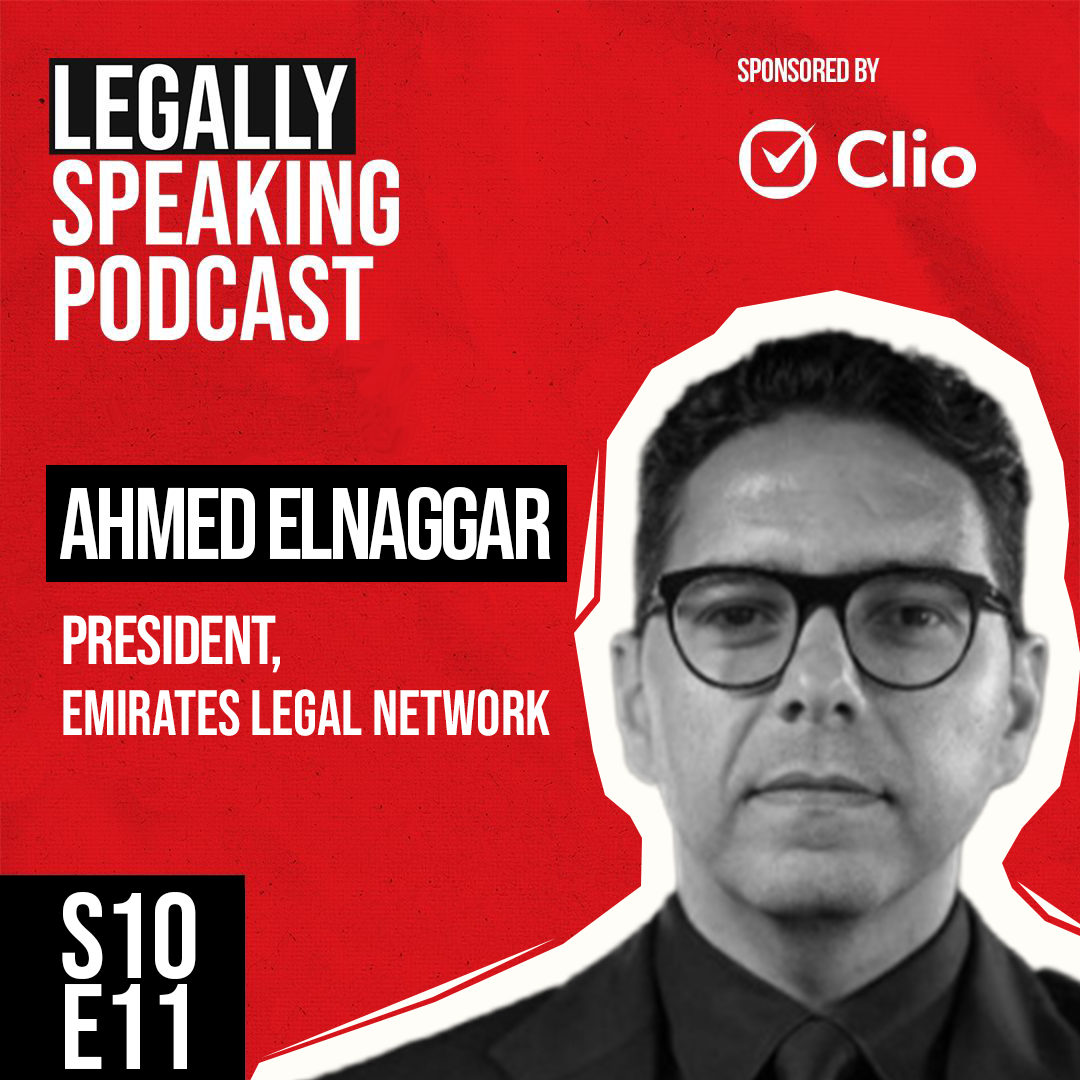
On today’s Legally Speaking Podcast, I’m delighted to be joined by Ahmed Elnaggar. Ahmed is the

In today’s rapidly changing legal landscape, understanding how technology, personal branding, and innovative training pathways impact

On today’s Legally Speaking Podcast, I’m delighted to be joined by George Hannah. George is a

Ever wondered how technology is reshaping the way law firms operate and develop their lawyers? With

*DISCLAIMER* All episodes are recorded at certain moments in time and reflect those moments only. The podcast does not support or associate itself with any inappropriate behaviour or actions that may have occurred after recording.