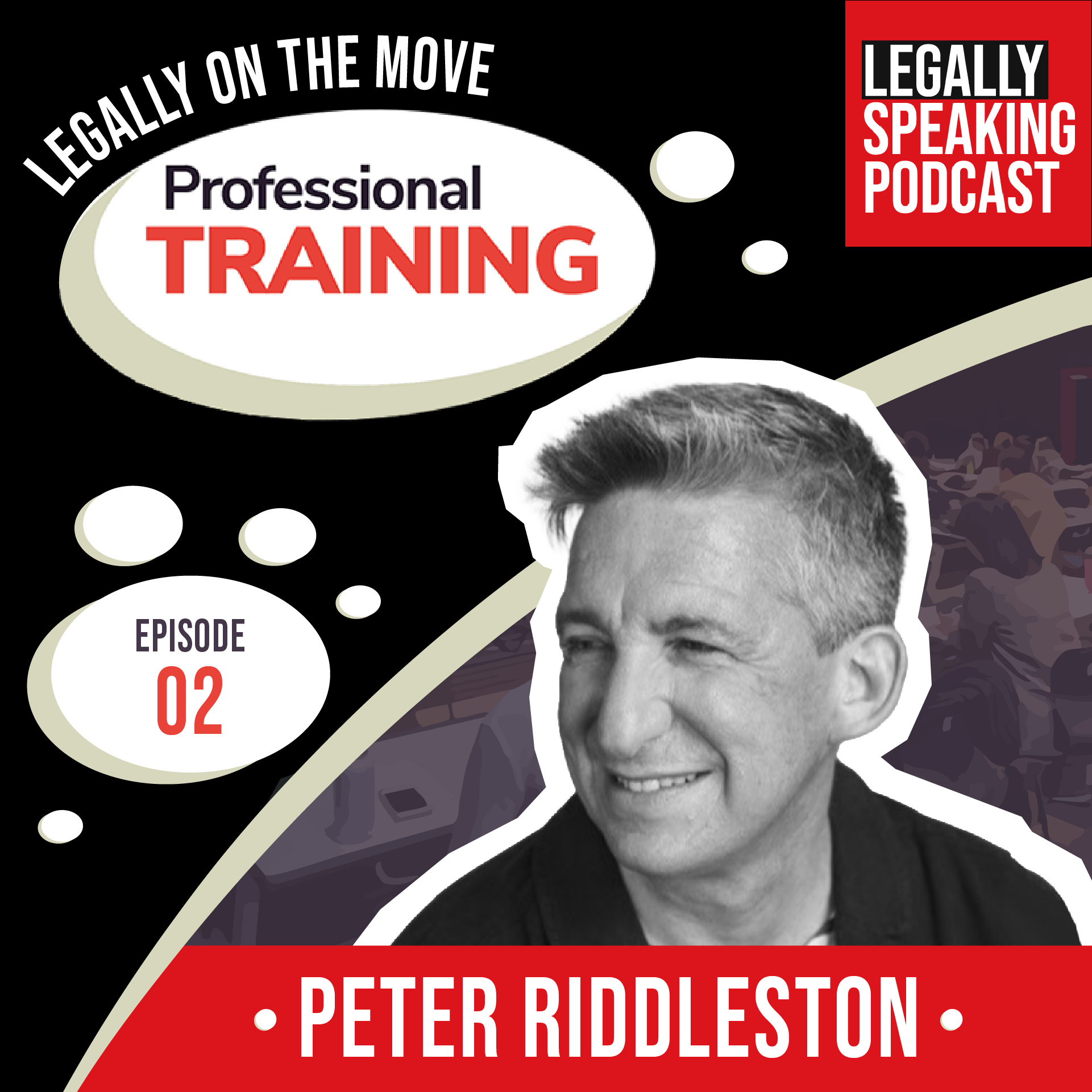
Legally on the Move: Professional Training – Peter Riddleston – E02
Welcome to the first episode of Legally on the Move: Professional Training, our brand new miniseries
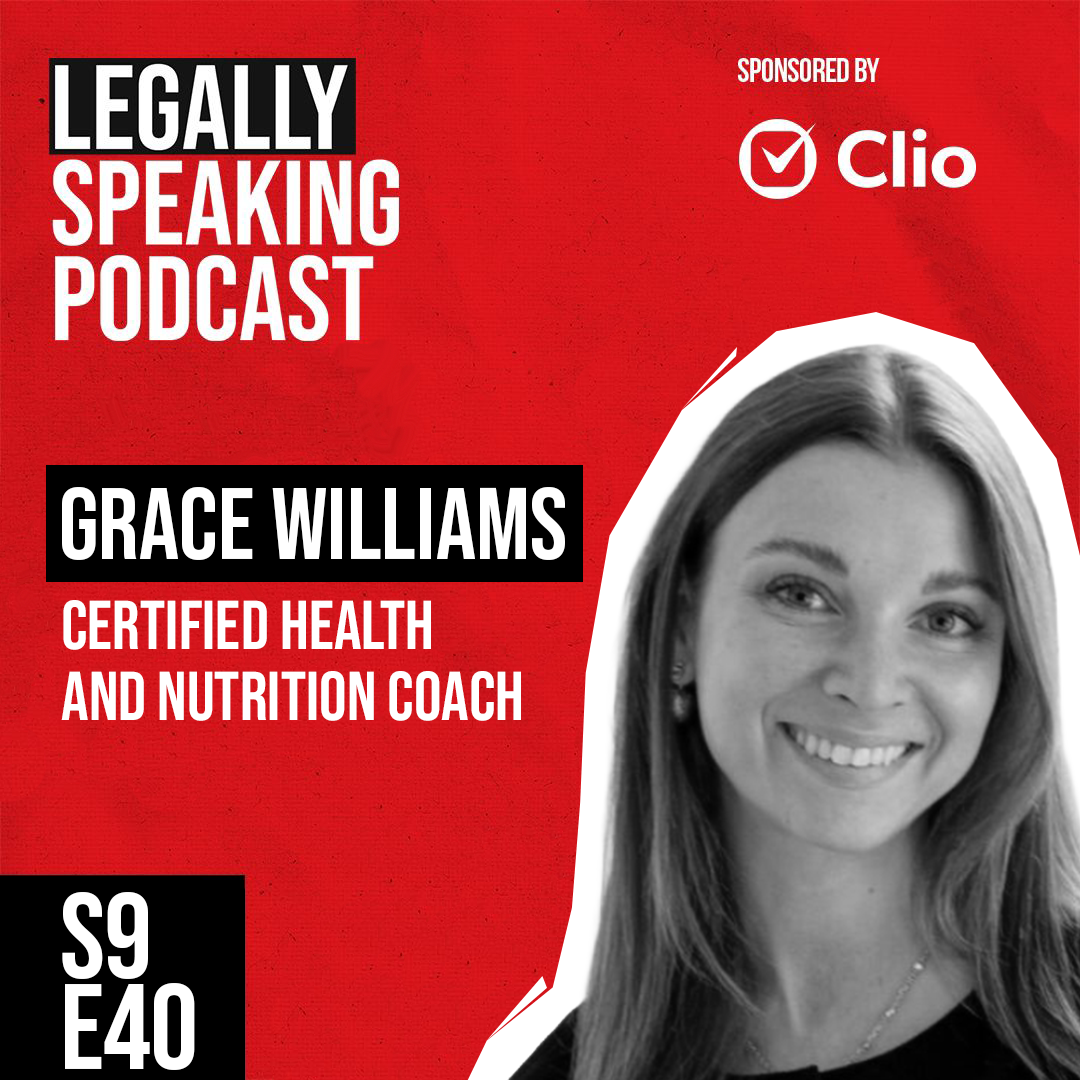
On today’s Legally Speaking Podcast, I’m delighted to be joined by Grace Williams. Grace is a Certified Health and Nutrition Coach. A former Whit & Case Associate, she has experienced the high-pressure environments of working at a US law firm. Grace’s mission is to support high-performing individuals, personalised nutrition and lifestyle strategies, all whilst developing their energy, resilience and wellbeing.
So why should you be listening in?
You can hear Rob and Grace discussing:
– Elevating Legal Performance Through Well-Being and Resilience
– Going From Burnout to Breakthrough with a Path to Sustainable Success
– Tailored Strategies for Health: The Next Level of Lawyer Well-Being
– Techniques for Staying Resilient in Law
– Power Habits and Honest Conversations and Wellness Essentials
Connect with Grace Williams here – https://uk.linkedin.com/in/grace-williams-coach
Grace Williams 0:00
When you are happy, when you are loving what you’re doing, and it might be that you love what you’re doing outside of work, the energy that you carry then completely shifts when you just feel good. Lawyers are like athletes. We expect ourselves to think clearly, perform at our highest level, put so much pressure on what we’re doing, but the thing that they’re missing is we’re not thinking about the internal we’re only ever focusing on output. Athletes, their biggest Flex is that they know that their body is their greatest asset. Ultimately, it’s their body that will get them the results. If they are not fueling, recovering and managing their stress. And even don’t have that team around them, they’re not going to run the 100 metres as fast as they want to, and they know that for me, well being is Do you feel at peace? And can you feel present in every task that you’re doing, not just the ones that you intentionally bring presence and peace into.
Robert Hanna 0:46
On today’s legally speaking podcast, I’m delighted to be joined by Grace Williams. Grace is a certified health and nutrition coach, a former whiting case associate. She has experienced the high pressure environment of working in a US law firm. Grace’s mission is to support high performing individuals personalised nutrition and lifestyle strategies, all whilst developing their energy resilience and well being. So a very big, warm welcome to the show, Grace.
Grace Williams 1:11
Thank you so much for having me. Very excited to be here. Oh, it’s an
Robert Hanna 1:15
absolute pleasure to have you on the show and equally excited. And before we get into all the great stuff that you’re doing in and around the world of law. We do have a customary icebreaker question here on the league speaking podcast, which is on the scale of one to 10, with 10 being very real. What would you rate the hit series suits in terms of its reality of the law? If you’ve seen it on a scale of one to 10,
Grace Williams 1:37
I have say I’ve seen it. Seen it all. Loved it. I’m gonna give it, you know, I’m gonna give it. This is actually such a cop out answer, but I think, like a five or a six, the thing that gets it for me every time is the fashion, because Jessica Pearson in her suits with massive sleeves, there’s no way you’d still be in that at 2am like a lot of us will still be working at the time, was like outfit all day, so that she they it docks a lot of points for the outfits, because you just we can sustain some things, but the big sleeves and some of the dresses she was, in no way
Robert Hanna 2:13
love it. And I love a very specific justification for the answer as well. I’m here for that. But with that, we probably should move swiftly on to talk all about you. So to begin with, would you mind telling our listeners a bit about your background and career journey?
Grace Williams 2:26
Yeah, of course. So I started my career as a lawyer. I was at well qualified, trained and qualified at whiting cases there for over nearly six years, and started out Bright Eyes. Was so excited. Do you know I really felt like I found myself when I joined white, in case I loved the firm, it was one of the only ones I applied to and went through, yeah, training contract, qualified into the arbitration team. But a couple of years into being at White, in case, my mum was diagnosed with a brain tumour, and then six months later, my dad was diagnosed with lymphoma. So very quickly, my world went from being all about law and like, truly I was that classic I didn’t make any weekday plans, nothing like I was the yes person to everything in the office, to having this very split focus and not really knowing where I stood with that it then, do you know, led me down such a crazy path of trying to balance life as a carer, but also being a lawyer, never wanting any ball to drop. And ultimately, I went through my own experience with burnout, which led to six months of work, which, as a type A perfectionist, was like the worst news you could tell anyone I had to take any time off work. Um, but it then led me, I wouldn’t be doing what I was I’m doing today, if it wasn’t for it, because ultimately, to skip a few steps. But ultimately, after my mum passed away, I went back into law. Was like, right, gonna be back proper lawyer. I had this split focus, so excited to be back, but I just had this real tension between a lot of the rhetoric around burnout being about slowing down, stripping back, and then you go back to a career that is so like, I’m ambitious. I want to be busy. I was saying yes or everything. It’s like, oh, but there’s this fear around what if I burn out again? And it just felt like these two worlds were so separate, and I really struggled with it mentally. And ultimately, it led me to set up my own business. I retrained and then now work with lawyers and professionals to, I always say, to create the internal foundations, or to build the internal foundations that will create your external success. Because ultimately, we can, we know we can achieve that external success. But how do we feel while we’re doing it? How well are we supporting our bodies? And it was always the piece that was missing for. Me, I can keep on succeeding, I keep on doing all of these things, but then there was that risk of what was happening around it. So I’ve gone through a real journey of being my career is everything to realising, yes, my career is everything, but I’ve got to bring in a few little caveats to that, of how I’m supporting myself throughout that journey. But it’s been, I love that I still get to be in the legal world despite not being a direct lawyer.
Robert Hanna 5:26
Yeah, no. And firstly, thank you for so openly sharing and authentically sharing your journey with us. We really appreciate that, and I fully appreciate how hard those times would have been to you. And equally, you’re right. I don’t think you can pour from an empty cup. So you need to ensure that you are putting yourself and putting those things around now, as well as obviously trying to balance the career, I guess, to go back, just getting a sense of sort of why law originally for you. Was there something that sparked you wanting to be a lawyer? Was there a moment before in life? Just curious,
Grace Williams 5:59
do you know I almost, at first, I felt like a fake lawyer, because I hadn’t been one of those people since like, 15 or, like, even an early age of like, I’m going to be a lawyer. It all just really fell into place. I’d done some work experience. I was out in the States for a couple of summers while I was at university, and they were political lobbyists, but they’d all trained as lawyers, and I loved the fact. I was like, wow, they’ve got this incredible training, but they’ve gone and done something different with that training. But it’s the skills that the legal skills that they gained, what they were then using in a different area. So I just found that fascinating. And then as I started looking it was I also I studied history. So it’s that classic trajectory from history into Yeah, I felt like a lot of us follow that path, but it all kind of came about by chance, and things piecing together and realising where my skill set was, what actually I was good at, rather than having. And actually, at that time, I’d watch all of suits, and I still hadn’t watched suits, and gone I’m going to become a lawyer. It was, yeah, a real like piecing things together. And then when I came back and realised that that was a career I could follow, and that it gave me. And it’s interesting, because as soon as I joined Ryan case, I never thought I’d leave. And whereas now I’m like, actually, the my legal career started because I saw people trained as lawyers, but using it in different ways. Whereas I then joined the lawyer, I was like, I’m never going to leave this, but it’s almost how I’ve ended up. How I’ve ended up, or how my directory has ended up.
Robert Hanna 7:26
Yeah, and look what you’re doing currently is incredible. I’m going to talk more about that in a moment, in terms of really looking after and protecting and helping current professionals, and no doubt, people that are going to continue to go in through the profession, in terms of a day in the life back then again, people who might be aspiring to go to a US law firm talk us through like, what a day in a life looked like for you.
Grace Williams 7:47
So it was very Do you know what I loved about all it started late. I’m not a morning person, so it was getting
Robert Hanna 7:55
in me. Neither I wouldn’t
Grace Williams 7:58
have that morning time, but it was getting in for 930 getting to my desk. And for me, I can’t say I had the healthiest day in the life when I was there, because I, no matter how much I tried, I didn’t really leave my desk. I felt like, sometimes, like the biggest thing that I could do was go get a coffee from the canteen. Rarely left the office itself when I first started and when I then qualified, and was that sort of in the dispute world. Every day was so different, because some days it’d be very insular work where you’re just working on a submission, working on a pleading. Other days it was like a lot of meetings, maybe witness interviews, and so it was always very fluid. But I’m someone that does love routine. And I think if there is someone aspiring to join a US firm, knowing whether you are someone that loves spontaneity, like off the cast suddenly something coming in last minute, or whether you like a very sort of steady stream of things, is actually really important, because ultimately, transactional, you don’t really know what’s happening week to week, whereas I kind of knew my schedule for a good few months because of being in that dispute side. Of course, emergency and random things would come in last minute, but it was a lot more you had a lot more foresight over what your week could look like. So you had a bit more control over how you structured it, but in terms of the US, like being in the law firm, every day was so different. But for me, I will say it was breakfast, lunch and dinner at my desk or in the office. I was so lucky that I had a really great cohort of trainees that we sort of all qualified together. So I never mind, because it was like you were all there together. You were sort of in it. And yes, it was late nights. But you know, I think the reality of it has changed so much with the working from home element. I think back when it was like Monday to Friday in the office versus now, have that having that slight flexibility to work from home. People have that have more of a say over like, where they’re doing the work and all that kind of thing, which I think is a really welcome change. But, yeah, every day was so different. But. Was always full on. But then you know also what I will say about a private practice over saying, being in house or something, you have that flexibility around there might be like 4pm you might have a couple of hours where actually you’re quite quiet versus I felt like other roles can be very like, You’re nine till five or nine till six every single day, whereas there is this sort of like, yes, you might be working late, but actually might have had a really quiet morning or a quiet afternoon. It’s not as doom and gloom as everyone thinks it is, of like you’re never going to breathe or sleep again. There’s a lot more sort of nuance and flexibility around the schedule of the day, versus, oh, you’re on a structured nine till seven, which actually doesn’t suit me at all. I liked that sort of chop and change a little bit. Yeah, and like,
Robert Hanna 10:45
probably, when you get those downtime moments, double down on enjoying them, and make sure you probably go out there and do things that you probably haven’t had a chance to do. Okay again. Just probably jump into your current situation. People aspire to get into US law firms. What’s maybe one hack, one tip you would give them if they’re applying either at the early stages to get in as a trainee or as an associate. What’s one top tip you would say, to help you land those jobs with the US law firms? I say
Grace Williams 11:13
always, in the same way that you do with friends. Check out whether you want that relationship with the firm. In the sense of I felt very at home from the first day that I walked into white in case I went on an open day. And it wasn’t just, Oh, are they going to pick me? I was so passionate about being in that firm because of how I felt when I was there compared to other firms. And I don’t even know what it was. I can’t put a finger on it, but I think sometimes we get so in our heads around, like, I hope they pick me, and we don’t really think, are we like, are they right for us as well? Because there are so many firms you can go to, and so really anchor into that energy. Like, do you feel good when you’re there? And then with that you and because you cannot do this for every firm you apply to, the ones that are really special to you. Go to everything they do, open days, vac schemes like talk, sign up to as much as they do as possible. Listen to their podcast, meet trainees that are already there. But you can’t do that when you’re applying to and so you can still apply to all the firms, but get very specific about ones that are, like your top ones, and double down on, like, just absorbing everything that they do so that you they know your face, like, I remember on the vaccine. They were like, Oh, hi, you came to our Open Day. They remembered that I’ve been there and that I think that does matter when it’s such a saturated market. And I know you probably talk about it this all time, but LinkedIn presence, I think that’s a huge thing as well, yep,
Robert Hanna 12:41
I bang the drum about both of the things you just said, so plus one, and thank you for sharing. And again, congratulations you achieved once you were in the world of law. So now let’s talk a bit more about high performance and wellbeing, because tell us about the moment you realised you really wanted to focus on high performance wellbeing specifically, rather than more of a traditional sort of path, and really for you, you touched on it from a sort of personal perspective before. But was this ever an ambition you had any other point in your life as well?
Grace Williams 13:12
So well being, I think on a personal level, has always been very important to me. I was diagnosed with multiple multiple sclerosis, actually, like two weeks before I did my vac scheme, and I always joke, I had was numb on one side of my body, which meant I bought a pair of heels to wear on my vaccine, and I they hurt like hell, but I couldn’t feel the thing. So it was great, and managed to get through the two weeks. But it’s well being was always really important. But it then I realised, through my own journey and going through burnout, that actually I’d let that side feel so separate from my career, when actually it was the thing that was going to fuel my career. And taking, I think, the moment it clocked was when I had to stop work. And when I look back and realise that six months is not a long time, but it at that time, six months felt like the biggest hole of like, I cannot believe I’m having to take. So it’s like I was too scared to take a gap year before uni type thing. Suddenly it was that you’re doing this in your career, and it’s the phase return, like, going back into the firm, phasing back in, it is overwhelming, and it’s a lot. And so for me, that and looking around when I came back, I could see, I was like, Okay, there’s people that maybe haven’t burnt out, and maybe they never will, but they’re definitely feeling very similar to how I felt before I did burn out. And I think a lot of people were starting to share more around how they were feeling and how stressed they were, and I was just a more more attuned to the language because of my experience with it. And so I think it was a slow, I didn’t have a one moment thing, but it was a real slow burn of suddenly realising that these two worlds of well being, which at the time was very aesthetic and very like, Oh, if you go to Pilates and you go to for a run like that makes you you’re in well. This, and that’s great. And so it felt like two separate identities, like that could be your weekend self, but that wasn’t your Monday to Friday when you’re at work self. And so I started saying, How can I bring these two things together? Like I always say lawyers are like athletes. We expect ourselves to think clearly, perform at our highest level, put so much pressure on what we’re doing, but the thing that they’re missing is we’re not thinking about the internal we’re only ever focusing on output, like, what are my results? What am I creating? Athletes, their biggest Flex is that they know that their body is their greatest asset. Ultimately, it’s their body that will get them the results. If they are not fueling recovering and managing their stress, and even don’t have that team around them, they’re not going to run the 100 metres as fast as they want to run it, and they know that. And that’s what lawyers, we sort of miss. We don’t have that athlete mentality. We have it from the like, God, I’m going to achieve this incredible thing and my output. But we don’t have it from an internal perspective. But it was a slow build, I think, to get there.
Robert Hanna 15:59
Yeah, we’re humans, right? We’re not robots. We’re not programmed to be 24/7 on the go all the time. And there is real power in the pause. And, yeah, I think it’s a really good way of looking at it, like you say, with certain athletes, also great athletes, also have, you know, coaches and mentors and people around them to get them to the next stage as well. Again, just going back, there’s a lot of buzzwords put out there, and people could argue, well, being is a buzzword. So how would you define in practical term, what well being actually is,
Grace Williams 16:27
for me, well being is feeling at peace. And the reason why I use that word specifically is because you can feel at peace while sat at your desk drafting a submission, because you can feel really happy and content that you’re doing it, and you can feel at peace when you’re at home with your children, with your family, enjoying a dinner together. When you don’t have that peace, you are distracted. You are your head is elsewhere. You are stressing about every little thing, every little inconvenience becomes the biggest thing in the world, and that is the most unpeaceful place to be in. So I burnt out and couldn’t have felt further from peace if I tried. So for me, it’s bringing that feeling in of like, well being is not a state of health. Like, yes, there is that element to it, but it’s how you feel while you’re doing everything that you do in your day. A big thing that I hear from people is like, Oh, it’s fine. I’ll have a bath when I get home, or I’ve got a massage, but the weekend, but that just means you’re staying in that place of stress from, say, Monday to Friday, or from 9am until you get home for that bath, or whatever time it is when actually there’s things that you can bring in. So the bath isn’t the Saviour at the end of the day. Actually, you get to be at peace when you’re before you even get to that bath. That just gets to be an added bonus. But yeah, for me, well being is, do you feel at peace? And can you feel present in what every task you’re doing, not just the ones that you intentionally bring presence and peace into? I’m just going to pause there,
Robert Hanna 17:52
because I absolutely love that answer. It just really landed with me, and it’s so true. Because like you say, when you’re saying, Oh, I’ve got a massage or this really, that’s just putting a plaster over maybe a bigger thing that needs, needs, needs doing work, right? And I think we all have to put in the work to ensure that we get to that level, like you say, of being at peace and genuinely happiness. And that’s what we, of course, we all, we all strive for. So yeah, really appreciate you giving some context behind that. And I guess that leads nicely to your own coaching style, because how did your own journey, which, again, thank you for being so open sharing with us, in terms of sharing, terms of stress, burnout, etc. How’s that influenced your coaching style,
Grace Williams 18:27
if at all? I think it has massively. Because ultimately I to sort of bring it back to I remember starting and as a lawyer, and we had a talk on stress management, and a lot of what we were told with things like, make sure you get your eight hours sleep, don’t eat lunch at your desk. Like, make sure you take your lunch break. And we’d all been in the sort of we’d been there for a couple of weeks, and we sat there going, I can’t do any of that, so you tune out to all of it. You don’t listen to anything. And so my coaching style is very much taking, what is the science, what is the sort of research back things that we should be doing, but tailoring it so specifically to the place that you are in and the profession that you are working in, because I have that insight over both and can marry these two worlds of I know what it’s like to be in the middle of a filing, but how can I also be looking after my nervous system, my metabolic health, and actually tuning into The rhythms of my body that are going to fuel that performance and so very It took me a lot of time to take everything that I was learning on a scientific perspective and be like but how do I tailor this to the reality of professional lives that actually is missed from that conversation, because, yes, the ideal is that we can get eight hours of sleep, but when that’s not your reality. Okay, what are we doing around that to make it the best quality sleep that you can have? And then how are we recovering? Like, I think of life in seasons, like it’s not day by day, it could just be a busy season. But how are we recovering after that? Season and it so it was bringing a lot of nuance into the things that we see on social media, the things that you listen to on podcasts, bringing that nuance and the personalization to, I think, is one of the most important parts, because otherwise you tune out to all of it and go, what’s the point of even trying? Like, I’m not even going to start. So it’s been this real marriage of two worlds.
Robert Hanna 20:21
And I love how you’re laser focused on the individual, because we’re not all the same, you know, we do have different drivers. We do have different ways of coping with things. And the fact that you’re very specific, you know, is obviously a testament to why you’re doing so well. Looking back from your time in big law and some of the early days being surrounded by a lot of the high performers out there, what were some of the lessons you learned about what drives sustained success, particularly in high pressure environments?
Grace Williams 20:47
I love that question. I think a big part is definitely a passion. If I think about the partners, the senior associates, that I really admired and looked up to, ultimately, they loved what they were doing, and they were you might not love every single task that you’re doing, but that bigger mission of what is your goal and what is it that you’re working towards? And when you have that fire behind it, half of any there are two components to energy. You have that physical side of energy, so the fuel rest recovery, but you also have vitality. And if you have lost, and very often, what I see with my clients is they’ve lost the vitality piece, which is joy, fulfilment, purpose. For me, when you can bring in that vitality to what you are doing, your energy around it completely changes. It supercharges it, and it makes that success sustainable. Because ultimately, you have a deeper why, and that can go into so many different angles, but I think it’s you can be laser focused on something, but having a passion for and you know, the passion might not be directly for the end goal that you’re working towards. Actually, your passion might be slightly outside of that, but everything fuels it together. And I think it’s bringing and it’s what I do with clients, we look at like, where is their purpose within what they’re doing? Because even in the smallest ways, you can bring it out, and it just changes the energy that you’re approaching it with, because suddenly you can actually come be like, I’m excited to do this. And I do think the other part of it is they have systems in place. So there’s that side of it, but the systems of like, they have a structure behind them that allows them to do what they’re doing. We, as you said earlier, we are not robots. And when you think that you can just get by which and I was like, I don’t need help. I can do it all myself. Don’t, don’t worry about this. And your systems can be people in your team. It can then be people around you. How are you even when it comes to food, what is your structure around food? Do you have? Are you having to walk into a supermarket, walk into somewhere that you pick up your lunch and make a decision when you’re stood there? Or can you have a formula or structure in place that means that decision is not one you have to make. What is it cut by 1000 or something? By 1000 cuts or something? There’s that saying around like every decision you make is actually taking away from the really big ones. When you have a structure and a support system, your success is uneasy, because you get to stay in your zone of genius, and then you just have the structure behind you.
Robert Hanna 23:13
Yeah, and again, I love that, and it’s so true, isn’t it? Like if you make these 1% incremental changes, then they compound as well over time. And I always say loads on the show, everything is energy. I couldn’t agree more. Like, if you have that passion, you know, I always say, if you feel whole, you’re going to be really passionate about delivering on your goal. And I think so many people who perhaps don’t find that passion, unfortunately don’t get to get to levels of success. And I think it’s so important that, you know, you really do try and lean into your passion, because that will get you through also the challenging times. But I also love that you reference systems there as well, because the more you can be more efficient, the more processes you can run, a lot more again, leads to your well being, right? And your overall happiness. You’re not doing so much of the drudgery of certain certain things. Okay, I want to talk now about your three pillars, your three pillar method to build foundations for confidence from inside out, tell us about that.
Grace Williams 24:02
So this very much came from, well, always personal experience. But actually, when I was working with clients and realising that no matter how different we all are, which is, you said, we are all such individuals, ultimately, there is a pyramid that we need to be building in order to have the foundations then create the success that we want to and stress resilience is at the bottom of that pyramid. Because ultimately, if the body doesn’t feel safe, we cannot operate at the level that we want to. Our gut health is every part of our body is impacted because all of our systems are diverted to survival, which sadly, is still thinking that we’re running away from that tiger behind us that actually is now our emails, the commute, whatever it is, there’s no longer a tiger, but the body still thinks it is that. And when I see people operating, we the goal is to be in that state, because stress is not a bad thing. There’s a really good site to stress that we can use to our advantage, particularly when it comes. Comes to say, a presentation or working on a deadline, that laser focus we can really harness. We never want to get rid of stress. But the goal is to spend 80% of our time in that calm, rest and digest state. But we, on average, are spending 80% of our time in our fight or flight stress state, and so without this bottom sort of layer of the pyramid, any top down hack. And this is what I see so often. People are layering a different supplement, a new workout routine, eating differently, cutting out lots of different foods, saying, Oh, I’m working on my gut health. But if you haven’t addressed this foundation of safety, you won’t feel confident. Any tool that you’ll bring in won’t be landing. You might feel a little bit of a difference, but then you wonder why it stops working. It’s because the body’s just not primed to receive it. Well. Being isn’t about what you’re doing and how much you’re adding. It’s is your body in a place to truly receive and respond to it. So that’s where stress, resilience, that safety piece, comes in, and then metabolic and gut health are stress is a drain on your resources, and because it’s using so many nutrients, we need so much fuel to be able to stay in a stress state. And so when we are operating from that level, if we’re then not giving our body the nourishment and the fuel that it needs, that’s when we get depleted. So yes, there’s a sleep side of it, which is always important, but actually, we very often forget, what am I eating to fuel this? Because our food is a building blocks. It’s the instruction manual. Like, that’s how our body runs and operates as off nutrients. But we just grab things. We don’t even think about it. We always take advantage of our food, like, we’re just like, oh yeah, I’ll just have this. It doesn’t matter. But everything you put in your mouth is an instruction manual to your body, and so without this piece around, how is your body turning food into energy, which then trickles into every area of what you’re doing, we’re missing such a fundamental piece of the puzzle we can be I’m all about body first. You can’t out think stress. You can’t out positive a bad situation. When you give the body what it needs, your mind will then follow. Because ultimately, 90% of communication is going from your gut to your brain. You’d think that your brain was controlling everything, but if 90% of that communication is coming from your gut, it shows how important food and what you’re eating and how you’re supporting that really comes into place so holistically together, it’s this trifecta that just go to that everyday feeling of confidence and just that I’ve got this like, you know, when you want to walk in one day and be like, I know I can do this. I can handle everything in front of me. And that’s what is really there to to create change that narrative a bit.
Robert Hanna 27:36
Yeah, and I love that sort of method, and thank you for being so thorough and just practical with it all as well. I’m just absorbing it all and thinking there’s things and tweaks that I could be making as well just listening to all of this. Okay, again, building on what you’ve shared, you talk about building the internal and physiological foundations to create external success. So what are some of the key physiological foundations, and how do you actually go about helping clients build them.
Grace Williams 28:02
So as I said, we start with this pyramid sort of look of looking at that foundation of safety. So that’s always the first one. Does your body feel safe? Then it’s things like, Okay, how is your body responding to your natural biological rhythm? So light are you getting light exposure? What is the foods are you eating? Are they actually? Is your body able to absorb the nutrients that you’re eating? Is your metabolic health truly primed for that? And in terms of how I do it with clients, so we always start actually, and it comes back to your point around being we’re all so different. I all my private clients will have continuous glucose monitor for two weeks, because when you are busy, and this, I’m speaking from my own self, like, I know that when I’m busy, that if someone says, What’s your body telling you, like, how are you feeling? Tune into your body. I’m like, I don’t know. I can tell you what it’s in the email that I’m reading, but I can’t tune into my body. And so web, wearables and technology now is, I’m a I come from. I love ancient wisdom. I think we need to strip it back to basics. But where the sort of advancements in longevity technology are so powerful is they give us a gateway into understanding our body when we are so tuned out of our bodies, part of the reason why so many of us can get to the point of burnout, and actually, a lot of my clients, we don’t use the word stress, because if I ask someone if they’re stressed, they’re like, No, I feel great. But when they tell me the symptoms they’re experiencing or how their body is reacting, I’m like, Okay, there’s a little bit of stress going on here. Let’s work on this. But we can’t identify that we are stressed. So the CGM is not just about your yes, it’s linked to blood sugar, but actually that’s giving me more of an insight into your stress response, your sleep, how well your food is balanced, and it ultimately gives us that like, okay, that’s why you couldn’t focus at 4pm that day. That’s why you had a really bad night’s sleep. And we can then pinpoint these specific things, because, again, we all react to foods so differently. So I can give a blanket statement of like, this is good for your gut health. It might not be good for yours. We need to see that in data. So I love using the data to really allow clients. It gets clients buy in as well. I think when you see on a graph that something is affecting you, and that’s why there’s an incredible statistics around oura rings, wheat, bands of like the impact it’s had on the drinking culture. Because people that have this wearable see how much a glass of wine affects their sleep, and they’re like, Oh, was that glass of wine worth it? So there’s been a massive drop in how many people are actually turning to more alcohol free alternatives and things like that from wearables. So it’s a process of matching this sort of data with then, yeah, going through those three pillars looking at what does your day look like from the moment you wake up to the moment you go to sleep, we run through every part of your routine, finding the other sources of stress that aren’t to do with work, because you can’t control those. And we don’t want to control them. Those the ones we want to keep and actually use to our advantage, where there are three other buckets of stress that we look into and reduce those, because it’s all about the load on your body, and then looking at your nutrition and how that is playing into your day. That was a long answer.
Robert Hanna 31:04
Sorry, no, but it’s thorough and very appreciated. And we talk a lot about data being the new gold, but great example of data and tech there actually within your zone of genius and how you’re helping people to make better informed, specific, you know, really tailored solutions to to people. I think it’s fantastic. Okay, we touched on before burnout, and again, you’re very open with sharing your own journey. Again, thanks for that. But burnout is a word we casually use to describe how bad, basically, things have gotten, and ignoring the signs only makes the recovery harder. So no doubt there’ll be people listening to this when performance starts leading to burnout. Can you share signs you can tell high performers to probably watch out for so perhaps it doesn’t get to that stage?
Grace Williams 31:50
Yeah, of course. And I think it is such an important part of this conversation, any conversation around high performance, wellbeing, and there are the classic signs of being waking up, feeling exhausted, feeling very stressed, and you won’t necessarily notice it when you’re at work, but maybe you get home and you realise that you’re still doing everything at 100 miles an hour, digestive issues, hormonal issues, particularly for females, that can play a big part. But there are sneakier signs that I really love to draw out, and it’s things like, can you go for a walk without listening to music or a podcast? Do you always have stimulation or something on in the background? Can you sit in silence? Or can you when was the last time you daydreams? Because those are really powerful indicators of what setting your brain is on, if you being able to sit in stillness, sit in silence is one of the best signs that we know we’re in our parasympathetic nervous system when we are constantly needing noise a podcast and it I and I had this as well. Clients have it where it’s like you’re listening to a podcast when you’re brushing your teeth, when you’re cooking, as soon as you leave the house, you’re then sitting at your desk while listening to music, and there’s this constant feed of something, and it’s because your brain is searching for threats. It’s searching for things in the background. So it’s like, how efficient can I be, and how much can I like? How much information can I take in? Because it’s just this hungry, high alert setting. Do you listen to everything on double speed? Things like, can you like, how well are you sleeping? That’s also another one. And how are you reacting to the little things in your day? So the example that I will always use is at the like, height of my stressed period, I couldn’t open a parcel, and I remember throwing it across the room and bursting into tears and being like, I just can’t get into this parcel, which made me realise it wasn’t about the parcel, like, there’s I was never going to cry over my emails, but it’s those little things that tip you over the edge. So if you have moments, if a Uber being cancelled, a train being late, they’re annoying. If you can’t laugh them off, that’s a sign that it’s like, okay, I need to bring in some tools to actually bring some awareness to how my body is feeling. I something I get my clients do is take their emotional temperature, not just first thing in the morning. We can all do it in the morning. We can all do it just before we go to bed. But can you do it when you’re at your desk? Actually? Where am I on that scale of stress? Like, too hot feeling like I’m angsty, I’m like, almost when we’re stressed, we there’s a lot of tension in the body. Because ultimately, the body wants to run. It wants to move from that tiger. And so if you can feel that, and you’re like, gosh, my thoughts are going 100 miles an hour, catch it in the moment, because that’s when you can bring something in to regulate there and then and not be waiting for that bath moment at the end of the day that we spoke about. And so it’s the little signs that actually are the more powerful ones, because they come in a lot earlier than the oh, I have insomnia or I can’t digest any food, puffiness, bloating. There are also signs as well, from a more gut health digestive perspective, but these little things then start as. You said the 1% compounds the negative can as well. So once we can spot these early podcast double speed, I think is the most common one that I see of people like I fall asleep. I had someone say they fall asleep to watching crime documentaries. And I was like, hmm, that’s a real not being able to switch off level. So it’s those little ones that come in.
Robert Hanna 35:20
Today’s episode is brought to you by Clio. Are you frustrated with your current legal management software? You’re not alone, and 1000s of solicitors across the UK feel your pain. However, the hassle of moving all their existing client and case data holds most back from switching, prolonging the frustration. Cleo is here to help. Their dedicated migration team will be with you every step of the way while you transfer your information, and if you have any questions, you’ll get award winning support available 24, five by live chat, phone and email. So help is always there when you need it most. It’s no wonder Clio is consistently receiving five star ratings for its ease of use and top notch service. If you’re ready to leave frustration behind, visit clio.com forward slash UK to learn more and see why Clio continues to be the go to choice for solicitors across the UK. Now, back to the show. When you give the example of a pass or the certain little things that you know you can give me a client, easy work, but something at home or something’s happened, maybe someone’s cancelled, something that’s quite might be quite small in relative terms, that could potentially unregulate me. Okay? Because I’m used to quite systems things being on time, so I’ve had to work on certain things as well. So yeah, a lot of what you’re sharing is resonating with me, so I’m sure it’s gonna be resonating with people listening and watching around the world as well. Okay, so with that, then give us, like a typical wellbeing check in you would do with a client. Give us an example, if we were to be working with you, yeah, what we’re doing as a sort of general check in on well being
Grace Williams 36:48
for like, in the moment, or like, how a session runs,
Robert Hanna 36:52
how a session runs. So you someone signed up with you, and you’re going to do a sort of well being check in.
Grace Williams 36:56
What does that look like? So we really run through, as said earlier, like, exactly what your day looks like from start to finish. Because very often, what I’ll hear is, I don’t have enough time, or I’m so busy, is the answer that we all give to the question, how are you I don’t have enough time I’m so busy, or I like, I also want to know how what people’s relationship with work is, like, a big part of this work is actually understanding. Like for me, stress was a badge of honour. I loved being stressed. I thought that’s how I performed at my best, was being stressed, and that was through school all the way into law and so really understanding their thoughts around work. But then also the relationship with the food side of things. Like, do you enjoy cooking? Is food something that’s just very functional or reactive. How do you react to certain stress patterns? So we really delve deep into you and what is happening, and then from there, we build that picture of like, okay, I always say there’s a plan A and a plan B. We create Plan A, which is the ideal situation that we’d love to happen every single day, but we also create your plan B on the days where actually nothing is going right, maybe something has come in last minute, and it’s where we take say the Plan A is, I’d love for you to get outside in the morning for 10 minutes before you if you’re working from home, before you log into your laptop, or before you go into the office. Plan B might be, I want you to sit by a window when you turn your laptop on, because I know you can’t get outside like there like there are always ways, or I want you to take two minutes to do some body weight squats every two hours to bring movement back into your day, because that’s going to give your brain a boost of energy. Cognitive function is a big thing. Of like we again, you don’t notice that maybe your decisions are a bit slower. It’s hard. Like you feel like you’re using more effort to get to the place that you want to. Your brain is just functioning a bit more slowly. And ultimately, we put that down to old age. We put it down to being tired. We put it down to like, oh yeah. It’s like, this just happens. Of course, it’s normal, but none of this is normal. We’ve normalised so much of these symptoms, or so many of these symptoms. And so it’s also bringing that awareness around. It’s the number of times the client will say, I was tired, but don’t worry, it’s okay, or Yeah, I didn’t feel great at 4pm It’s fine. I pushed through. And those little caveats that people give at the end of sentences is what we delve into, because then we get to create this, like, very clear, personalised structure. Of like, okay, taking those pillars, I don’t have a set structure of how we run through them. It’s very dependent on the person in front of me. But then what are the small things that you can bring in and we can layer in to create that structure that I said before? Of like, that’s where sustainable success comes from with those structures. But understanding your day is the most important part, because otherwise, all you’re doing is taking someone else’s routine and trying to micromanage it into yours, which is going to be so different for everyone. And what you enjoy that vitality piece, very important
Robert Hanna 39:53
devil is in the detail, isn’t it? Ultimately, you’re really laser focused, like you say, on what that day looks like. And. Dissecting that bit by bit by bit, so you can be exceptionally, you know, valuable and helpful to them. I love that, okay? And clearly your work is getting recognised. Because now I want to talk about the work that you’ve done with some some big brands, because you’ve worked with Christian Dior and obviously a number of the big, large international law firms. You previously hosted the art of confidence workshop, collaborating with Dior and Layton and Watkins, again, one of the world’s largest and most successful US law firms to share your unique teachings on confidence. So how can individuals trust themselves knowing how to work with their body and leading themselves from a place of feeling calm, clear and safe?
Grace Williams 40:36
This comes back to knowing your knowing what works for you when you know how good a food makes you feel, when you know the meals that actually really fuel you for the whole day and don’t leave you with brain fog at 4pm or wanting to have a nap under your desk, that’s when you feel confident. I and the collaboration with Dior comes about because I wore a Dior jacket to my mum’s funeral, and it’s the thing that got me into the church that day, because I needed it was my armour. I needed something to get me in there. And even when I started weighing case, I remember going shopping for a pair of heels that I wore to my big meetings, and they were so I was like external power dress, like, that’s what will get me in and that’s what will give me confidence. If I then think about my career in law, I was terrified to ever speak up in a meeting. My feedback was always grace. I think you need to speak more when we’re all together. And I was like, Nope, don’t want to do that. Don’t want to say anything. And so even though I had the external confidence internally, I had none of it. And confidence is an internal it comes from safety and your physio physiological needs. There’s Maslow’s hierarchy of needs. And ultimately, confidence is in the middle, around like self fulfilment level. And if we don’t have that physiological sort of foundations, you cannot access those feelings of confidence. You can fake them, but you can’t naturally feel them. But again, that comes to knowing your body. When you know the things that work for you, when you have that structure you know, you know, you then feel confident because a you know you have your back up, you know that actually everything you’re doing is in support of what you’re trying to create. So you don’t that self doubt can’t come in. Those fears can’t come in, because ultimately you’ve got a really stable foundation, so safety, knowing what works for you. And then the third pillar, I always say, is bringing the joy in because when you are happy, when you are loving what you’re doing, and it might be that you love what you’re doing outside of work, but that will trickle into work, because the energy that you carry then completely shifts when you just feel good doing something in the same way that putting a Jackson makes me feel great. That’s why a power outfit works, because it makes you feel good. But can we do that internally as well
Robert Hanna 42:40
as externally. Yeah, it’s such a good point, isn’t it? Because, like you say, the external bits probably the easier bit to do, and the internal bit we sort of, you know, we kind of don’t neglect. And I think actually it should probably be the other way around, because that will then influence more than your external outlook as well. And look, you know, the success doesn’t stop there, because you’ve also had some huge opportunities. You’ve collaborated with the careers edit as well, which is obviously head up by Oliver haddock, who was one of our very first guests on the show. Big fan of Ollie and what he’s building, and you hosted a success and nutrition workshop with them. So what do you enjoy most about hosting that workshop? And tell folks a bit about it.
Grace Williams 43:18
I say many things, partly. I mean, Ollie has created an incredible community of people that are just so invested in their careers and bettering themselves. And I think what was so lovely is when Ollie and I were speaking about it, it was so much has been around those skills, but how we fueling the performance of those skills? And so that was the conversation that we were bringing to everyone around how do you have that support network? And when you come at it from the lens of nutrition, food has become something that we control. It’s something that there’s good foods bad foods, even if we think just about stress and cortisol, the number of things that you can read around this is good for cortisol, this is bad for cortisol, and we disconnect from actually, the fundamental place of like food is about nourishment, and it is about giving our body what it needs to thrive. Yes, there are parameters around something being healthy or not healthy, but being able to speak about food is something that really is a tool to build that safety. So when I say around that safety, being that bottom layer of the pyramid, food is such a huge part of that, because if you are under eating, overeating, spiking your blood sugar constantly throughout the day, that is a stress on your body, and it’s a stress that we have so much control over. Again, can’t control those emails coming in, and so we really love bringing this to people, where actually it was like I hadn’t even thought around about food in that way, as something that I can use as such a powerful tool, like we can all I think I said Is My Story of like, you can achieve that success, probably in your sleep, like, you know you’re going to get there if you work hard enough, put the hours in, you know, you’ll get that successful thing that you’re working towards or get close to it. But how do you feel while you’re doing that? That is the biggest. Acts like, if you can feel good when you achieve that success, then everything shifts, versus like, it’s easy to achieve it and be and then say, afterwards, oh yeah, it was burnt out. Or, like, actually, it was such a struggle. Imagine doing the same thing, but just feeling, as I said that, like, I’ve got this feeling that’s where the nutrition side really comes in. And I think what’s so great about the careers edit and your community as well as it’s not just females that are part of this conversation. It’s also there’s males who are interested in actually looking at, how can I improve my performance through what I’m eating my routine? Most of the questions came from the men on the call, which was so good to see, because it’s like there’s this engagement outside of the aesthetic well being side to actually being so performance LED, which is everything that I’m working on to really change this narrative around success, that it is not just output, we need to think of that input. So yeah, it was a really, I love bringing up to the community that’s such a great place. Yeah, no.
Robert Hanna 45:56
And I know you had tonnes of fantastic feedback, and it was really well attended. So congratulations, and actually touched on where I wanted to go next when it comes to men’s health awareness. And just want to share before that, I think we also, if you don’t know, you don’t know certain blind spots, you know, like you said, you give examples there of maybe people saying, well, I wasn’t aware of that. So, you know, that’s why it’s important to have people like you within your within your world, to identify those areas that maybe you have gaps so you can enhance your overall well being. And like you say, control the controllables, because certain things like email, you probably can’t so yeah, I love, I love that you’re doing that. So let’s go a bit deeper then, because November is known as sort of Men’s Health Awareness Month. What targeted strategies I know you’re touching on there? Would you recommend to support men in performing at their best, both inside and outside of work?
Grace Williams 46:40
So if we start with outside of work, we are, I think men in particular, we’re not very good at stripping back. It’s all about adding more, more more. How much more can I do? And the message I always want to get across is simplify. When you simplify your routine, when actually you focus on the needle movers only. It takes the biggest load off you. And the health is not sexy. Health is not the really cool workouts that you do like they are fun to bring in. But the fundamentals are, are you getting natural light in the day? How are you eating enough? Is that even coming into your psyche, or are you surviving off coffee until males have a greater flexibility when it comes to fasting. But if you think about your brain is 2% of your body’s total body weight, but it uses up to 30% of the calories that you consume each day. And so if you are not getting enough fuel, your brain is not functioning at the level that you want it to. And so outside of work, that piece is always okay. Is my routine keeping me shut down? And actually, is it fueling me positively or negatively? Am I going to the gym and absolutely bashing out a workout? Am I going to meet friends at the pub? And actually, I know I’m exhausted, and I could have done with an early night, and that’s not to take the joy out of it, but to just think, like, where are the little things coming in that it just don’t really come into the conversation around light, fueling yourself well, and actually having enough of the fuel. We think that we’re eating great, but probably there’s so many gaps that we can go into there, and even things like, I had one client who realised he didn’t drink any water once. And actually, I will, I’ll bring my dad into this. Still, my biggest struggle with him today is that he doesn’t drink any water. He’s like, I’ve had three coffees and I’ve not drunk a single glass of water today. And I’m like, right? We need to change this, because dehydration reduces cognitive performance by so much, and you then can’t the brain is 2% dehydrated, it can affect your cognitive performance by up to 40% and so we really want to be again, these simple tricks that you can bring in and then opening up the conversation. This is inside and outside of work, because as someone that has been so lucky to go into incredible firms, a lot of it has been brought in by the women’s groups. So it’s very tailored to women, whereas actually this conversation around stress, burnout, high performance applies just as much as men as it does to women. But actually that conversation isn’t openly there or isn’t proactively put there for people, because the women’s groups are so proactive in the wellbeing space, and it’s incredible to see. But actually, where are people being left out of that conversation? So I think it’s even if you open up to your family at home being like, what? It’s been a hard week, and I’ve got a lot on me. I think this conversation, it is happening more and more, but men having that willingness to want to bring that in and actually know that it gets to be it’s one of the most important conversations you can have. But you also get to bring in all the fun stuff, like, by an ordering by a week, like, something that brings in the tech side that I think is actually a really great that you can measure things metric, but opening up the conversation around, like, actually, I think I am just pushing through at this stage, and there’s more I can. More I can do to support myself. I hope I’ve answered your question, though, on a tangent,
Robert Hanna 50:04
more so, more so than I could have hoped. And again, thank you for being so, so thorough for that. And I love that you talked sort of early part of that of simplicity, because sometimes less is more, isn’t it? I think sometimes with this, we live in a world of overwhelm and loads of things going on, and trying to simplify things is probably a good strategy. And you know the age old clip, listen to your body, and you give the example of water. I’m probably the opposite. I drink tonnes of water every day. I’m probably on the opposite spectrum of the water scale. And but there’s people in my family also that are just sort of coffee and very rarely touch a glass of water that probably need to change some of their habits. And talking of habits, I know you’ve talked a lot about sort of light and, you know, making sure you’re getting the right nutrition. Are there any non negotiable well being habits that you have that you haven’t already shared, that you incorporate into your day to day, or things that you’d like to reinforce that you do?
Grace Williams 50:49
I will reinforce light, because I think so in terms of when it comes to stress, cortisol is what wakes us up in the morning, and so we need, we want that boost of cortisol, but natural light is then what switches that off and tells your body you don’t need to run off cortisol. You can now run off your natural energy. And so if you’re not getting that as soon as possible, when you wake up, and the great thing is, okay, if you can’t get outside, get a sad lamp, have a red light set. There’s we have the gadgets now that means we don’t even need to leave leave our desk to get that light in. It’s almost like now no one has any excuse, because you could do it at any point in the day. But some two others, I will say, and this the first one I say, with the biggest caveat, if I know this is hard to do, is have time where you don’t have email notifications coming through, or you don’t check your work phone, even if it is five minutes in the morning, but if the first thing you do is checking your emails. And again, this is very season dependent. There’ll be seasons that you’re working in where you have to, you have no choice, and it has to be that. But take advantage of the times that you don’t. Don’t allow it to be the habit that you naturally follow. Actually let it be the other way. You naturally don’t check your phone first thing, and you give yourself 10 minutes to allow yourself to come into the day before the day dictates you, and that’s the biggest thing. Like the you want to be in control of your day. You don’t want the day, the external, the emails, what’s come in overnight to be what then sets the tone for the rest of it. You’re setting that tone. The only way you can do that is if you create some boundaries around it. It said, it sees independent. It depends on, like the stage that you are currently at with work. But where can you bring that in? And then the same goes to, how are you bookending the end of your day? So what are you doing 10 minutes before you go to sleep? A nighttime routine? There’s no set structure to it, but your body loves a signal. One of the best biohacks, I think anyone can get to is your body being in a place when it anticipates rather than reacts. So for me, like regular meal times, knowing when you wake up and sort of as much as you can when you go to sleep, but your body being in the state of like I know this is coming, because then there’s so many processes got to do, to digest your food, to wake up in the morning, to fall asleep, but we expect ourselves to go from laptop to bed straight to sleep. So it’s can you build like bring in this anticipation as opposed to reaction? And one small practice that is the signal that tells your brain right? You’ve now finished with the day and you’re about to go to sleep, those 10 minutes will massively improve the quality of your sleep, even if you’re not getting the number of hours that you want to get because you’ve given your body that signal of like, right? Please get ready to now wind down. So I think those would be my main ones.
Robert Hanna 53:29
And I’m just sat here going, Rob, you need to take action on this, because I think that definitely the start of the day I could probably do better. And I think, you know, maybe other founders and busy lawyers and people listening to this, it is just so easy, isn’t there? Just to think, I know we’ve got that in the back of back of my mind, I probably need to get to that, because I know I’ve got an email from the US overnight, or whatever it might be, but actually, like you say, give yourself, put yourself first, get yourself out there, give yourself that little bit of time, and then try and get the day on your terms. I think it’s, you know, it’s a powerful thing, and I think it takes a lot of willpower to to change that. And so, yeah, I’m just sat here thinking right from this podcast onwards, it’s going to change, and talking of change and looking forwards before we sort of look to close we’ve touched on tech, but I’m just curious to get your thoughts on like emerging tech and trends within the performance and wellbeing space that you think we’re going to continue to see in the coming years,
Grace Williams 54:17
just on what you said around the phone and sort of remembering things, come back to pen and paper. Write things down, getting things out of your brain allows your brain to go, oh, yeah, I don’t need to hold on to that anymore, which reduces the stress and things that it’s holding. So even if you wake up in the morning you’re like, oh, I need to do it. Just write it down, and you will feel so much clearer for five minutes. And then you can get to it on your phone, but come back to pen and paper. But in terms of tech, which is going completely away from tech coming back to pen and paper, but I think the tech side of things, it’s really coming back to personalization. And I think what’s incredible is we are just going to have more and more access to ways that we can personalise and understand that. Bodies, without it being a huge expense, or without it being something that is very abstract, and it’s going to become easier to do the things that we have known about for a while, whether it’s biohacking. So like, for example, red lights, like they are now, it’s a huge thing, and I swear by my red light, I have a panel that I use every single day, and that is bringing something that used to be only you had to go to a clinic to use it, or something like that. And I think more and more we’re going to see that of how different gadgets will come in will really boost our routines in a way that means we can keep on working in the way that we are. As I said, around a sad lamp like that, you don’t have to leave your desk now to get natural light. Of course, my ideal is that everyone gets outside, but there is that reality side, and it’s we’re in this incredible dynamic of longevity, tech gadgets, but also this call, as I said, around simplicity, there’s a real call back to ancient wisdom. But the beauty of this is they’re not at odds at each other. All the tech is doing is going back to the ancient wisdom and bringing it in a way that is tailored to our modern life. And that’s what we get to really tap into and harness. I love an infrared sauna. I love red light. I love being able to see what my blood blood sugar is doing. Those are all things that, yes, an ideal world you tap into naturally, but we’re distracted. We’ve got lots going on. So how can I make this with everything? How do I take as much stress off my body as possible when it comes to the foods that I’m eating, the routines that I’m following? And I think tech is going to make that more exciting, provided you don’t then fall into the just add, add, and then you’re almost you can burn out. I think you can burn out with the tech as well, because ultimately, you can then have every gadget and it becomes too overwhelming. So it’s being discerning over what it is that you need and want. But yeah, it’s a really exciting time, I think, both from a AI tech perspective and well being,
Robert Hanna 56:58
yeah, it sounds very much. So I’m just sort of reflecting on red light, just with a young, a young daughter, you know, sort of three or four years old. We’re on the sort of red light in the bedroom at the moment and kind of getting the right sort of lighting and all of that good stuff, just to try and do whatever you can. There’s 1% is to improve sleep and everything else. So yeah, I’m massively on the red light and also natural light buffs. So I’m with you on that. This has been great grace, I guess. One final question before we let you go, what would be your advice to young lawyers looking to focus on their wellbeing? Yeah, and putting that first,
Grace Williams 57:30
I think, not having the fear around if you put your wellbeing first, that you’re going to let people down. Because the reason why I let myself get to the point I did is like, I didn’t want any ball to drop. But actually, the example I will always give is if a partner was asking you for and maybe a partner will tell me off for saying this. But if a partner needed something in the next half an hour or the next hour, and you said to them, I know if I go outside for 10 minutes, the work product I give you will be so much better, please. Can I do that? They say yes every single time, because they want the work product to be the best that it could be. But we never give ourselves that same permission. So something that I will always say is like, imagine asking like the question that you are saying no to imagine asking that to your boss, to your senior, with the ultimate goal of like this is to improve what I am working on. This is to improve my the longevity my career, the impact on law firms of there’s an incredible statistic, and I can’t remember the numbers, but presenteeism has more of an impact on a law firm than absenteeism, because ultimately that being checked out but still being there is not conducive to the team, morale generally, but also your performance and what you’re then going to achieve from it. And so actually, these this well being side and as is, as in much the firm’s interest as it is for you. And so that permission, when you are telling yourself, I don’t have enough time, I’m too busy. Actually, imagine putting it in, like a pitch deck and asking permission for it. You know that actually you are the your body is that greatest asset. Come back to the athlete analogy. You want to give deliver the best work. Okay, yeah, you need to take this time. You need to take and that’s it’s 10 minutes. It’s five minutes. It’s these micro moments in the day over the macro. We’re so good at the macro. We’re so good at fitting in a workout if we need to. We’re so good at like, booking a holiday for a week off or something like that. What we’re not good is the micro moments throughout the day, of two minutes of deep breathing, 10 minutes to get outside at lunchtime, picking going for a glass of water instead of getting another coffee at 4pm those micro choices are what matters, and break away from the do more simplicity ancient wisdom. Bring in the most nutritious foods you can so that your body doesn’t even have to think about it, organ meats. I know it sounds crazy, Tech is one thing, but I think the biggest wellness trend for 2026 is going to be around the. Deduction, or the love for organ meats. When I introduced those into my diet, I mean, I came off a lot of the supplements I was on, they are nature’s multivitamin and these are things that we get to hack into. And so the things that you’re telling yourself you don’t have time for and you don’t have permission to do, is self imposed. Nine times out of 10. I love
Robert Hanna 1:00:20
that example of particularly with the with the partner, because I always give the, you know, talk about wi if TFM, what’s everyone favourite radio station, what’s in it? For me, by you actually sort of positioning it that way, you’re delivering the benefit to them from the action that you’re going to be taking by taking that time out, which is going to be like, you say, an even better benefit to them, because the output is going to be even better. So, yeah, I love that. So it’s kind of a good EQ leveller as well, in terms of reading the room as well as obviously looking after yourself and the well being. So yeah, really, really great insight, and it’s been a fascinating discussion. Really, really enjoyed it grace. And I’m sure lots of people were going to want to get in touch with you to learn more about you. So if they want to do that, where can they go? Feel free to shout out any websites, any social media handles, we’ll also share them in this episode for you, too.
Grace Williams 1:01:04
Thank you. So I you can find me on LinkedIn, Grace Williams. And my website is grace williams.com so all of my information, both from the corporate side, but private side as well, is all on there. But I post on LinkedIn, and always love any takeaways, questions. I’m always there to answer them, so just send me a message over on there. It’s been so fun to do.
Robert Hanna 1:01:26
Yeah, likewise, loved it. Thank you so so much grace. It’s been absolute pleasure hosting on the legally speaking podcast sponsored by Clio, but for now, from all of us wishing you lots of continued success with your future pursuits over and out.
Thank you for listening to this week’s episode. If you like the content here, why not check out our world leading content and collaboration of the legally speaking club over on Discord. Go to our website, www dot legally speaking podcast.com, there’s a link to join our community there, over and out.
You may also tune in on Goodpods, Apple Podcasts, Spotify, or wherever you get your podcasts!
Give us a follow on X, Instagram, LinkedIn, TikTok and Youtube.
Finally, support us with BuyMeACoffee.
🎙 Don’t forget to join our Legally Speaking Club Community where we connect with like-minded people, share resources, and continue the conversation from this episode.
Sponsored by Clio – the #1 legal software for clients, cases, billing and more!
💻 www.legallyspeakingpodcast.com
📧 info@legallyspeakingpodcast.com
Disclaimer: All episodes are recorded at certain moments in time and reflect those moments only.
Welcome to the first episode of Legally on the Move: Professional Training, our brand new miniseries
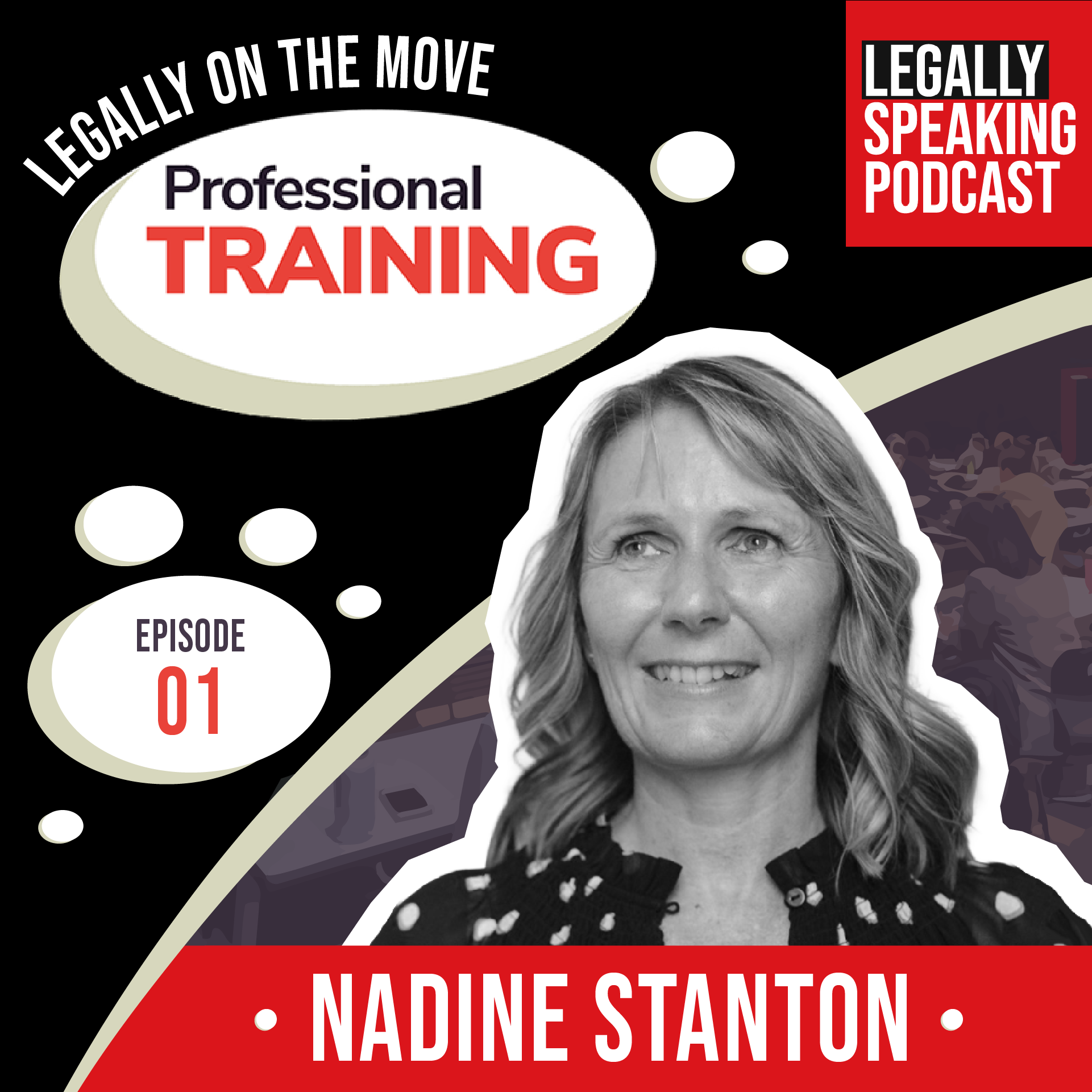
Welcome to the first episode of Legally on the Move: Professional Training, our brand new miniseries
On today’s Legally Speaking Podcast, I’m delighted to be joined by Ahmed Elnaggar. Ahmed is the
In today’s rapidly changing legal landscape, understanding how technology, personal branding, and innovative training pathways impact
On today’s Legally Speaking Podcast, I’m delighted to be joined by George Hannah. George is a
Ever wondered how technology is reshaping the way law firms operate and develop their lawyers? With

*DISCLAIMER* All episodes are recorded at certain moments in time and reflect those moments only. The podcast does not support or associate itself with any inappropriate behaviour or actions that may have occurred after recording.