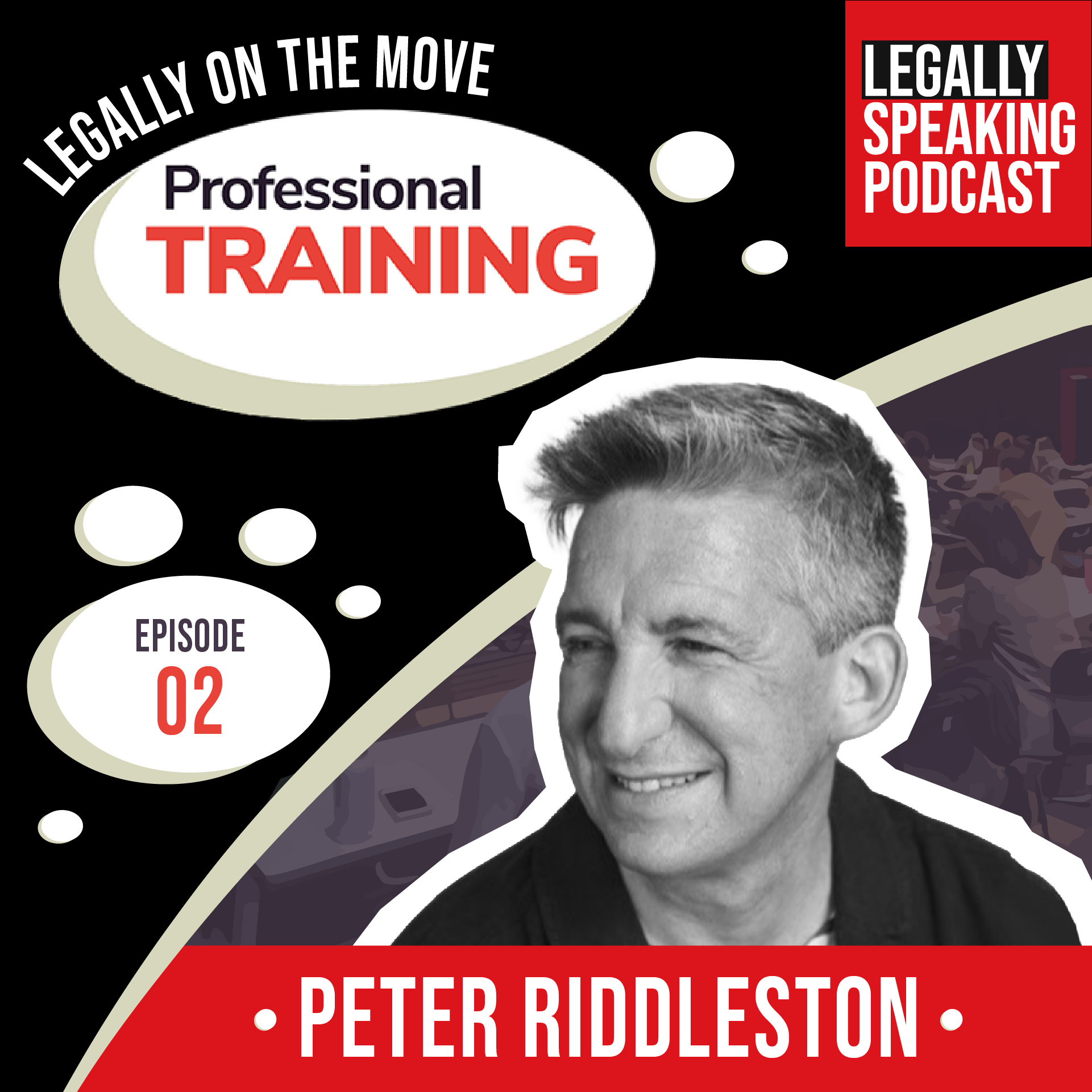
Legally on the Move: Professional Training – Peter Riddleston – E02
Welcome to the first episode of Legally on the Move: Professional Training, our brand new miniseries
Welcome to the first episode of Legally on the Move: Professional Training, our brand new miniseries which explores what makes high-performing teams in law, focusing on leadership, communication, resilience, trust, and psychological safety.
On today’s minisode, Peter Riddleston discusses the importance of high performance, which is often measured by revenue and utilisation. He focuses on the significance of understanding team dynamics and the role of purpose in driving success. In today’s hybrid work environment, leadership behaviours that foster collaboration and psychological safety are crucial. The conversation also contrasts cultures of accountability versus fear and highlights the importance of resilience and collaboration in achieving high performance, with Peter expressing a strong passion for utilising these themes at Lawnet.
You can Hear Rob and Peter talking about:
– High Performance Measured In Revenue And Utilisation.
– How Purpose is Absolutely Crucial Here.
– Being Deliberate is About Connection.
– Learning Experiences Improve Psychological State.
– People More Likely To Own Results.
Connect with Peter Riddleston – https://www.linkedin.com/in/peter-riddleston/
Transcript
Welcome to Legally on the Move, Professional Training, a brand new mini series from the Legally Speaking podcast sponsored by Clio. I’m Rob Hanna and in this exciting new series, we’re coming to you live from BMA House in London, where senior leaders from across the legal profession are gathering to explore a critical question. What really makes high performing teams in law? From leadership and communication to resilience, trust and psychological safety,
We’ll be speaking to experts and industry voices about what it takes to build teams that perform at their best in today’s legal world. So let’s get into it.
Welcome to the Legally Speaking podcast, name, title and organisation please. Thank you very much. I’m Pete Riddle-Stoun. I’m Learning and Quality Director at Lawnet. So I’m involved in all things learning, risk management and compliance, that side of things.
And it’s an absolute pleasure to be recording live as you can hear in the background here at BMA House for professional training conference down in London. Incredible event thus far. But today we’re talking about high performance and high performance is often measured in revenue and utilisation. In your own view, what is the most misunderstood driver of performance in teams? Well, I think it’s really interesting. You mentioned how we measure it. And I think we often think about high performance in those very individual terms. Yeah.
But for me, I think it’s important to put it in that team context. you know, actually, interesting thinking about our first speaker this morning who spoke a lot about purpose. For me, purpose is absolutely crucial here. Understanding why your teams work, how your work contributes to success and high performance. ⁓
Whether that’s in relation to results for the client, results for the team, and results for the firm, but also how it links into your own individual purpose and the firm’s overall strategy and purpose as well. That focus on purpose can really help improve, increase people’s performance in my view.
Yeah, and Emma Wiggs MBE was an incredible keynote and I loved her talk, start to finish. I loved that she talked about the three C’s in terms of, you know, being curious, having that context and the choices that we make, defining our decisions relating to high performance. Definitely go and check out more about Emma Wiggs MBE. So in the hybrid world that we kind of live today, what leadership behavior most strengthens collaboration and what quietly weakens it in your view?
That is such an interesting question, isn’t it? Because working in hybrid environments is so, different. And I think the starting point for me is being really deliberate about how you do things. And when I’m talking about being deliberate, the main thing that comes to mind then is all about connection. So connecting with people in a very deliberate way, and whether that’s through one-to-ones.
check-ins with people just to see how they’re getting on. It might not be about specific work issues, and I think it’s really, really important. And I think where it weakens is where you have the flip side, where you dial that communication down and you only communicate when you feel it’s absolutely necessary. I’d be looking for those opportunities for connection, seeking them, rather than thinking only about…
When do I actually have to communicate? I think it’s so true. And my listeners will be bored to me saying it that we’re not in this B2B, B2C, we’re in this H2H world, that human to human connection, that’s internally and externally, even more so with your people, which typically are your greatest products when you’re running an organisation. So couldn’t agree more. And of course, another important point we must talk about is psychological safety. You know, that’s widely discussed. So what does it genuinely look like inside a high pressure legal environment or in the business environment?
Again, a really interesting question. So psychological safety, obviously part of my at Lawn Out is around risk management. So we often talk about errors and near misses and how we learn from those. And one of those features for me of an environment where you have true psychological safety, one of the clues lies in how you deal with errors, claims, complaints, and the near misses. If those are dealt with positively,
So people know that they will be seen very much as learning experiences and you’re in a much better place from a psychological safety point of view because people will own up if something goes wrong. They’ll be willing to share a situation where something hasn’t gone to plan. So I think for me that’s one of the clear signs. I think your feedback culture as well. Yes. Having a culture where feedback is clear, honest, given in the right way.
so that it doesn’t demean the individual is a really ⁓ important factor. And I think another one is a good sign is that people are willing to manage upwards. So they are willing to share feedback, share comments with those who are in those more senior positions. So I think I’d be focusing on those things. And I love that it’s so open.
there as well. think that’s such an important point to mention around open, honest feedback. And another important thing we talk about in business is culture and you fear. So linking to that, what’s the difference of culture of accountability versus a culture of fear? So accountability for me starts with clear expectations. Okay. People know what they’re aiming for. Then they are, they’re in a much better position to actually achieve that. clear expectations, but not just the expectations.
But the why, why are people being asked to deliver at a certain level, deliver in a certain way? I think that’s really important. And that creates a situation where people are much more likely to own the results. Yes. That’s such an important part of accountability for me. And another thing, I mentioned this in my answer to the last question, where we were talking about psychological safety. Again, this is about how we deal with errors and mistakes.
If those lead to learning, for me, that’s another side that you’ve got real accountability going on there. Fear, I think, will perpetuate when you’ve got different standards, different levels being held by different people. In that situation, you’re not going to have clarity. And that lack of clarity, I think, can create fear. A blame culture.
It’s very much the flip side of the things that I was talking about. Where you’ve got that blame culture where people fear what will happen if they make a mistake and they’re honest about it. That is going to create that fear. it’s when people put their own position first. So you’re thinking, how do I safeguard myself? How do I protect myself in this situation? Rather than stepping forward and maybe owning up to an error or giving that piece of feedback to someone who is in a more senior position.
giving that feedback to colleagues, when you fear that and want to safeguard your own position first, I think those are the signs for me. a mentor said to me very early on into my career, Rob, on accountability, if it’s meant to be, it’s up to me. And I think having that self accountability is so important. And something else I’m very passionate about and why I’m here today is collaboration. I strongly believe collaboration is domination and particularly cross-functional collaboration between teams can be complex at times. So what have you seen when…
aligning different incentives and priorities probably leads quite nicely on what we were just discussing. Yeah, yeah, very much so. And collaboration is something that I’m very passionate about because it’s something that is absolutely fundamental, central to what we do at Lawnet. Our members collaborating with each other is absolutely key to the success of our community. But I think what it requires at that team level is for people to have common goals.
and a common purpose. I think when you’re too focused on those individual team or single team goals, then it’s much more difficult to create that collaboration. And I come back to Emma’s talk again, because she talked a lot about values. Yes. And having those shared values is something that really fuels collaboration, because you
You want people to pull in the same direction and then you’re much more likely to get that focus on results for the whole team, results for the whole firm, rather than that individual sort of more siloed approach. That’s what you want to be avoiding, I think. I agree. And I think one of the words that Emma used throughout her talk and a question what came at the end was the word we.
You know, she used that a lot. And I think, you know, I always always taught we is greater than me. And I think through these collaborations and things like that, it can definitely be a greater strength. Just for let you go a couple of quick questions, because today one of the key themes, of course, is resilience. And Emma talked to that in her talk. At what points does resilience become unhealthy endurance and how should leaders actually recognize that fine line? Resilience is a really interesting concept in itself, isn’t it? Because I often think about it as
the availability of resources that you can use to tackle a particular challenge. so that raises the question of when people are depleted, what kind of things are you going to see? And I think often the signs that a team is struggling are when people are, you normalise almost overworking. So that situation where people feel they always have to give more and almost afraid to leave their desks.
When you normalise that and that becomes the culture of how we do things around here, I think that’s a situation where I would be concerned that people are struggling with resilience. the others are, you know, maintaining high performance, but with an associated drop in energy. So, you know, a team might be still performing quite well, but if their level of morale and their level of energy is steadily going down, that suggests, you you…
you could be struggling on resilience in the medium to long term. And I also think it’s related to something I’ve already spoken about really in the sense of challenge and managing upwards. If people feel there’s no point in sharing feedback with their colleagues, there’s no point in managing upwards, I think that could be a sign that your resilience is potentially under threat. So you really want the opposite of those things happening from my point of view.
so that you’re seeing that people do have the resources to deal with the challenging situations and the things that they need to work it on. And I think a word that pops to my head, which was used again in Emma’s talk on that is the context, isn’t it, around those? And we are humans as well. We will go through different phases of life. I mean, it’s been a tremendous conference. know we’re quite early into it. Just before I let you go, though, why did you choose to attend the conference today? And what’s stood out to you thus far? So I think there’s great energy.
Yeah. You know, the start of the day was really obvious. The atmosphere feels really positive, which is brilliant. And I think Emma’s talk probably really helped with that. That focus on we, really important collaboration. And I think that’s one of the reasons that I chose to attend. I really enjoy that collaboration, but also that core theme of high performance is something that we talk about a lot at Lawnet.
that’s where we want to help our firms succeed. So today’s conference, well, it couldn’t really be more relevant for us. I couldn’t agree more. And I thoroughly enjoyed hosting you today, And if folks want to know more about LawNet or indeed yourself, where can they go to find out more? Feel free to tell our listeners and watchers where to find you and your best social media handles and websites. So we’re very active on LinkedIn. So look for LawNet on LinkedIn. We’ve also got our website, which can give people a lot of information. And we always say,
come and talk to us. We’re always happy to talk to firms that might be interested and suitable for law net membership. So that’s what I’d say. Well, thank you so much once again for joining me live here at the Professional Training Conference, all about high performance. But for now, for all of us on the Leaguespeed podcast, over and out. Thank you for listening to this week’s episode. If you like the content here, why not check out our world leading content and collaboration of the Legally Speaking Club over on Discord.
Go to our website www.legallyspeakingpodcast.com. There’s a link to join our community there. Over and out.
You may also tune in on Goodpods, Apple Podcasts, Spotify, or wherever you get your podcasts!
Give us a follow on X, Instagram, LinkedIn, TikTok and Youtube.
Finally, support us with BuyMeACoffee.
🎙 Don’t forget to join our Legally Speaking Club Community where we connect with like-minded people, share resources, and continue the conversation from this episode.
Sponsored by Clio – the #1 legal software for clients, cases, billing and more!
💻 www.legallyspeakingpodcast.com
📧 info@legallyspeakingpodcast.com
Disclaimer: All episodes are recorded at certain moments in time and reflect those moments only.
Welcome to the first episode of Legally on the Move: Professional Training, our brand new miniseries
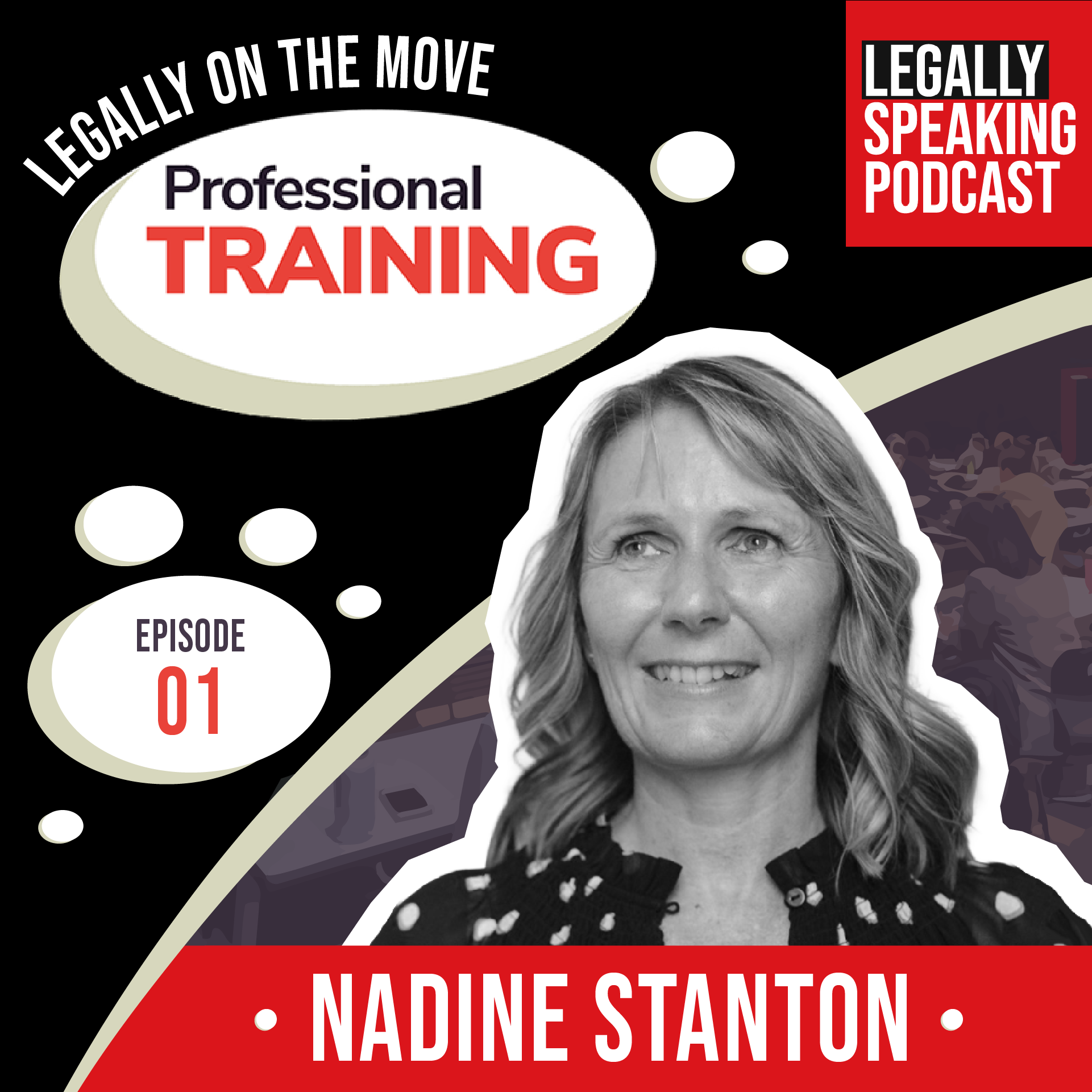
Welcome to the first episode of Legally on the Move: Professional Training, our brand new miniseries

On today’s Legally Speaking Podcast, I’m delighted to be joined by Ahmed Elnaggar. Ahmed is the

In today’s rapidly changing legal landscape, understanding how technology, personal branding, and innovative training pathways impact

On today’s Legally Speaking Podcast, I’m delighted to be joined by George Hannah. George is a
Ever wondered how technology is reshaping the way law firms operate and develop their lawyers? With

*DISCLAIMER* All episodes are recorded at certain moments in time and reflect those moments only. The podcast does not support or associate itself with any inappropriate behaviour or actions that may have occurred after recording.