
The Legal Rebel Who Took on Big Law & Built a Dynamic Litigation Powerhouse – James Oldnall – S10E12
On today’s Legally Speaking Podcast, I’m delighted to be joined by James Oldnall. James is the
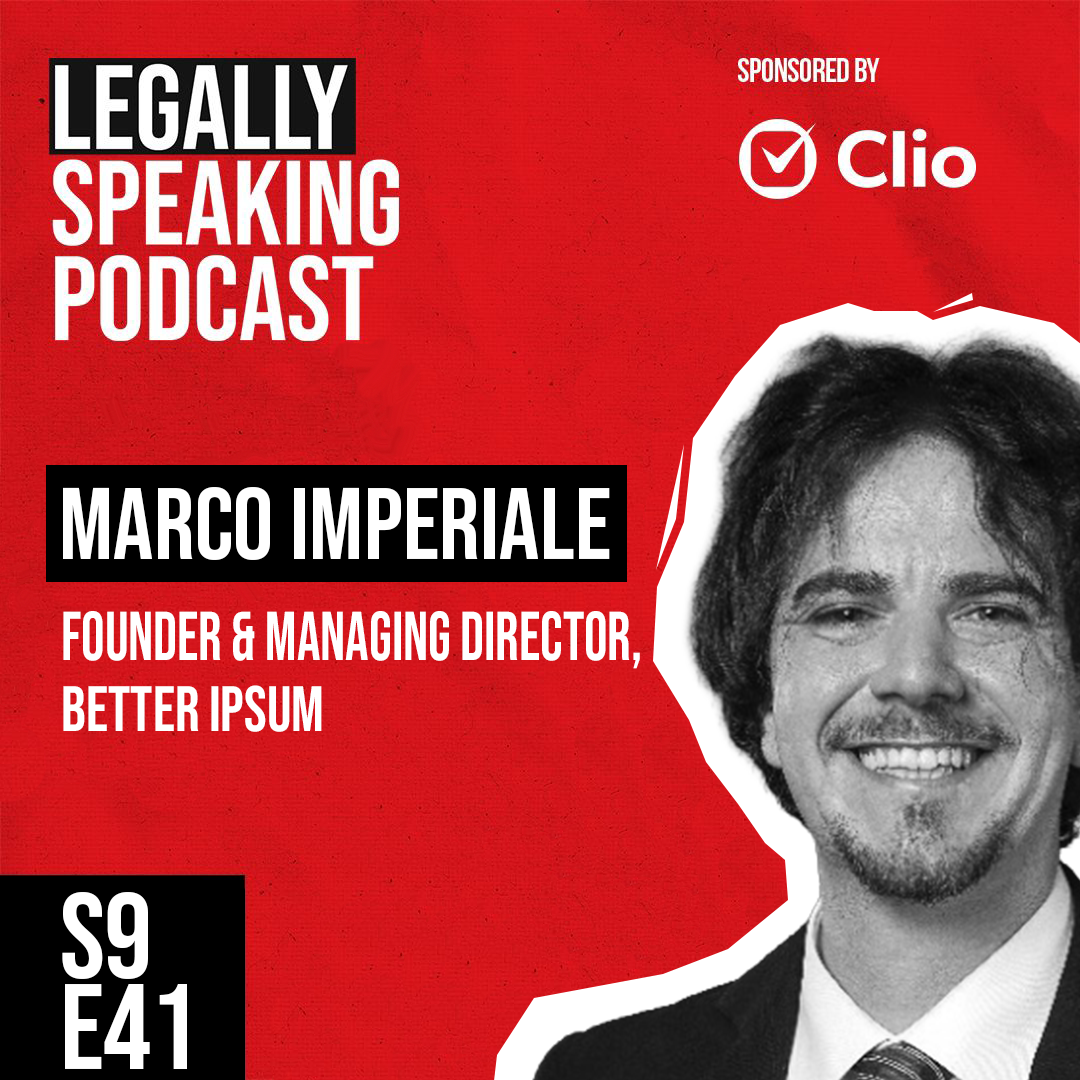
On today’s Legally Speaking Podcast, I’m delighted to be joined by Marco Imperiale. Marco is the Founder and Managing Director of Better Ipsum. He graduated with a Master’s from Harvard Law School in 2016. Marco was an entertainment and copyright lawyer, before becoming the Head of Innovation of a leading Italian law firm. Marco now sits as the President of the Wellbeing Committee.
So why should you be listening in?
You can hear Rob and Marco discussing:
– The Evolution of Legal Design: Embracing User-Centric Services
– Navigating the Intersection of AI and Legal Innovation
– The Importance of Flexibility in the Legal Profession
– Mental Health and Well-being: A Priority in Law Firms
– The Role of Legal Design in Enhancing Access to Justice
Connect with Marco Imperiale here – https://it.linkedin.com/in/marco-imperiale/en
Rob Hanna (00:01)
So a very big warm welcome to the show, Marco.
Marco Imperiale (00:05)
Hi everyone, it’s great to be here.
Rob Hanna (00:07)
it’s great to have you on the show. Love your energy. And we’re talking lots off air. So really excited for today’s episode. But before we get into that, we do have a customary icebreaker question here on the Legally Speaking podcast, which is on the scale of one to 10, with 10 being very real, what would you rate the hit TV series suits in terms of its reality of the law on the scale of one to 10, if you’ve seen it?
Marco Imperiale (00:33)
Well, as any lawyer would say, it depends. I mean, if you think about structured law firms, I think it’s seven to eight. If you think about small law firms, it’s probably three to four. If you think about UK and US, it’s closer to seven or eight big law firms, but it’s not the same in other countries. So it really depends. But I’m a big law kind of guy. I work with them, and so it’s slightly more towards seven, eight.
Rob Hanna (00:59)
There we go and a good cross sectional answer. with that, we can move swiftly on to talk all about you. So to begin with, Marco, would you mind telling our listeners a bit about your background and career journey?
Marco Imperiale (01:10)
Oh, wow, how many hours do we have? I mean, you know lawyers when they start talking, it’s just going on and on on. you know, luckily I’m not a lawyer anymore. So, you know, I was a lawyer once, but I have a company and they provide services to law firms, legal departments, institutions, and the company is called Bederipsum. And we work in legal design, legal operations, legal innovation.
Rob Hanna (01:12)
Not enough.
Marco Imperiale (01:37)
legal well-being, everything that is kind of new, fresh and dynamic in the legal field, we are probably in that or someone is asking, you know, something about it. So that’s pretty much it. I am also the president of the Well-being and Mental Health Committee of Unión Internacional de Zavocá. ⁓ I have written recently a book on legal design for global law in business. And here it is.
Rob Hanna (01:42)
We are probably in that or someone is talking about it. So that’s pretty much it. I am the president of the World Economic Council, the chief of the International Economic Council. I have recently had full time legal design for global economic development.
Yeah, and I love that. Let’s sort of go back to the earlier days for you because we’ll definitely get into all of that good stuff as well. What drew you to a career in law originally and what inspired you to sort of pursue a career as a lawyer?
Marco Imperiale (02:18)
I wish I could say, I’m sorry, I hear a little bit of echo of my voice. So if I am slightly detached, it’s not because I’m unfocused, it’s just because of the echo. But I will try to be as focused as possible. And that’s why I will probably close my eyes, which is not very good for your audience. So ⁓ I wish I could say, you know, I was inspired by great lawyers like Andy or…
you know, the rule of law, whatever, but truth is…
The law school was the easiest choice for me after high school. It was Italy, so lots of exams that were oral exams, I always loved speaking with people and engaging and interacting. And plus, you had to learn lots of rules by heart, and I’ve always had a good memory. And plus, was full of people, and so it was not kind of, know, 2030, was kind of, know, 1,100. ⁓
students in the law school on University of Bologna. And that’s what why started it was kind of, you know, let’s, let’s start law school and then figure it out. And so I did a thesis in philosophy in the United States, the University of Carolina at Chapel Hill. I was a musician at the time. And my first job was becoming a corporate attorney, same a lawyer to help my peers because they were asking me support about contracts and
⁓ policies, how to ⁓ negotiate with agents and so on and so forth.
Rob Hanna (03:57)
I love that and I want to dig a bit deeper onto those days as an entertainment and copyright lawyer as you mentioned because you work for stadium artists, booking agencies, labels, media companies. What were some of your memorable cases from back then?
Marco Imperiale (04:13)
Wow, I mean, the most memorable case is something I can’t tell because it was a stadium artist ⁓ dealing with an insurance company because of a tour that did not happen. So was very tough negotiations, very sensitive data about what was happening with the artist and the health of the artist. So I cannot get too much into details, but there was a very kind of big moment because I was a…
young lawyer, I was just finished my trainee years at the law firm and you have this kind of, know, million dollar case with Stardom Artists about the tour that did not happen and then you’re, you on the case and it’s exciting. It’s exciting. But, you know, I could speak for hours about tours, you know, negotiations with labels. You know, I’ve seen artists delaying
You know, the release of an album for 12 months because of a couple of lines in the contract. This is not something you expect as an outsider in the artistic world. But when you get to the point that it’s a business, the music business and the entertainment business are businesses and your idols are in the business, you think about what’s happening in a different way. It’s not about art anymore and it’s about making this
as much money as possible. How can I monetize on fans?
Rob Hanna (05:38)
Yeah, and it’s
Exactly. you know, business is business in some respects as well. And if people have put a lot of time in there to their creativity or into whatever their work of art, if you like, then, you know, of course there is going to be a lot of negotiations and things behind the scenes and hence leaning on legal teams to create the right deals. Okay. Now I want to talk about sort of moving away from the traditional career path, because what was the moment you realized traditional legal practice was no longer for you and you wanted to build something different?
Marco Imperiale (06:10)
That’s a very interesting question. So it was not a black and white moment. It was kind of a gradual path. So imagine I leave Boutique Law Firm, one of the biggest ones in my country, I launch myself as a solo lawyer, you in order to stay with the artist and deal with the artist. And then I realized that the world is going fast. The world is going very tech, very data oriented. And so I decided to take a sabbatical. And, know, the sabbatical in my case, it was not a normal sabbatical because it was
Three months in Scotland, doing Pupilage, one of the smartest baristas who advocates in Scotland and supporting lords in their daily practice. Then my first Camino de Santiago, which by the way, I’ve done 11 times. And then my master at Harvard Law. So I decided to use my sabbatical in order to strengthen my skills. And so after the sabbatical, I just realized…
But it took me one year to realize that what was happening in the legal field was very similar to what happened in the music field in 1999 when Napster came. So Napster arrives and people are not interested in paying for music anymore. They are interested in playlists, and playlists have a specific value. They are interested in…
Rob Hanna (07:12)
What was happening in the music field in 1999 with Numpter. So Numpter arrives and people are not interested in paying for music anymore. They are interested in playlists and playlists have a specific value. They are interested in
Marco Imperiale (07:33)
connecting with the artists and that’s why you pay for synchronization, merchandising, concerts and so on and so forth, but not intending to pay for music anymore.
Rob Hanna (07:34)
connecting with the artists and that’s why they pay for music But then, if any people for music anymore.
Marco Imperiale (07:42)
So that value dramatically changed. And I mean, we’re speaking about 1999 and 2003, it’s iTunes, 2018, Spotify, so I could speak for hours about that. I also wrote articles on the topic, but the idea is that if you are hiring a lawyer for knowledge,
Rob Hanna (07:46)
And I mean, in about 1989, I also would argue that if you are having a lawyer,
Marco Imperiale (08:03)
You know, that’s not something that the market is willing to pay for anymore. I mean, I realized that in 2015 or 16, and it took several years for AI to rise, you know,
Rob Hanna (08:03)
that not something that the market is willing to pay for anymore. I mean, I realize that in 2015, and it took several years for AI to rise.
Marco Imperiale (08:15)
especially after November, 2022, you know, with GPT and, you know, now general purpose systems are used all over the world and billions of people are using them. But in 2016, it was kind of a leap of faith, know, tech is going to come and we have
reflect, you have to reflect about ⁓ what is the value that you provide to clients? Is it the trust, it’s the brand, it’s the secret sauce and can you define in a practical way what is the secret sauce? So this is it, I became the first head of innovation in my country, then I took a second sabbatical but at same time I was working for the firm.
So was a very hard sabbatical because I was still working and then I launched the Better Eapsum and the way I launched it is just, you know, if I have to start a company, I want to do it my own way. So it’s a fully remote company. It’s a benefit corporation. It’s very much into legal well-being, which I think is one of the, will be one of the main drivers in the legal profession. We try to have a very smart and how can I put it? Bottom-up approach.
So I’m the youngest, I’m the CEO of the company, but at same time, I’m the oldest one and I’m 40 years old. So we try to have a very dynamic and…
Interactive approach, you know, we work with contractors because we are also similar to a software house. Maybe we will do tools, maybe not. are, we have a very strong focus on your diverse talents and, and services. And that’s pretty much it.
Rob Hanna (09:55)
Yeah, and I love everything that you stand for with your organization and your mission because your mission is our mission is to support all stakeholders through this complex yet exciting transformation, helping them navigate the future with clarity and purpose really like that. So what is the meaning behind your mission? Give us a bit more.
Marco Imperiale (10:15)
I mean, I wish I could have a clear definition through this. I’m changing it every seven days. But the idea is making law and the legal world more human. And then you just have to reflect about what makes you human and how can we frame services that are more human. that’s not an easy answer to provide. I have a personal blog where I speak about blockchain and sense of life.
Rob Hanna (10:17)
haha
Marco Imperiale (10:45)
And this morning I wrote a blog post about the fact that maybe AI is coming to dehumanize us because most of the times I speak with my clients about optimization, efficiency, automation. And the more we go into towards that direction, the more we consider ourselves as zero and one, as data centers, as data points. And we are thinking about…
You know, entering in a battle with machines where the machines can already win. You know, they process data better than us. They manage numbers better than us. They can collect information better than us, but they don’t have that kind of instinct that, you know, a client comes to the lawyer and the lawyer thinks, client hasn’t told me, you know, all the truth. Same for a doctor, you know.
Rob Hanna (11:11)
know, entering between a bottle with machines where the machines can already win. All the process data that they manage numbers better than us, they can collect information better than us, but they don’t have that kind of instinct that the client comes to your account.
Marco Imperiale (11:38)
there are all these elements that leading you to a specific kind of outcome, but your instinct is telling you, And so it’s not a tech-driven company. It’s not a tech-driven mission. It’s a mission to reach our goals, whether with AI, without AI, with tech or without tech. And…
I think that the legal world, whether we speak about general councils, law firm partners, institutions, is facing so many challenges. It’s a very exciting moment and it’s a very scary moment. And we tend to underestimate the fact that we are overwhelmed about data, about information, about numbers. And our brain is not able to cope with all of these and to focus on all of these. So we’re kind of in the wave and it’s pretty tough for us to have.
long term goals and long term purposes. And at the same time, everything that’s happening around the world in terms of AI, in terms of geopolitics is influencing our work as lawyers.
Probably to cut it short, otherwise I speak for hours, but it’s creating flexible products, flexible services and…
flexible approach towards what we’re doing. So creating a flexible company, that’s probably the best definition that I would provide to you. Why? Because prompting six to 12 months from now will be probably dead or dead as we know it. And context engineering pretty much the same, vibe coding pretty much the same. But the idea of flexibility, the idea of
shifting from being a service company to a learning company that is not changing. And that’s very exciting and it’s very difficult. And the Zen word which I love, when the snowstorm comes. ⁓
Rob Hanna (13:38)
And that’s very exciting and it’s very different. And that’s an word which I love. When the snowstorm comes.
Marco Imperiale (13:52)
The big tree is cut down in two, but the bamboo that is flexible still stands because it’s flexible. So how can we be still better hips on five years from now, 10 years from now? I don’t know which kind of products we will sell. I don’t know which kind of relationship we will have with the clients, know, co-creation, service providing tools. I don’t know. And I’m also skeptical about everyone that says three to five years, that what would be like that, you know, because I think that ⁓
Rob Hanna (13:52)
The big tree is cut down into, but the bamboo that is flexible still stands because it’s flexible. So how can we be in a field better than five years from now, a year from now? I don’t know which kind of to clarify in, know, in creation, service providing, to, I don’t know. And I’m also skeptical about everyone that may be 35 years old or something like that, you know, because I think that
Marco Imperiale (14:23)
Acknowledging of being aware of your limitations, especially considering everything that is happening around the world. It’s a matter of being wise. It’s not a matter of, you know, being dumb.
Rob Hanna (14:33)
Yeah.
I love that. And thank you for being so refreshingly open and honest and human as which is, I know something you, you really sort of, you know, are passionate about. And I agree with you, you know, there are certain unknowns, but adaptability is a word that I kind of get from that, you know, being adaptable to the environments, you know, the only constant is absolutely going to be change and continuing to be as client centric as possible. And look what you’ve built with better. Ipsum’s fantastic.
And again, just in terms of being human and open with our listeners, because everyone will see your impressive experience, your amazing background, but it’s not easy to get there. Right. And it’s not easy to kind of build these things. So what challenges have you faced and how have you been able to overcome them when building out your business?
Marco Imperiale (15:16)
so many, I could speak for hours about
challenges. I think that the first and most important one, which is also related to my character and my attitude because it’s somehow some way, you know, if you’re creating a company, you know, that reflects, you know, your mission and your purpose is that ⁓
if you see things in a unique way and you’re kind of convinced that that’s a blessing that the universe gave you and your mission in the world is just being strong and stubborn in that perspective and hope that some other way someone will notice it. I think that the biggest challenge is being a magnet and not a chaser. So…
Rob Hanna (15:33)
if you see things in a unique way and you are kind of convinced that that’s the blessing of the universe gave you and your mission in the world is to keep things strong and stubborn in that perspective and of course in a modern way some of you notice that I think the biggest challenge is being a mad technobot tracer
Marco Imperiale (16:01)
If you have a company like Baderism, it’s pretty easy to say, okay, let’s look at all the companies that have these hundred millions of dollars of revenues, have innovation ads, sustainability ads, they are into A, B, and C, working, cold call them, or work with several other players, several agency in order to reach them as clients. And I thought about that, it will be way more convenient, especially in the short…
to midterm, but the kind of relationship that you have with them and that you develop with them is not the same as the relationship that you have with clients that come to you. Because what you’re asking to clients is thinking and acting in a different way. You really want to co-create with them. And if you want to co-create with them, you gotta have on your board clients that are willing to take that quantum leap. So that’s very hard. So because…
Rob Hanna (16:42)
you you
Marco Imperiale (17:00)
you have to be strong and still and be ready to face all the problems that your company may have, whether in terms of cash flow, revenues, investors, whatever, and say,
Rob Hanna (17:12)
Yeah.
Marco Imperiale (17:12)
if you really believe in that, clients will come and we will work them and creating something that others may consider as an inspiration. And that’s very easy to say, but when you’re waking up and you have bills to pay and…
you know, in taxes, whatever that you may face as a company, that’s the hard part. You know, so everybody loves to be a magnet, but no, but I would say nobody, but most of the people that I know, most of the professionals that
I know are not willing to pay the price of being magnets. And if you want to be a chaser, good for you. But especially if you want to do something that it’s really groundbreaking, it may be counterproductive.
And that’s a big challenge.
Rob Hanna (17:59)
Love that and such a hard
It’s a big
challenge, but it’s also a reality check. And I think it’s refreshingly again, hard hitting answer because that’s what we want on the show. want, know, people’s reflections who have been there, done that, sharing their lessons, their sort of opportunities. I always talk about the acronym LOOSE, you know, you never actually lose in life. It’s just life offering some experience. And I strongly believe that because from every opportunity and every
Every circumstance you can always learn from something can move forward and talking and learning. And now I want to move to your Harvard and legal design days because you lectured at Harvard Graduate School of Design. What did you most enjoy about teaching on the course when it comes to legal design there?
Marco Imperiale (18:36)
Oh, I mean, it was just a small J term course at the graduate school of design because it’s, oh yeah, you took the Harvard. I mean, I graduated at Harvard. went as a visiting scholar there during my visiting scholar year. I had the opportunity of doing a JD term. And at the end of the day, you just enjoy working in legal design with students. That’s what you enjoy the most and say, oh, about redesigning this contract. How about…
know, reflecting on what legal design is for you. And because of the fact that it was not the law school, but the graduate school of design, it was also kind of, ⁓ so we have designers here. And the GSD is way more into structural design and architecture than it’s into, you know, information design or graphic design. So it was a really good challenge in terms of structures of the document and customer.
client user experience. But at the end of the day, it’s just telling them what legal design is because most of the people living in the design field don’t know about legal design and creating something together, hopefully following a specific methodology, but reminding them in the same thinking, even the methodology can refine itself. So it’s very challenging. And then love.
Rob Hanna (19:33)
At the end of the day, it’s telling them what legal design is because most of the people living in legal design feel somewhat of a legal design and creating something together, hopefully following the specific method, never mind it being in the same thinking.
Yeah.
Marco Imperiale (19:55)
I’m lecturing at Polymoda, I’m still lecturing copyright with the Bergman Center and Harvard school courses that are doing pro bono school copyright Excel over the world. And I’ve done hundreds of classes. I love staying with students because I’m the one learning the most, especially now. And when I
speak with clients, especially
They’re scared when I tell them that that’s tabula rasa after 2022. After GPT, we are learning. am, Marco, I am the one learning how to use Claude. I’m the one learning how different versions of GPT reply. I am the one testing the products. I am the one working with Gemini. I am the one learning. And there’s a 20 year old.
you know, guy in some campuses that learning better, faster, smarter than me. And so I may have culture about data, I may have culture about processes, may have culture about people, I may have culture about collaboration among departments, I may have culture about law firms. But when we speak about learning that specific tool, they may know better than me. And so it’s my challenge to engage them in a smart way.
Rob Hanna (20:53)
better, faster, smarter than me. And so I may have talked about that, may have talked about trust, I may have talked about people, may have talked about collaboration among departments, I may have talked about workers. But when we speak about learning that specific tool, they may know better than me. And so it’s my challenge to engage them in a smart way
and…
Marco Imperiale (21:20)
and ⁓
involving them so that there’s not so much difference between me and them. And that’s something that law firms find a little bit threatening because, you know, especially if you’re an equity partner earning millions of dollars or millions of pounds if you’re in the UK here, having someone that can provide a very similar product for a fraction of the price, it’s threatening.
Rob Hanna (21:39)
I think someone that can provide a very similar project or programme advice than me.
Very much so. you know, that’s a great point you mentioned. I also talk a lot about the importance of 360 mentors, having someone above you, someone at the same level, but someone beneath you and like you referenced there, these next generation people coming through who have got lots of skills, lots of talent and sort of bringing out and nurturing that it’s wonderful. You talked about legal design again, just for folks within our audience and our community who may be less familiar.
What’s your definition of legal design?
Marco Imperiale (22:13)
Well, there’s a chapter in a book that is called A Definition or Many Definitions. So if you ask 10 legal design practitioners all over the world, they will probably provide you 10 different definitions. I do believe it’s a discipline for the creation of user-centric products and services. That’s pretty much it. It’s a matter of bringing in the legal world the mentality that Amazon, Uber, Airbnb, Netflix, they’re developed in
all over the years. So creating something starting from the consumer, the user, the client and going backwards. And then you have lawyers that are, ⁓ yes, but we do legal design. We really listen to our clients. And then just no, because co-creating is different than listening to them. And even if you think you listen to them, you really don’t listen to them.
How many of you have done structured feedback forms? How many of you have done co-creation sessions? How many of you have reflected about how the clients perceive what you provide? How many of you have also reflected about how the clients sees or receives, analyze the information that you provide them? And once you get into that loop, you realize that you are really way behind and you are thinking you are providing a tailor-made client-centric service.
And you are very, very far from that. Maybe you are a verbal thinker and your client is a visual person. Two thirds of the population are visual thinkers, but most of lawyers and journalists are verbal thinkers like politicians. Maybe your client is neurodivergent and, or maybe, you know, you’re speaking about num, this Calcuria is a form of neurodivergency. And so maybe your clients, you know, cannot process numbers and you’re providing a long list of numbers.
Rob Hanna (23:54)
you
maybe
Marco Imperiale (24:10)
Maybe your client is ADHD and you’re asking them to be focused in an eight-hour session or reading 60 or 70 Times New Roman, 12 pages. I mean, could go forward, but
the idea is that legal design is not something that is for legal designers. Legal design is something that is for lawyers because the more we reflect about language, the more we reflect about communication, the more we reflect about engagement with the clients, we can become better lawyers.
And okay, I can speak for hours, but the idea is that there are several layers, at least in my experience of legal design. And once you reach the top level and you enter into impact analysis of what you are doing, then you enter in the KPI and ROI of contracting, KPI and ROI of legal design. And the scenario changes because you are providing criteria in order to see the success and see what’s working and what’s not working or what you’re doing. It’s a different way of looking at the legal world.
And it’s a different way of looking at your services.
Rob Hanna (25:13)
Yeah. we like that. And that’s what we encourage here on the show is to kind of expand people’s minds and create new ways, new opportunities. Cause you know, if nothing changes, nothing changes and the world is changing and you need to be adaptable. like you said,
flexibility back to your mission point earlier. And you gave some really practical tactical insights there. So thank you ever so much for that. And now I want to talk more about your book, because you published it recently and ⁓ practicing legal design. So what was the inspiration behind your book?
Marco Imperiale (25:33)
⁓
Yep.
All desperation behind my book is probably just the publisher that comes to me and say, I’m publishing a book. in my life, my life is a series of why not. I have many episodes and experiences of, it’s very hard for me to say no. It’s funnier to say why not.
Rob Hanna (25:48)
You
Marco Imperiale (26:07)
And how about doing delivery in this workshop for our clients? Why not? How about ⁓ doing an article on this topic? Why not? How about making a book that is more about the practice and legal design than more about the theory of legal design and say, not? But ⁓ if we are doing it, I shouldn’t say it’s going to do my way because it’s always a matter of collaborating and conversating with editors. But the idea is…
Rob Hanna (26:22)
So, I’ll see you guys next time.
Marco Imperiale (26:33)
We got to provide something that it’s really practical. And so there are some chapters about the challenges that we face. Some about ⁓ why things are not working the way they should. And why everybody’s speaking well about legal design, but why there are no projects in practice. So I really get into the things that we don’t say in the field. ⁓
don’t think that there’s a book in the market with a specific methodology and this book has, and I don’t think that at the moment in the market there’s a book with chapters about legal design and artificial intelligence. And also because AI came, especially generative AI, not AI because AI is there since 1960, but generative AI disrupted the market and ignoring that, if you’re writing a book, it’s counterproductive. ⁓
And so the idea is it’s a four part book. First one is about the ontology of legal design. We decided to put it there because especially partners, general counsel is slightly less, but especially partners don’t know about legal design or they think they know, but they don’t really know. And the second chapter is about disciplines that are, areas of law that are.
Rob Hanna (27:56)
basically the desire for areas of law that
are kind of related to the government.
Marco Imperiale (28:00)
kind of related to legal design but are not
legal design. Gamification, dark patterns, sustainability. ⁓
which is a three-layer framework that we developed, and it’s called the Leonardo framework. And after each part of the book, there’s an interview with a key player of the legal design industry. And even if they’re not legal designers, one of them is Michael Doherty, he’s the first professor of legal design, Sally Gouyer, CEO of World Commerce and Contracting, Matthew Berderick, that is the typography for lawyers, mastermind, but he’s also one of the smartest copyright lawyer I know. And last but not least,
Ashley Ragoz and Macklin Starley, who are ⁓ not only great lawyers, but are also influencers with the Lawsays What. think that they have, you know, one million plus people on TikTok following them or something like that.
Rob Hanna (29:22)
Yeah, it’s incredible and so high valuable and content rich and thoroughly thoroughly enjoyed it. And I know lots of people who will hopefully check it out after this podcast will too and get serious value from it. I want to go to the third part specifically, because you touched on it there and go a bit deeper because your book has been described as a comprehensive guide to improve
implementing
legal design in law firms and legal departments, and it’s engagingly written featuring real world examples and challenges. So how did you balance that sort of theory with the practical realities lawyers face every day? Because that’s going to be the heartbeat of this and we’re trying to increase adoption.
Marco Imperiale (30:02)
I mean, the short answer would be being transparent, but don’t name clients and episodes. So the idea is that everything that you see here is real, but we decided not to mention the clients or the corporate providers that were involved in order for them not going to approvals and you know what happens. So, and it’s kind of the manual instruction of the IKEA. you go and then you play.
Rob Hanna (30:11)
Yep.
Marco Imperiale (30:32)
So when I say, you want a successful legal design project, the first issue is the budget, because everybody loves legal design and there’s the budget. And then it’s not a priority. And so how can you put this as a priority? Or go for the evangelists, which are your key players in the organization. It can be a trainee, can be a general counsel, it can be the CEO, the CFO, or it can be just an in-house counsel. But the idea is that without the evangelists,
the process will not move forward. Everything that I say is coming out of experience because I’ve seen, you know, in my life, projects suck for months. And I know that if you don’t tell someone inside, the project is not moving forward and you can send mails. And especially now, where most of the legal departments and the law firms are just AI, AI, AI, AI, AI, AI, nothing else really matters. Then you should reflect about the fact that
First of all, how can you measure legal design and AI? And secondly, how can you make this a priority in a legal department that has other priorities at the moment? And you can tell whatever you want, but if they don’t perceive it as a priority, it’s not a priority. I’m sorry about that. know, the business is business. And if you sell empathizing with the client as an asset,
Rob Hanna (31:48)
No, yeah.
Marco Imperiale (31:56)
you should empathize with them and probably they’re right.
And what I see now in the, especially in the software community, more than in legal design community, is that you have software and project managers and engineers and other scientists that are just selling lawyers who are wrong. And lawyers that are just, yeah, you’re telling us about the end about the biddable hours since 1980s. You’re telling us about the ICC years. And you know what? Nothing is changing. And I think that a better
active listening on both the ends could really help law firms to be a little bit more forward thinking and developers and data scientists and engineers to be better listened because they struggle with the fact that this project cannot move forward because of A, B and C and D. And the idea is where the other party shows and maybe your project will benefit.
Rob Hanna (32:34)
and developers and the engineers, because they struggle with that. Love that.
Yeah. I always say, and even when it comes to negotiations or anything, it’s not necessarily about you. It’s about them, you know, and the benefit to them.
I love that lens in terms of the way you look at things. So AI, AI, AI, as you say, how do you see then specifically AI and tech interlinking with legal design?
Marco Imperiale (33:17)
That’s a one million dollar question. And I say this against myself.
Rob Hanna (33:19)
You
Marco Imperiale (33:26)
And we spoke about it, I was at the Legal Design Summit, also managing a workshop with Antin, and he’s a great mind, he’s the head of DOTPLUS and Legit, and we were working about agents for legal design, AI agents for legal design. And at the Legal Design Summit, all of us, the speakers, the people, the attendants, all the legal design community, just kind of tight.
ask this question to ourselves. And I think that we have two options. The first one is that we have to embrace AI and if we don’t embrace AI, the risk is collapsing and you know.
Rob Hanna (33:58)
think that, yeah.
Marco Imperiale (34:09)
In 2017, everybody was speaking about ICOs and nobody’s speaking about ICOs anymore. and I think that I’m still believing that blockchain is changing the way we structure information, the way we process information and transactions, but it’s not the password anymore. And there was a time where legal design was a password and it’s not a password anymore. At the same time, if you think about what legal design can do in terms of plain language, what legal design can do in terms of
Infographics, what legal design can do in terms of creating customer personas without going for the real personas and so changing your project. That’s the real challenge. So the idea is artificial intelligence will probably help legal design being a legal design 2.0. I don’t know if we will gamify the law. I don’t know if we will… ⁓
restructure the way we interact with citizens and consumers and clients. It’s very hard for me to say that. I think that it’s great opportunity in front of us. And if we don’t jump on that wave, if we don’t ride that wave, there’s a risk of disappearing because you’re just selling bicycles in a world that has just car roads.
roads for cars and everybody has a car and everybody will bend and then just you know what my technique can make your car smarter and so I’m I think that the more we are into bicycles the more we should be aware that the roads we are on which have with the death bicycles and cars three years five years from now won’t be for bicyclists anymore it only be cars
Rob Hanna (35:57)
Yeah.
So it’s just, can we use the technical device, the bicycle principles of the bicycle, make faster, better, know, less difficult to make cars?
Marco Imperiale (35:59)
And so it’s just, can we use the technicals, the bicycles, the principles of the bicycles to make faster, better, know, less polluting cars?
And I believe that, yes. So that’s why I speak about principles of legal design. That’s why I speak about theory of legal design, because the idea of having customer-centric law has never been more relevant, never been more real. The idea of having real access to justice has never been more real. Now think about…
you know, all the communication issues you have. Think about the United States and maybe, you know, you’re an immigrant and you don’t speak English and ⁓ think about online translation. Is this a way of making customer centric services? Of course, yes. And think about what you can do now with AI. So the principles of having, you know, more human law, more human laws.
KPI and ROI of contracting are still there and never be more real, but we have to evolve. And that’s very hard to do in practice. It’s very easy to say, but it’s very hard to do in practice.
Rob Hanna (37:06)
Yeah, and such a wonderful answer. And I’m just sat here sort of nodding in agreement with you. And it comes to mind. Firstly, I’ll just give Mia a shout out from the Legal Design Summit. Great with her. And she’s been on the show multiple times. did an interview with her earlier in the year with Legal Tech Talk. So go back and listen to her episode. And we’re hoping to take the show out there soon as well to be part of the next Legal Design Summit. So it’s wonderful. And I loved everything you got up to.
This year, that’s for sure. And just, guess one thing that came to mind is the Henry Ford quote, I’ll butcher this, but I’ll kind of paraphrase it in terms of the lines that he said, if I’d asked my existing customers what they wanted, they would have said faster horses. And of course it was the automobile. was the breakthrough in the innovation there. And I think there’s a lot of learnings we can take from that in terms of thinking and innovating differently and understanding the inadaptance and where the puck is going and the exciting times ahead. Just want to switch lanes now very briefly, because I know something else you’re very passionate about is mental health and
and wellbeing because you are a president of a wellbeing committee. So I’d just love to learn some of the initiatives you’ve actually been part of and maybe some ideas you could help others that might be wanting to do good work within the wellbeing space.
Marco Imperiale (38:10)
I mean, I think it’s very exciting and very scary at the time because…
I say 10 years ago, was the mindfulness chicken guy and everybody was, I know, I had long hair, know, motorcycle, you know, so I was kind of the hippie in the ferment and everybody was okay. That’s Marco stuff. And after COVID, was, us your secrets. Why are you balanced? And everybody’s going nuts. And ⁓ now five years after COVID,
It’s even worse because we are just thinking about well, being as a pillar of our profession, especially because now we speak about money, because we are thinking about what’s the cost of associates burning out? What’s the cost in terms of talents not jumping on your firm because they’re required to do 2,400 billable hours on training contract? What’s the cost of a client that is not… ⁓
working with you because you’re not providing a social report and so equity partners are just, now well-being is an issue and a priority, but the mind of the lawyer and the way lawyers work, especially in big firm and big companies is exactly the opposite of what well-being requires because we are perfectionist and we are required to prototype, we are pessimists and we are required to be optimist. ⁓
Rob Hanna (39:32)
because we have a part of the optimist.
Marco Imperiale (39:41)
We are very individualistic and we are required to be collaborative. We are very high hierarchy and we are required to be bottom up. So what does it mean in practice? It’s basically a big clash. And so in terms of opportunities, I think that the first thing is ⁓ making people aware, whether it’s, you know, there’s the Congress in Guadalajara, next year in New York, we will have two days about legal well-being and we will call general councils, law firm lawyers.
Rob Hanna (40:06)
general council for more than a whole year.
Marco Imperiale (40:08)
hopefully also next generation lawyers in order to speak about strategies to cope. But I think that more than providing solutions
Rob Hanna (40:09)
Hopefully also next year or eight years, I’ll be speaking about the, you know, the ROTC school. I think that’s more than solutions to that.
Marco Imperiale (40:20)
is just making partners reflect about the relevance of this matter. And okay, I shouldn’t say this, but we are very transparent in this podcast. The only way you can succeed in law firms and companies is speaking about money.
So, you know, it’s just how much money you can save and how much money you’re losing if you’re not taking care of this topic. Because if you speak about mindfulness and Zen and Spal, it’s just, okay, that’s a law firm. That’s not what we do. If you think about what’s the cost of doing that, what’s the cost of not sleeping at night? What’s the cost of an entire department not sleeping at night for several months? And have you thought about the fact that clients are paying you for intellectual services?
If your mind is not working, I’m sorry. You know, you can be reactive for the first couple of months, the first three months, the first four months. You cannot create a career about that. the devil is in the details. Nobody’s speaking about the posture. Nobody’s speaking about the fact that we are spending, you know, 10 hours straight on a chair.
Nobody’s speaking about the fact that we are sleeping pretty badly at night. Nobody’s speaking about the fact that we don’t speak about that kind of stuff. And okay, you can put a psychology professional in a law firm, but nobody’s speaking about the fact that the associates won’t tell anything to that professional because they’re afraid of this person speaking to the partners. And so the idea is how can we make a sustainable legal profession? And well-being is such a wide topic.
Rob Hanna (41:39)
And okay, can put up psychology in a program, but nobody’s thinking about the fact that they’re not going to tell anything to that professional because they’re afraid of this person. So the idea is how can we make a sustainable, big enterprise? And we’ll be in touch with why,
how big, because whether you’re a penny, whether you’re a single, not a few, whether you’re a big money, not a big firm,
Marco Imperiale (42:02)
because whether you’re a trainee, whether you’re a single man with two kids, whether you’re an equity partner in a big firm, whether
you’re a general counsel, whether you’re young in-house counsel, it will affect the way ⁓ you do your job, the way you’re being a lawyer and everything that is happening in the legal world right now.
artificial intelligence and lots of norms and geopolitics is making our mind chaotic, but nobody’s telling about the fact that being against innovation in this kind of world, it’s the perfect storm. And I try to speak about that. I will you see, you know, double digits rising in terms of depressions, alcohol, drug abuse, suicides, whatever. It’s an emergency. And I really care about that. Same for neurodivergence.
You know, 7 % 2025 Garner report of your clients are neurodivergent, which means that if you don’t take this into account, those persons will struggle, will mask in their professional life. And that’s bad for them and bad for the firm. Maybe not in the short term, maybe not in the midterm, but if you really want a sustainable law firm and if you really want your people to speak well about your law firm where you’re going…
Rob Hanna (43:04)
which means that if you don’t take this into account, those persons will struggle with us in their private lives and that’s bad for them and bad for the firm. Maybe not in the future, maybe not in the mid-year, but if you really want sustainable movement and if you really want your people to speak well about your law and where you’re going,
Marco Imperiale (43:27)
to the clients, then it’s an issue.
Rob Hanna (43:27)
know, it’s quiet, then it’s a finish.
Yeah. No, but it’s important to speak
Marco Imperiale (43:32)
That’s my Italian part. It’s kind of wrap.
Rob Hanna (43:36)
with passion and it’s important to make the point because that’s why we want to ask the questions to get the hard hitting thoughts and responses and people also who are pushing for change and trying to change the world of law and make things more fulfilling careers and more sustainable as you say. So thank you for that. And thank you for just an enthralling, really educational, fun, engaging discussion. I’ve really enjoyed today. And before I let you go, just one final question.
What would be your advice for the next generation of aspiring lawyers who are interested in learning more about legal design?
Marco Imperiale (44:11)
I’m taking some time because I’m letting the audience know that nothing of this is prepared. I haven’t read the question, so I really have to think before answering. Play more than reading. So play more than read. So the idea is if you really want to know what legal designing is, call a designer or even play with Canva. Do something that it’s maybe access to justice related.
So there are no clients involved and start doing. So you can read 10 articles about what legal design is and the various theories of legal design about proactive law, about gamification, but nothing is effective like spending two, three hours, one afternoon, hopefully with a graphic designer, hopefully with the project managers together doing something and prototyping something, you know.
analyzing a specific problem, defining the problem, and then I arrived to the point where you say, how might we do this in a different way? That’s way better than spending hours in a library. And lawyers love to spend hours in a library. I love spend hours. I’m not doing that anymore, but during my student years, I love that. I love reading, but it’s nothing like doing and…
because of the fact that I’m seeing a lawyer some house away.
I mentioned one specific term, play, don’t do. Play is way better than doing. Playing is way better than doing.
Rob Hanna (45:45)
I made sure more of the people there play, want to play, better than
Love that. Great advice and really enjoyed it. And if our listeners, which I’m sure they will want to, to follow you or learn more about your career or indeed book, where can they go to find out more? Feel free to share any websites or any social media handles. We’ll also include them in this episode for you too.
Marco Imperiale (46:09)
So I’m pretty active on LinkedIn and Marco Imperiali on LinkedIn and the company is Baderipsum.net. And my personal website is MarcoImperiale.net. And the personal website has the blog, but it’s also a small window, which is the ⁓ 20 minute window, which I provide ⁓ time for free. I still believe that the most precious thing that we can provide to people is
free time because once you give away time, there’s no way of having it back. so every working day of my week, I try to provide 20 minutes for free to someone. No legal advice provided. I’m sorry about that, but you have to pay in case. But if you speak about, speak about legal design, sense of life, Camino de Santiago, mindfulness, mistakes I’ve done in my career, you know, I’m always open to that. And most of the times it’s a very engaging conversation.
Rob Hanna (47:05)
Yes, and like today’s been a super engaging conversation. So thank you so, much, Marco. It’s been a real pleasure having you on the show from all of us here on the Legally Speaking podcast sponsored by Clio, wishing you lots of continued success with your career, business and future pursuits. But for now, over and out.
You may also tune in on Goodpods, Apple Podcasts, Spotify, or wherever you get your podcasts!
Give us a follow on X, Instagram, LinkedIn, TikTok and Youtube.
Finally, support us with BuyMeACoffee.
🎙 Don’t forget to join our Legally Speaking Club Community where we connect with like-minded people, share resources, and continue the conversation from this episode.
Sponsored by Clio – the #1 legal software for clients, cases, billing and more!
💻 www.legallyspeakingpodcast.com
📧 info@legallyspeakingpodcast.com
Disclaimer: All episodes are recorded at certain moments in time and reflect those moments only.
On today’s Legally Speaking Podcast, I’m delighted to be joined by James Oldnall. James is the

Welcome to the first episode of Legally on the Move: Professional Training, our brand new miniseries
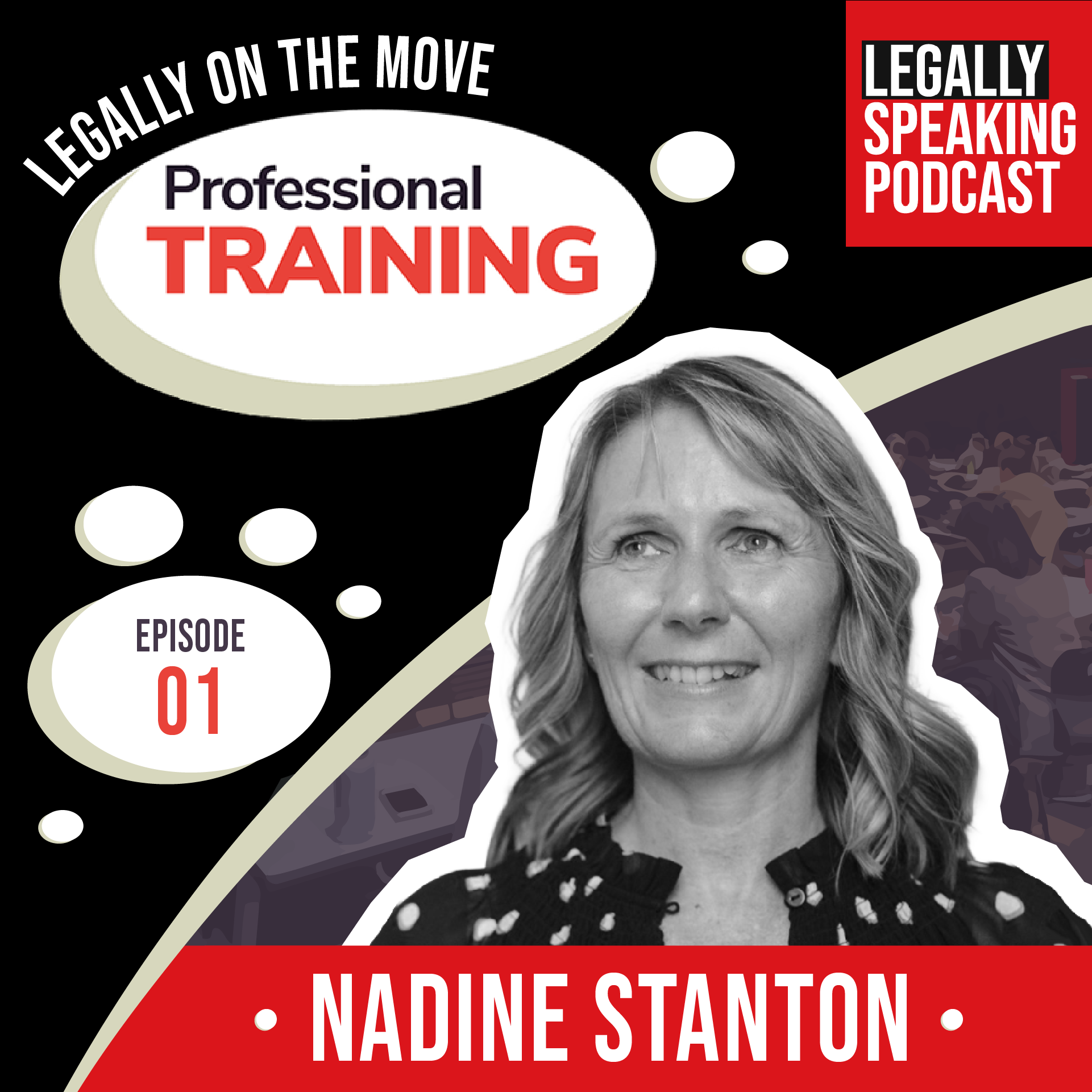
Welcome to the first episode of Legally on the Move: Professional Training, our brand new miniseries
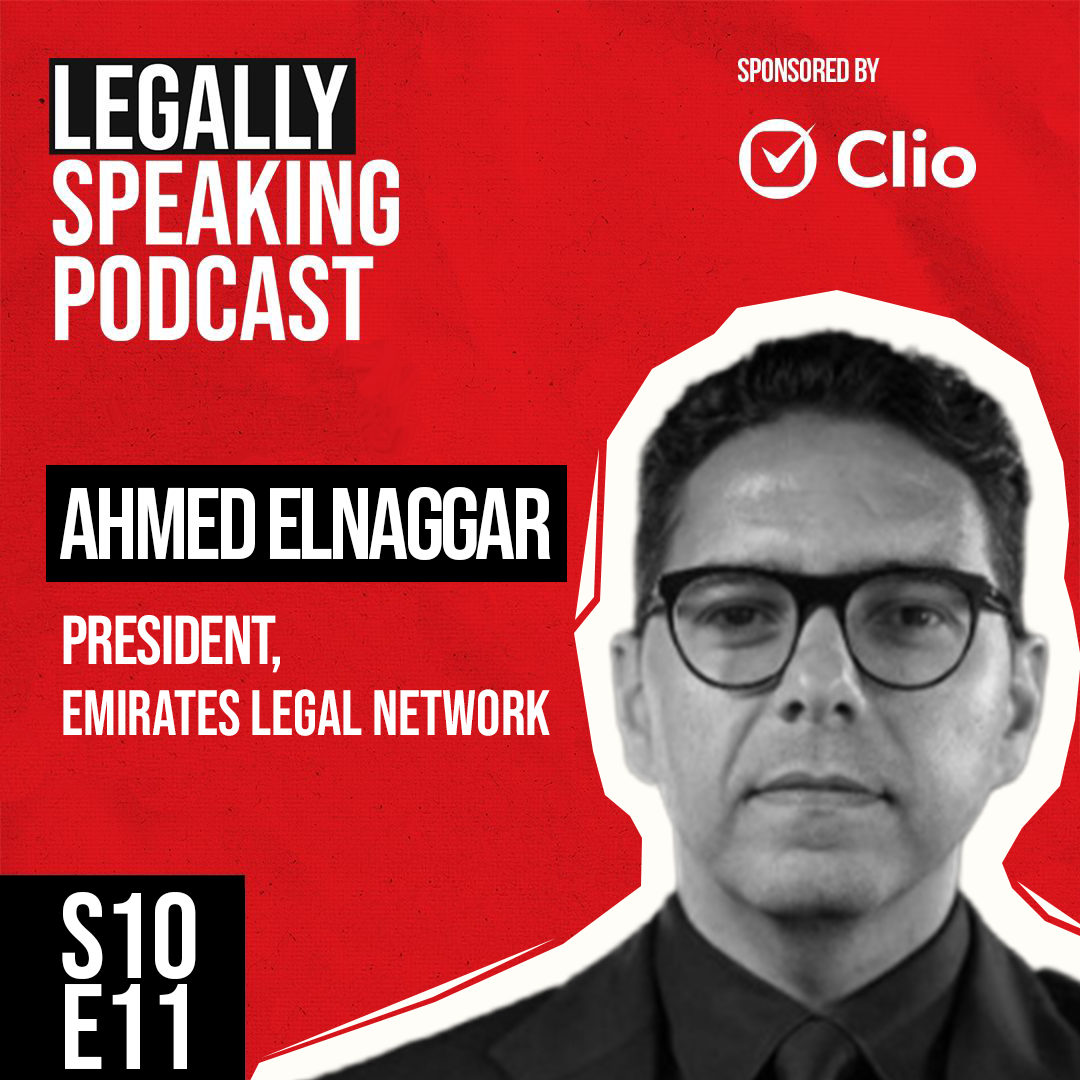
On today’s Legally Speaking Podcast, I’m delighted to be joined by Ahmed Elnaggar. Ahmed is the
In today’s rapidly changing legal landscape, understanding how technology, personal branding, and innovative training pathways impact
On today’s Legally Speaking Podcast, I’m delighted to be joined by George Hannah. George is a

*DISCLAIMER* All episodes are recorded at certain moments in time and reflect those moments only. The podcast does not support or associate itself with any inappropriate behaviour or actions that may have occurred after recording.