Legally on the Move: Professional Training – Susan Glenholme – E04
Welcome to the first episode of Legally on the Move: Professional Training, our brand new miniseries
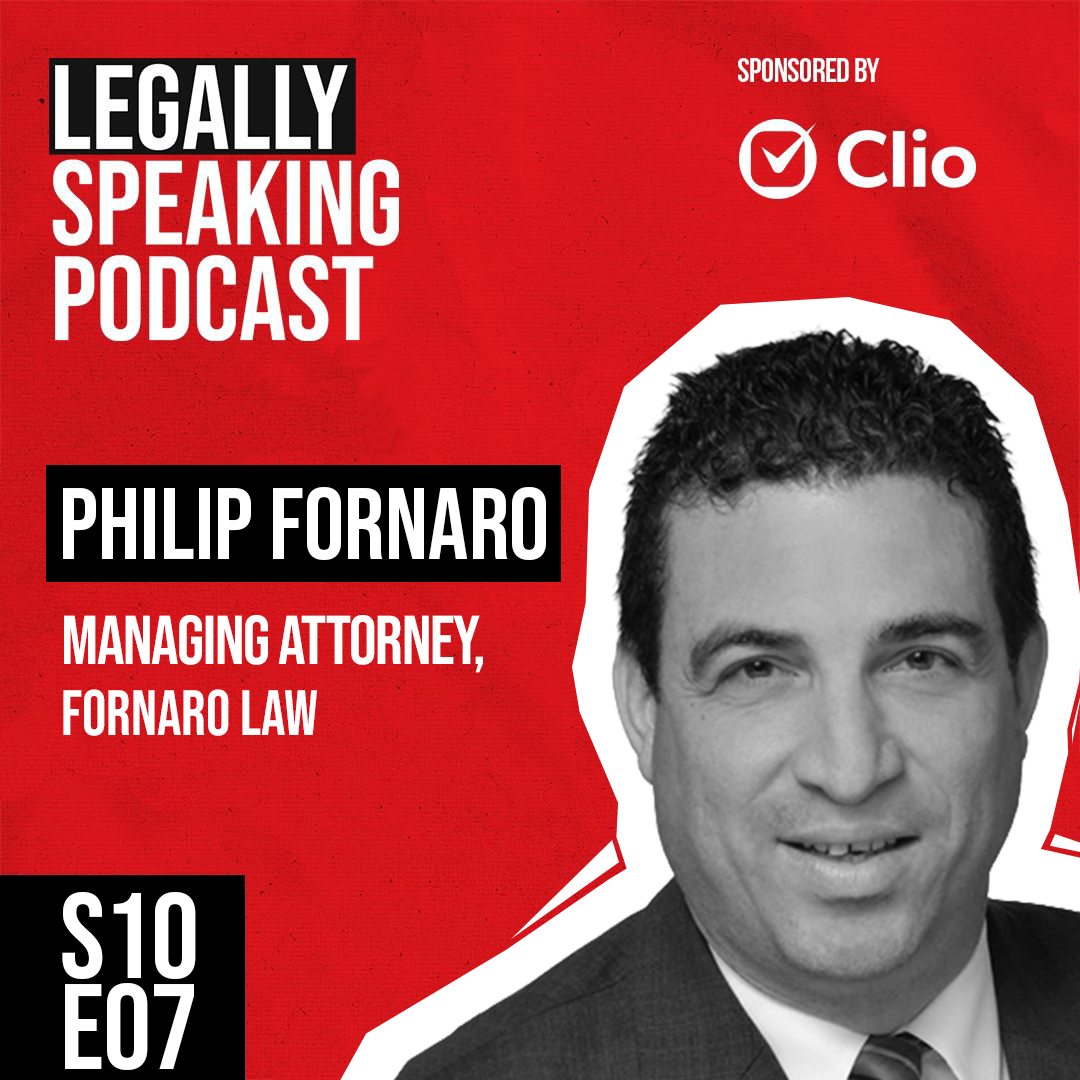
On today’s Legally Speaking Podcast, I’m delighted to be joined by Philip Fornaro. Phil is the Managing Attorney of Fornaro Law. He is also the host of Light Bulb Moments, talking to leaders, entrepreneurs and creatives about ideas sparking change. Philip is passionate about the Outside General Counsel model and how it is transforming legal services into a true business partnership.
So why should you be listening in?
You can hear Rob and Philip discussing:
– An Inspiring Entrepreneurial Journey
– The Outside General Counsel Model
– The Importance of a Positive Energy & Mindset
– Community and Charity Work
– Why We Need to Embrace New Technology
Connect with Philip Fornaro here – https://www.linkedin.com/in/fornarolaw
Rob Hanna (00:01)
So very big warm welcome to the show Phil.
Philip Fornaro (00:05)
Hey, great to be here. Thanks for having me on the show.
Rob Hanna (00:08)
it’s an absolute pleasure and always a pleasure to have people have better microphones than me as a guest on the show as well. And before we get into all the great things you’re doing in and around the world of law, we do have a customary icebreaker question here on the Legally Speaking podcast, which is what is your favorite beverage and your preferred choice of footwear during a typical work day?
Philip Fornaro (00:13)
Ha ha ha ha.
See, you did that extra spin on me because I was going to just say tequila. But I don’t know if I want to project that right away. So, yeah, just usually a coffee and a water. I’m not a crazy drinker. After hours, I like to do my drinking. And footwear. ⁓ So I’m no fashionista by any sense of the imagination. But I do like those. What are those called? On clouds ⁓ shoes. I enjoy those.
Rob Hanna (00:41)
Absolutely. Well, I’ve been getting into running this last year, so I’m a big fan of the on trainer generally. So, and what they’re producing, but we can get stuck in that rabbit hole for hours. So let’s move swiftly. Let’s move swiftly onto all about you, Phil, and the great things you’ve been doing. So would you mind by kicking off telling our listeners a bit about your background and career journey?
Philip Fornaro (01:20)
Yeah, so I became an attorney in 1995, just had my 30th anniversary. It’s unbelievable. I posted it. I a lot of love out there related to our journey because we’ve touched a lot of people over those 30 years. And it started off, you know, I decided to go to law school and then I came out and one of my dad’s lawyers said, hey, do you want a job? My dad was hunting for me from the very beginning, always helping me. And I said, yeah, you know, I’ll take the interview. And it was a local law firm.
I didn’t know exactly which way I was going at that point. I thought maybe I’d go to the state’s attorney’s office, but I ended up going with the generalist to start. I decided against big law and mid-sized law. I wanted to sort of create my own book of business and learn from somebody that was a great connector. Yeah, then it just accelerated until 2004 when I hung my own shingle. And then I wasn’t sure whether I wanted to be a lawyer or not. then because I was doing development and business, I did a lot of real estate.
flips, condo conversions, et cetera. And suddenly, you know, I liked both. So I was doing both. You know, I was an attorney by day and, you know, a construction guy at night, you know, drywall at night, you know, at law during the day. So then we sort of accelerated into the downturn downturn and the great financial crisis. And we pivoted to being debtor attorneys of all things. And, you know, we we we helped so many people, but it was very troubling time seeing all people lose their
their homes and their businesses and it was very tragic, but we help people. Then we came out of the spin and said, next time I’m going to be on the other side of the equation. I’m going be with the wealthy people to help help them, you know, acquire and help other people get out of their problems and create better asset protection structure, etc. And that led me to Bitcoin and blockchain.
and ⁓ aviation law and then suddenly now we’re representing mostly business to business through our outside general counsel model, which I’m sure we’ll talk about later.
Rob Hanna (03:20)
Yeah, absolutely. I know it’s something you’re very passionate about as well. But I mean, you’ve packed a lot in there, certainly over three decades, as you you say, in terms of practicing law, and you touched on it. But what drew you to studying law, and actually becoming an attorney in the first place? Was there a family influence? Was it something you saw? What inspired you?
Philip Fornaro (03:39)
So was very interesting. ⁓ my family came from Italy. ⁓ I was born here. I was first generation. And as our family grew, decided, or my family decided, we need to get some people educated here. ⁓ Not that they weren’t educated, but secondary education and then obviously ⁓ law. And I said, OK, let’s start with ⁓ the college. And I’ve always wanted to be a lawyer. I don’t know why. I think it’s because it touches so many different
Parts of our world. I can I can do any type of law and it will always ⁓ Be something that’s intriguing to me, but I don’t have to do I don’t have to be a a trademark guy But I can be you know commercial real estate guy or do whatever I want so as a result of that we got involved in ⁓ in Deciding I want to go to law school and then you know, I chose it and went, you Just something inside me said it was for me
Rob Hanna (04:35)
Yeah, absolutely. And on the flip, I actually married into an Italian family, which is brilliant because my mother-in-law is an amazing cook. And so I just love all the food and yeah, I got it. got introduced to all the delights that you can expect. ⁓ So yeah, I’m a big fan of the Italian way and the Italian culture, particularly when it comes to all things cuisine. Okay. Let’s move to your entrepreneurial side then. What was the moment you realized you wanted to build your own entrepreneurial law firm?
Philip Fornaro (05:01)
So was weird. I was always an entrepreneur. Even when I was young, I always worked with my father who ⁓ ran multifamily residential buildings and bought and sold and taught me that trade. So then when I got to become a lawyer, I realized that it was more about practicing law. And it was probably somewhere around 2003. I always say lawyers for the first seven years, we really sort of suck as attorneys.
Hopefully I can say suck on your podcast. I’ll try not to get… So then I decided, then at year 15, it’s like, oh yeah, I’m really starting to get this and I’m starting to come into my own. But then what happens is when you’re a lawyer, you meet so many different types of clients that are so interesting in their various fields. So I go, I need to go on my own. And I love my mentor, John Dvorak. He was wonderful to me. He got me to the point where I needed to be.
Rob Hanna (05:30)
Absolutely. ⁓
Philip Fornaro (05:56)
but I was sort of branching off into different things. So I needed to go on my own so I could not just follow the passion of the law, but follow the passion of all the entrepreneur pursuits that I ended up getting with a lot of my clients and strategic partners. So it was somewhere around 2004 where I went on my own and I said, yeah, let’s rock this. Let’s get good clients and let’s grow.
Rob Hanna (06:18)
love that mindset, love that positive energy, if anything. And I also love that you talk about mentors. It’s something we talk a lot about here on the show and how important they are in terms of helping shaping and developing you and encouraging you. And I love that you gave them that shout out to one of your mentors as well. Okay. Let’s talk about the journey then, because can you talk us through the process of actually how you’ve built your firm from the start 30 years ago to what it is today? Cause it’s been a hell of a journey.
Philip Fornaro (06:42)
Yeah, so, you know, the first, like I said before 2004, it was sort of focused on understanding the law and understanding what everything was new, because they don’t teach you how to be a lawyer. I know this is very cliche, but they do not teach you how to be a lawyer in law school. They teach you to think like a lawyer or think in a certain way, which is invaluable. Even if people don’t want to be lawyers, it’s a great education, really tough education. I didn’t like it too much, but I learned.
And I absorbed it and I got to the point where it was like, okay, I’m learning the law and but everything was a problem. You hit a situation. It’s like, oh my God, this is the end of the world. I don’t understand. But then what I learned at that point in time is that just to ask the questions. So I’d be in court and you know, someone would say something. I would go talk to the guy next to me. I what are we doing here? I don’t even know what he’s talking about. And then they people it’s really nice is that despite the bad
Perception of attorneys they’re kind and they’re they they want to help you for the most part, know Not everybody but you surround yourself with people that if that guy doesn’t you know Not nice to you go to the next guy But then sort of you learn you learn how to do that and then you grow as an attorney So then the next stage was was Realizing that you can I could be a very good at business development. I reached out to all my family friends My good friend Scott Ruswick
I was a real estate agent. So we connected. I referred everything to him. He referred everything to me. I go, Hey, this is kind of cool. And then you build your network over time. I joined various organizations early on, you know, wasn’t making money from it, but I was really learning how to connect with people. And that was the, you know, the sort of the connection in my mind, you know, the light bulb moment is, is I got to, this is what I’m good at. And so then it evolved to the fact that I could get bigger and better clients.
just by going out into the world. after 2004, I was like I said, a dual, I was an attorney and a real estate developer. So as a result of that, I learned and got bigger and bigger bigger clients until the downturn of course, and then we started diving into other things. So that was sort of the evolution of it.
Rob Hanna (08:52)
Yeah. you know, that’s business, isn’t it? The only constant in business is obviously change. And I love that you talked about learning, learning. Cause again, if you drop the L from learn, you spell earn. So before you actually earn, need to learn. It’s really important that people get that grip that actually sometimes you need to invest the time to learn. And eventually things will start to come your way. Okay. Look, it’s competitive.
Philip Fornaro (09:11)
And
I love that. Now I understand why you have 48,000 followers. That was magnificent. I never thought about that. I’m a dummy, I think. ⁓
Rob Hanna (09:16)
You
No, well, look, this is all about knowledge sharing and enjoying it. I’m learning from you
as we go. And I think what’s great is, you know, that’s the power of podcasting. Isn’t it? You meet people in different areas. You meet people with different experiences, you share, you collaborate, you come together. And I’m just loving learning about you. And I guess with that, what I wanted to ask was getting a bit real now, you know, it’s competitive, you know, legal services is competitive. There are lots of law firms out there. We can’t deny that. So what particularly differentiates your firm from
Other firms that are out there specializing in let’s say real estate, bankruptcy, commercial law, crypto, you name it. What are the unique factors you think you bring to the table?
Philip Fornaro (09:59)
All right. So I guess it’s the ego of the attorney to think that they’re better than everybody else. And ⁓ it’s funny is that I think I learned this early on in residential real estate, and we practiced in that area. We cornered the market during the downturn, but during the regular non downturn time period when times were good, it was like a race to the bottom. Everybody had that equal level of knowledge.
And everything was okay. Well, everybody’s the same, so to speak. There’s differences for sure. I know what the differences are. That’s why I left that space because I couldn’t mentally handle, you know, what everyone was doing in the space. However, you learn is that if everything is equal, then price is the differentiator and people are always going go for the lower price. So I go, this doesn’t make sense. I got to get into areas of law that where other people are not.
And we did that with Bitcoin. We did that with aviation. We did that with the short sales and foreclosures during the downturn. Now we’re doing it with OGC. So I think everybody should understand, especially with AI coming very fast and furious, that documents are a commodity now. ⁓ anybody who would embrace all the attorneys, not going to be affected. Absolutely, we’re going to be affected. And those that don’t figure out
how to get ahead of it, they’re all gonna sort of die out. And especially for these younger attorneys that are listening, it’s very important to figure out how to differentiate yourself. So now I’ll answer your question. Basically what happens here is that we deal in a high level of chaos and complexity. So if someone comes to our office, they’re all freaked out, know, what am I gonna do this? I’ve seen it all before, because I’ve lived it. You know, on the business side and on the attorney side, I go,
Calm down, you know, before we leave the office here, we’re going to have a nice plan. So the first stage is our chaos or complexity is that we love it, we embrace it, we don’t run away with it. We won’t run away from it. The second thing is, is that we’re all about adding value and people are going to say, well, everyone can add value. It’s not the value you add by being an attorney. It’s the value that you add outside. give to their favorite, their favorite charity, you help them ⁓ organize their favorite charity. You don’t charge them.
You connect their child to somebody else in your network. You give them somebody that’s going to save them money. Like one example is cost segregation. One of my clients came in and he just had a big redevelopment and on his properties, I said, well, have you done cost segregation? They go, well, what’s cost segregation? That first year that client saved a million bucks, okay, now paid for my fees probably for the next 30 years.
And then on top of not that long, but the next thing was is that they saved millions of dollars. So it’s this ability to coordinate and forget about the law and forget about the billable hour. We want you to succeed because guess what? When you succeed, we succeed because we’re going to get the legal work and we’re going to get that friendship. And the last part of our differentiator is the business acumen that I bring because I’ve been involved in so many different businesses and I’ve had exits from private equity.
I’ve done a whole bunch of commercial real estate and partners. I’ve had about 15 partnerships. As a result of that, I understand what the client needs.
Rob Hanna (13:29)
Yeah. And I love that because you’re meeting them where they’re at. You’re exceptionally client-centered. And I also want to go back to love your line of thinking about blue ocean opportunity and actually, you know, understanding a lot of people think about what if it goes wrong if we do this? What if it goes, you know, pear shape, but you’ve looked at it as what is the opportunity if we go early on crypto? What is the opportunity if we understand the AI revolution is coming and actually we’re going to dive in to do X, Y, Z. And I also love that you talk about sort of
adding extra value, little touches, but big impact, maybe connecting with somebody who, like you say, they have a personal interest in this. You can go the extra mile to help them to really kind of foster and develop those relationships. Cause again, contacts are good, but it’s really the relationships that you nurture and sprinkle over time that really.
lucrative over time. So love all of that and love your energy. And with that, we’re to talk about positive energy because you firmly believe in the principle of positive energy, betting sort of getting positive outcomes as well. So can you tell us why this principle is at the center of your own success?
Philip Fornaro (14:26)
Yeah, I I learned, you know, I don’t want to be like that glum from Gulliver’s Travel, you know, we’ll never make it, we’re doomed. But the ideology is that if you think about things in a positive way, you frame it because every situation that comes to you, it can be framed in a negative way or a positive way. You can go into a hole or you can attack it head on. And when you believe that the success and that no issue is insurmountable, there’s always a solution.
Rob Hanna (14:31)
Hehehehehe
Philip Fornaro (14:54)
It’s easy to be positive and people like positivity. It’s really hard. mean, again, people like to talk to each other and feel bad about things and that’s okay. But I need to see the positive of every, it’s part of my biggest strength and it’s part of my biggest weakness because I always think I can make something better.
Rob Hanna (15:14)
Yeah. And I took a lot about this because it’s just piggybacking what you’re saying. You can either be surrounded by radiators of energy or drainers of energy. And I think the more radiators of energy you’re around, the more likely to pick you up because at the end of the day, everything is energy, isn’t it? The more that you put into things and the more you kind of give it that passion that the likelihood is the better the results. Okay. I want to now flip back to
Philip Fornaro (15:22)
Yeah.
And I and I
love that. I think we could probably you and I could have a podcast just about energy, I think
Rob Hanna (15:38)
And yeah, I attribute a lot of what I have done. And even this podcast, know, every, you know, if you say, Rob, you’ve done 400 and whatever, or 500. How do you keep, I was like, I’m so passionate about what I do. And I meet amazing people like yourself. We get to curate conversations. We get to brainstorm, share ideas, have fun. You know, it’s all, it’s all good energy. And with that, I know something you’re passionate about that we touched on a bit earlier is outside general counsel. So for your listeners and our listeners who are unfamiliar,
What is outside general counsel?
Philip Fornaro (16:09)
So it’s around, it’s like one of those things I talked about. It’s the bitcoins, it’s the aviation, it’s the whatever it may be, you your niche of business that is doing something that other people, people run away from this, you you jump into it. So it’s hard. It’s hard to find attorneys that do it. It’s hard to, ⁓ it’s easy to sell to clients because it’s very simple. It’s a holistic approach to representation. It’s providing
the questions, asking the right questions, diving deep. I like it when I first meet a client, I bring them into my office and I have our whole team there. And we are, or if it’s outside of Illinois, we’ll do it through Zoom. But each of our attorneys and staff talk about everything that they do and how they can help that person. And when they come in, they realize is that they don’t no longer have to approach five different attorneys.
in five different law firms that they have under one roof and that we can then connect them. So we don’t do medical malpractice. You know, we don’t do BK anymore. So what we do is we have those relationships where we can connect them to and they understand that we’ll be there for them. But the best thing that we’ll do is no matter where they’re at, we’ll go visit the site. We’ll meet their team. We’ll talk to their team. We’ll make sure they understand.
that we’re there and we’re the people that are going to be helping them. Because if you’re emailing, you know, an assistant or another person in their ⁓ controller or whatever, if they see you for one time, then they know who you are and then you interact with them. And when you talk to them again and you follow them on LinkedIn and then you interact, it’s like a big partnership of people then. And it’s not
Like, I got to call my attorney. It’s like, we got to call our attorney. It’s exciting, you know.
Rob Hanna (18:03)
Yeah, it changed the narrative, doesn’t it? I think it changed the whole dynamic of the relationship as well. So what are some of the biggest misconceptions that you’ve sort of seen around this model when it comes to, you know, the OGC?
Philip Fornaro (18:16)
So because it’s sort of a rare bird, at least here in the United States, ⁓ most of the outside general counsel comes from really upper middle market and big law. And it’s almost like because the size of our clients, most big law would like some of our clients. It’s the, shouldn’t say that they might come and try to steal them, but they won’t go. They’re aligned with us.
Rob Hanna (18:37)
Yeah.
Philip Fornaro (18:43)
But the ideology is most of the transactions we have is with big law. And what we notice is that they have, you know, the younger attorneys dealing with the transaction and so forth. I think people then once they get into our model, they realize is that they definitely don’t need big law. They don’t need the three people billing at the same time. They don’t they don’t get access to the founder on the phone when they’re at their most troubled. And so the misconception is, that
A smaller firm cannot handle the OGC model, but the smaller firm with the large ⁓ quality of people like we have or other people have, it’s critical is that they’re not going to get that level of access or service anywhere. So I think the misconception is just that a misconception.
Rob Hanna (19:28)
Yeah, and again, it’s access to that that wisdom, those years of experience that know how particularly for yourself as well. Let you say that you’ve blended a whole range of skill sets from legal service, obviously, to that entrepreneurial mindset, commercial mindset, and so much more. And look, you don’t sit
Philip Fornaro (19:42)
Did you get, we gotta get, we’re gonna tape that one. I think you just sold for an hour a lot. I appreciate that, man. That was awesome. Well said, well said.
Rob Hanna (19:51)
No, it’s a pleasure learning about your, your journey and meeting, you know, fellow business owners that are doing, great things, but also visionaries. And I know you have ambitious goals with this as well, because you know, your visionary goal is to expand, I think the sort of outside general counsel model to encompass more top tier businesses with revenues from 25 million up to a billion.
So what steps are you actually taking to achieve that goal? And what would be some of your advice to others who probably have big ambitious goals as well?
Philip Fornaro (20:17)
Yeah, so I’m very, very good at business development and getting clients and so forth, but sometimes I get ahead of that structure. So I’ve been involved in this group where I’m surrounded by family offices and it’s called consortium, private equity, et cetera. And the ideology is that the ability to get those clients may surpass my ability to support those clients. And it hasn’t happened yet. We have absorbed so many clients because
clients keep on referring clients. So the ideology is to build the foundation. we’ve been very, very in tune with creating very good processes. We’ve gotten to technology. We’ve established a great team. I mean, I would take our team over any team in the world and we have to add on to those teams. So the next step is to sort of continue on and ⁓ buy law firms in the, you
starting off in the area of Illinois and then expanding to where we serve other clients, Florida, Texas, Arizona, et cetera. So the ideology is that we need to add on the right people to enjoy the infrastructure that we’ve created so that we can fully support this ⁓ everywhere in the world.
Rob Hanna (21:34)
Yeah, I love that. And I talk a lot about this because I learned this from a keynote from Jack Newton C of, of Cleo. I’ve read the book good to great, but it’s all about momentum and this flywheel. And actually if you have a business that there’s more energy inputs you bid, maybe it’s from acquiring another business, maybe it’s trying a new tool, but all your time, you’re putting energy inputs into building momentum for your organization, whatever it might be. And your examples there of what you’re doing is basically that, isn’t it? You’re just contributing to the energy inputs, keeping that momentum. It’s
spiraling and spiraling and spiraling. As a result of that, you’re heading more to more more towards your goal. I think the other thing I want to talk about now, which is very important is cultivating attitude. I remember my first ever basketball coach said to me, Rob, AIE and I had no idea what it meant. And he just said, looked at me and says, attitude is everything. And this was when I was a super young kid and I’ve taken that throughout my life remembering AIE. I almost have it written on my wall.
How do you cultivate and maintain that sort of “never give up” attitude within your team, especially when clients come in with some really strong, really insurmountable problems?
Philip Fornaro (22:40)
Yeah, I mean, it’s just you take the bull by the horns, so to speak. You understand it. You listen. I mean, it’s funny is that people have, the client comes in and they’ll have all the questions ready for the client and they’re asking the questions. I typically, you know, despite today talking a lot here, I typically I typically go ahead and I let them tell their story, understand them, understand where their problems and because
Guess what? After a period of time, you will understand where their pain point is. And it’ll be really, really surprising. They think their pain point is A, when it’s actually B. And when they hear it for the first time, you know, it’s like, my God, now that is my problem. Why didn’t anybody ever tell me that before? So I think that that’s the most important part of that is listening.
Rob Hanna (23:20)
Yeah.
I agree. And I think, you know, it’s the age old cliché, isn’t it? Don’t don’t hire lawyers, you know, and tell them what to do. You hire lawyers because they know the right questions to ask. And then they can tell you what to do off the back of asking those questions, like you’ve just articulated right there. Okay, again, and we’ve been touching on relationships sort of throughout this conversation, but you talk a lot about building an enduring relationship, both with your clients, but also strategic partners. So can you talk about a partnership that surprised you or turned out to be particularly valuable?
Philip Fornaro (23:46)
That’s right. That’s right.
Rob Hanna (24:04)
As a bit of an example for our listeners.
Philip Fornaro (24:07)
So it’s funny, I have so many relationships. It is a tough question is which one surprised me. ⁓ I guess in retrospect, there’s a couple but you know, the relationship with my father, know, which is I mean, fathers and sons, you know, there’s always that little bit of tension throughout relationships. Maybe not, maybe that’s just the Italian way. mean, now you’re having an Italian wife, I’m sure you’ve seen it.
Rob Hanna (24:14)
Yeah.
Philip Fornaro (24:36)
So, so the ideology is, is that in sort of retrospect, you know, all the troubles, and so, so forth is what I learned over that time. And when I reflect back and when I do my podcast, it’s pretty funny as I talk about my dad a lot because of the fact that that partnership sort of shaped how I operate it, you know, and he’s a little bit tough. ⁓ In recent times, the outside general counsel model, ⁓ it’s like almost what’s surprising is how much my clients
and our law firm, how we interact on a friend and almost like familial level. And it surprises me that most attorneys say, I’m not friends with my clients or I don’t want to be friends with my clients. This is business. And I think the shocking thing is the fact that there are some of my best friends now and I keep on making more.
Rob Hanna (25:29)
And that’s really beautiful to hear. And I think the other thing is, you know, it’s human connection, isn’t it? You know, where people, you know, ultimately are looking for a connection in business. And, you know, if you’re, if you’re connecting with your clients, the likelihood is, you know, relationships, friendships, all of that good stuff is going to flourish from that. And I love that you talk about your, your father and, know, that’s where you’ve got lots of inspiration. He’s been a mentor and he’s probably pushed you and you probably had some interesting challenges over the years. Cause I taught very openly about my late grandfather, who was a lawyer over here in the UK, built one of the most successful firms outside of any major city here. And he was a real inspiration for me. And, one of things he said to me just round the dinner table one, one Sunday, which has stuck with me in entrepreneurship because entrepreneurship is hard. said, laddie person who never made a mistake never existed. And I think if you remember, you remember that particularly when, know, you make tons of mistakes throughout your career, just remember that at the of the day, you’re not the only person to have done that. And as you said, if you keep that positive energy and that attitude, you’ll find a way, you’ll find a way to keep, keep going.
Philip Fornaro (26:13)
That’s right.
Rob Hanna (26:27)
Okay. Now I want to talk about tech because you mentioned AI and you’ve got some strong views, which I was agreeing with actually in terms of AI and the work that it can do. And I think we have to understand that technology is coming in. It is this is value pyramid. It doesn’t matter if you’re a lawyer, a doctor, an accountant, insurer, technology is coming in and it’s filling up this pyramid and you as a service provider need to stay ahead of that pyramid with AI coming in, which is still very much the dial-up stage of the internet to ensure that you have relevancy and can actually be valuable to your, to your client. So for you.
What makes your firm a next generation firm in terms of the technology that you’re utilizing and how has it transformed your client experiences, if at all?
Philip Fornaro (27:06)
Yeah, so I think the biggest thing for attorneys to be thinking about is the next thing. And obviously, when I first started, I’m a lot younger than you, Rob, is that there wasn’t a out of the box solution for you know, like like a Clio, for example, that didn’t exist. I remember that I mapped out a process and I was building it. I built a ⁓ portal in my in my ⁓ data drive on my hard drive.
We were had a huge, this is a funny story. If you have a couple of minutes, can I tell this story? All right. So I’m, I’m, I’m, it was my first big deal at the time. It was a big deal. think it was a $10 million purchase, right? Back in the day, it’s like, Oh my God, I got a $10 million purchase. They’re going to figure out I’m a fake. So I said, I said, we had all these attorneys. was the lenders attorneys. It was the other attorneys. It was big loss. So they had three or four attorneys. had staff. had staff.
Rob Hanna (27:38)
Please, we love stories. Go for it.
Philip Fornaro (28:04)
The first week, I think I got a thousand emails and I go, I go, I’m not, I’m not, I’m not doing this anymore. I go, if you want to interact with me and I work with my tech guy and I said, let’s make a portal. goes, what’s a portal? I go, I don’t know. We do this for internal stuff. Why can’t we do this externally? And, and he goes, yeah, that’s cool. And I go, so it’s like the precursor to box and Cleo and all this other stuff. It’s, it was this ideology is that
I have this portal and I told this attorney and I said, hey, if you want to communicate or send documents, put it into the portal because the lender documents and the seller documents and the buyer documents, everybody has their own checklist, but they’re all the same documents. They’re just packaged in a different way. So it worked. And I go, my God, this is great. wonder if I go, maybe I should stop being a lawyer. Maybe I should do the portal and then Dropbox box, Google docs. all come out and I go, that’s all right. We’ll get into it.
So I think that the first thing is every attorney, if they don’t have a CRM like Clio, if they don’t, I know Clio has some sort of ⁓ document review or document storage, but a document cloud-based where you can be anywhere in the world and you work on it, making sure you have e-signature, making sure the experience for clients is seamless. So it would always be, I need my EIN document. I said, well, it’s in box, you know, don’t worry. ⁓ I’m at a lender. it’s in box, don’t worry.
you know, all these things that go through the process of ⁓ making it. So then it goes back to the next stage and we tried it out and I’ll give a pump to LegalSifter because we were learning about them in 2018. It was an AI solution. And then now we start seeing that commoditizing documents and getting into AI is the next step. So what I do every single day is I do something else on AI, OpenAI, you know, or
know, chat GPT or something, or one of the other ones, I’ll sit and I will just play with it. Checklists for a meeting, ⁓ teaching moments, pitch decks, ⁓ asking it. And the way I use AI on a daily basis is I put it open on a screen next to me and I ask it questions, strategic questions. go, here are the two situations, what would you do? And I have it use it as like a bounce off.
idea. So I have a subject matter expert. You know, I don’t believe it 100%. And then lastly, I know I’m talking too long here, but the last part of this is the ideology of hiring and I’m in the process of hiring an AI expert to come into our firm to bring it because it’s not just chat, CPT. There’s so many ways to you know, streamline your processes, so many ways to use AI to benefit you as a lawyer to systematise it so that you’re giving not only
good quality ⁓ work to your clients at a more rapid fashion, but you’re doing it a little cheaper, which also will differentiate you in the future.
Rob Hanna (31:07)
I love all of that. what you’re ultimately doing is removing friction. And as a result of that, you know, it’s a more fluid, it’s a much easier process. It’s more efficient client satisfaction goes up. All of that good stuff is a result of you reducing friction because ultimately you want fusion rather than come fusion with your clients. And so if you can really marry that up, which is absolutely what you’re doing and doubling down.
⁓ it, the results show. Okay. Now I know other things that you’re passionate about is giving back. So I want to talk now about your community and charity work. Cause besides running a law firm, being very, very busy and having lots of things to do, you are heavily invested in giving back to community and charity work. So what causes are most important to you and why.
Philip Fornaro (31:44)
Yeah, got it. Before I do that, you don’t have like any trademark on remove friction and fusion instead of confusion do.
Rob Hanna (31:59)
No, no, you’re welcome to use you’re welcome to take
Philip Fornaro (32:01)
You synthesize my thoughts so well, that’s why I asked. So, all right. So.
Rob Hanna (32:05)
No, my pleasure. But I would love
to know because I know you are you know, philanthropy is important to you.
Philip Fornaro (32:09)
Yeah, yeah, yeah. So so we I started probably right right along the time period where I moved here to LaGrange, Illinois is is that I was always helpful to the community. But then I sort of dove in one of my good friends, Steve Jacinski said, he said, Hey, why don’t you jump in and, you know, join the business association. So said, Okay, what’s the business association? And they said, and then ⁓ they he said, No, come in, you’ll enjoy it. It’s like sort of the local businesses. And it was
It was so empowering to be in the room with all these small businesses. They’re all trying. They’re trying to learn this and that. And it was a small business at the time. So it was kind of nice to do it. It became the president got really embraced in the community, met the community leaders and anybody that ever ⁓ does this will it will pay itself back 100 times or 1000 times because now you’re in various events, various things and you’re giving back and it’s
You don’t understand when you give with all your heart without not having any any expectation of anything in return how much people’s eyes light up. They’re so happy and and and that’s enough. You people go, ⁓ a little tit for tat this and that’s like, no, you’re giving. So as a result, when I met all these community leaders, they all had that same mindset. So what happened is that they brought me into their charities, you know, the Legacy Guild, the H Foundation, Beds Plus.
You know, ⁓ there are so many that we’ve sort of ⁓ given back to and it’s great because these are part of your people. Then you find that if you find your people, the world is a great place.
Rob Hanna (33:51)
I absolutely agree. And that’s why I’m a really big advocate of community and you you will find your tribe and I love that, you know, this work matters to you as well. And I can genuinely hear it in your voice as well. And I guess that probably leads nicely onto something that I’m passionate about, is legacy ultimately in terms of how you would like to be remembered. What would you like your legacy to be as the managing attorney of Fenara Law?
Philip Fornaro (34:14)
Yeah, so it’s funny ⁓ as I think about that question. I’m always in the moment and thinking about the future, but not thinking about how I view it. So I appreciate the question. So I think the most important thing that I want to be remembered for is the fact that I connected a lot of people together. I made people’s lives better. And most importantly, I think the word is important is that I impacted them.
and that they were better off by our relationship. if, if for our law and myself, if we can be that person or that group that, that people can look back on and say, yeah, I was, I was better because of that relationship. I would be a static.
Rob Hanna (35:01)
And that just hits me really there because it’s so true and it’s well documented and it’s not what you do for people. It’s how you make them feel. And that’s the impact, isn’t it? It’s that sort of feeling. Did you really light them up? Did you have a positive impact on them? Did you maybe change a situation around for you that impacted them to go on and do? ⁓
great things because they’ll always remember that. And it’s been a, been a wonderful discussion. Phil really enjoyed learning from you, exchanging views. have a lot of mutual, obviously, respect for one another. And before I let you go, what would be your final piece of advice for those interested in learning more about the outside general counsel model? Cause I know you’re exceptionally passionate about this and have big goals.
Philip Fornaro (35:36)
I think that you look holistically and look at your pain points. And I’d encourage people to write down what’s their pain points with their business, what’s their pain point with their legal counsel, what’s driving them crazy about their other professionals, review it and then just call us. And I always like to say this. Someone the other day said, hey, will you look at our documents? How much is it? And I go,
Well, nothing. just want to look at it and see if I can help you in any way. I can’t, say, well, that’s weird. You know, someone just told me it would cost $10,000 to look at our documents. So the ideology is just to try it. And if it’s not us, if we’re not your person, not your group, just talk to it. And if attorney says, no, I don’t want to look at your documents to understand how to help you on a holistic level, then they’re not the people that you should be going to interview many, attorneys before you get to the last one you choose. So I think just try it out and understand and see if this is for you. And I think there’s no way it’s not because I would never go to an attorney myself unless they were part of an OGC model.
Rob Hanna (36:50)
I love that. And I just love everything that you’ve shared today. And with that, with our listeners, hopefully agreeing with you and wanting to know more about indeed your career or indeed Finaro Law, where can they go to find out more? Feel free to share any websites, any social media handles, we’ll also include them with this episode for you too.
Philip Fornaro (37:08)
Yeah, so definitely LinkedIn that tells the story a little bit better than our website. We’re in website transition. But the first couple pages of our website for Nara a lot calm talks about it. But if you want to know about us, and if you want to hear about how we impact and talk to people, it’s our podcast at lbm podcast.com. And that’s we’re having a good time. You know, we’re not as powerful use you Rob Hannah, but we’re giving you some good chase here.
Rob Hanna (37:35)
Absolutely. look, collaboration is domination. I think the more shows, the more education and what you’re doing is fantastic. And I love the sound of your show and hopefully we’ll do some more collaborations in the future. But for now, thank you so much, Phil, for joining us today. It’s an absolute pleasure hosting you on the legally speaking podcast sponsored by Cleo. Wishing you lots of continued success with your own career and indeed entrepreneurial pursuits. But for now, over and out.
You may also tune in on Goodpods, Apple Podcasts, Spotify, or wherever you get your podcasts!
Give us a follow on X, Instagram, LinkedIn, TikTok and Youtube.
Finally, support us with BuyMeACoffee.
🎙 Don’t forget to join our Legally Speaking Club Community where we connect with like-minded people, share resources, and continue the conversation from this episode.
Sponsored by Clio – the #1 legal software for clients, cases, billing and more!
💻 www.legallyspeakingpodcast.com
📧 info@legallyspeakingpodcast.com
Disclaimer: All episodes are recorded at certain moments in time and reflect those moments only.
Welcome to the first episode of Legally on the Move: Professional Training, our brand new miniseries
Welcome to the first episode of Legally on the Move: Professional Training, our brand new miniseries
On today’s Legally Speaking Podcast, I’m delighted to be joined by James Oldnall. James is the
Welcome to the first episode of Legally on the Move: Professional Training, our brand new miniseries
Welcome to the first episode of Legally on the Move: Professional Training, our brand new miniseries
On today’s Legally Speaking Podcast, I’m delighted to be joined by Ahmed Elnaggar. Ahmed is the

*DISCLAIMER* All episodes are recorded at certain moments in time and reflect those moments only. The podcast does not support or associate itself with any inappropriate behaviour or actions that may have occurred after recording.