
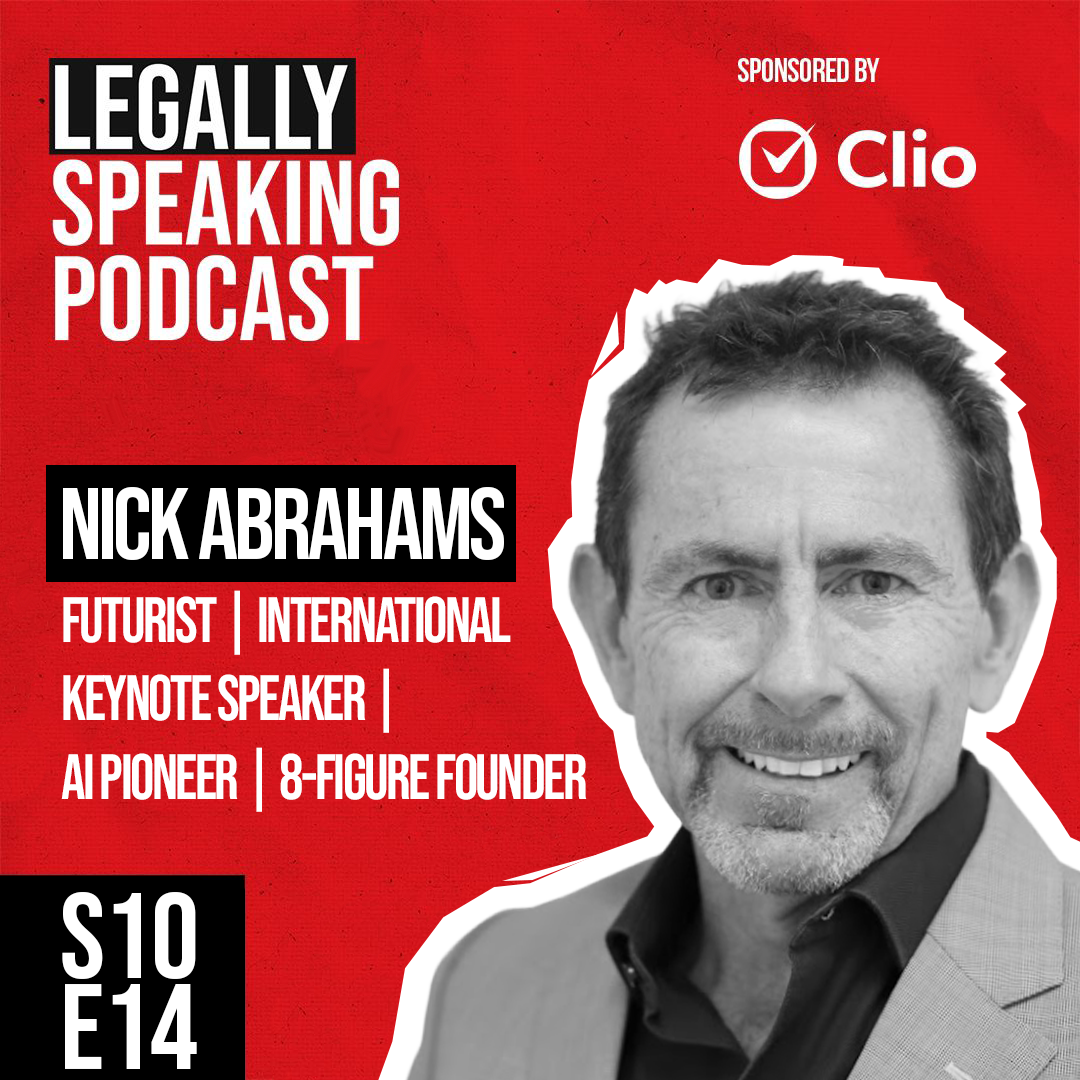
From Hollywood to Big Law: 8-Figure Founder Nick Abrahams on AI and the Future of Law – S10E14
On today’s Legally Speaking Podcast, I’m delighted to be joined by Nick Abrahams. Nick is an
On today’s Legally Speaking Podcast, I’m delighted to be joined by Nick Abrahams. Nick is an AI Pioneer and Business Futurist, creating the world’s first AI-enabled privacy chatbot. He is a successful entrepreneur who co-founded Lawpath, an AI-powered legal services platform. Nick spent 25 years in partnership at Norton Rose Fulbright and is now dedicated to working with law firms and in-house teams on their AI strategies. He is also a comedian, with his show ‘The Accidental Lawyer’ scheduled for this year’s Sydney and Melbourne Comedy Festivals.
So why should you be listening in?
You can hear Rob and Nick discussing:
– AI Not Replacing Lawyers But Reshaping Their Work
– The Real Value Of Legal Services: Peace Of Mind
– AI Increasing Legal Disputes, Not Reducing Them
– Problem-Led Innovation Overcoming Product-Led Hype
– Relationships And Trust Being Key To Driving Change In Law Firms
Connect with Nick Abrahams here – https://www.linkedin.com/in/nickabrahams/
The law is not just a task or a series of tasks. There’s a lot of talk about how the machines are going to take over the practice of law and we won’t need lawyers and it’s going to change massively. There will be change for sure, but I certainly don’t subscribe to the idea that the machines are going to take over. The claims are now breaches of consumer law asking for hundreds and sometimes thousands of dollars and they’re not getting solved by a 75 % off voucher. There’s a lot of expectation that they’re going to get something significant. And so now the poor in-house legal team has to get involved and try to solve this issue.
On today’s Legally Speaking podcast, I’m delighted to be joined by Nick Abrahams. Nick is an AI pioneer business futurist creating the world’s first AI enabled privacy chatbot.
He is a successful entrepreneur who co-founded Law Path, an AI-powered legal services platform. Nick spent 25 years in partnership at Norton Rose Fulbright and now is dedicated to working with law firms and in-house teams on their AI strategies. He is also a comedian with his show, The Accidental Lawyer, scheduled for this year’s Sydney and Melbourne Comedy Festival. So a very big warm welcome to the show, Nick.
Thanks, Rob. It’s terrific to be here and congratulations to you and the whole podcast team because this podcast is truly getting some great cut through. So well done. Thank you. And it’s an absolute pleasure to have you on this show. I’ve been following your journey for many, many years. Before we get into your successful career and all the great things you’re doing in and around the legal community, we have a couple of serious icebreaker questions. Number one, what is your favorite beverage? And the second, your preferred choice of footwear on a typical workday. OK, so my favorite beverage is
Well, sparkling water, which sounds very boring, but I’m a very big fan of that. then, so tragically, for whatever reason, ⁓ my body rejects wine. So I’m kind of a beer guy. Footwear on a work day. This will sound a little bit like the Australian stereotype, but I would generally be not wearing any footwear because I would be, you know, working remotely, which is kind of what I do because I’m not really in any one place.
at one time, but otherwise I’m a huge fan of OnCloud. So the Swiss shoe company. So I love those and they seem to work for me. You’re talking my language. So I have over the last 16 months got into running and I am a big fan of all of the OnRange. So yeah, we’ve got something there for sure. And before we get too down that rabbit hole, we must come back to talk all about you. So Nick, would you mind telling us a bit to start with about your background and career journey? Sure.
So let’s see, out of law school, I had ⁓ four years at one of the major firms in Sydney. It was called Blake’s, it’s now Asher’s. And then three years with a law firm in Tokyo. But Rob, look, I’ll share with you and I guess with the people who are listening. I had at that stage a very, very pronounced personality flaw, which is I always wanted to be a Hollywood studio exec.
And so I, it’s not really a direct line from that, from regional Queensland where I was ⁓ born and brought up, but I did a few things. I got accepted into University of Southern California film school. That’s a pretty good film school. So George Lucas went there and they take 20 people a year. So I did film school and out of that, then I got a job as what’s called a creative executive at Warner Brothers. And so I was working on ER and
the West Wing, the development of that show. And so that was great. But then I had another epiphany, I guess, which was that Hollywood was filled with more than the average number of sociopaths. And so I left Hollywood and returned home to Australia, really with the idea to do what I’d seen. It was the start of the dot com.
just at the tail end really of the dot-com boom to do what I had seen a lot of the West Coast firms do in the US. So Wilson, Sonsini, Fenwick and Cooley, great firms. I’d seen them be very technology focused. so particularly in 2002, I came back to Australia with the idea that I would be a technology lawyer. so I joined then Anderson, actually Anderson Legal.
which was part of the once mighty Anderson Professional Services firm. But that collapsed after nine months. So I was a partner there. So I got to learn all about joint and several liability there. And then I left. So I left. Well, as it was sinking, a few of us went and joined the predecessor firm for Norton Rose, Fulbright in Australia and in Sydney. And so I was a partner of that firm for 25 years and just
step down from partnership in a couple of months ago. Yeah. And what an incredible journey there from Hollywood to partnership. there’s so much to unpack. I guess sticking on the legal side, 25 years partnership with Norton Rose, huge congratulations. But what were some of the defining moments at the firm which really shaped your career? Oh, look, I love that firm. And that firm was incredibly kind to me.
And the thing is, I mean, as you mentioned at the outset, I’ve done a range of different things, you know, with Parker, the chatbot and, and, and law path, my side business and then the comedian stuff. And that is sort of awkward, I think for lots of law firms to have someone that’s, you know, I’m just an odd fit frankly, but that firm was able to.
make enough room for me and they were great, just terrific. They just gave me room to do what I wanted to do. so from that point of view, it was just a fantastic time. if I look at some of the critical parts of it, I I loved every day of being a I didn’t necessarily leave the law because I didn’t love being a partner at Norton Rose Fulbright. I just had other things to do. But if I look back, ⁓
some of the defining moments would have been certainly when I ⁓ started Lawpath. So that was a side business that they allowed me to start. And that was 14 years ago now. So was a very early part of the legal tech revolution. I’m in that business now. So we just hit 600,000 clients and we got 120 people working in that business. So that was an amazing journey. I was still full-time at Norton Rose.
⁓ And then I guess the next, there’s really three key aspects. The next one was the creation of Parker, the chat bot. So that was about five years ago now. And I came up with this idea of we could build a chat bot and I built it, I’m not technical, but I built it with a colleague who is also not technical, built on a chat bot as a service platform. And this was for Norton Rose, for Bright. And then ⁓ we didn’t need
The IT team to help us with that, just built it ourselves, took about 30 hours. And then on day one of Parker going live, it had over a thousand conversations with people, delivered over 30 hours of legal information, was smarter at the end of the day than it was at the beginning of the day. And all up in license fees to the chatbot as a service provider, we paid $8.50.
And so that chatbot then, I did a webinar to explain to people in the firm how they could build a chatbot. And so we ended up having that chatbot of the Parker generation of chatbots operating in four countries. That’s five years ago, well before sort of ChatGVT and so forth. So that was incredible. Getting a big law firm to get its head around the idea of being the first to launch a privacy law chatbot was quite something, but they were very supportive.
And then I guess the final thing was probably that, you I was very lucky to have spent the last 10 years of my partnership there in global technology and innovation leadership roles. I still had my sort of line partnership roles. I still had to make budget and so forth. But getting to work with the great people in that firm and other firms and legal tech providers around trying to shape
the future for lawyers, lawyers within the firm and also outside the firm was just terrific. So yeah, lots of things there as a wonderful career. I loved it. And so much looking forwards and ahead, you know, in terms of your your visionary approach, everything you’ve described there was very much ahead of the curve. And I know you touched on before sort of influenced by some of the
the West Coast firms and we’ve had partners from Cooley, advised folks to check out Rod Freeman’s episode from a couple of years back now. Incredible career started at a high street law firm in Australia now over sort of leading up one of the main teams in London as a partnership. But you’re just a visionary because I can see that the things that you’ve outlined there are not easy, particularly in those size firms to execute on top of obviously all the work you are doing. what
really interested you in innovation? Because you mentioned that you were there for the last sort of 10 years in that global innovation side at Norton Rose, when many firms, so what really interested you when many firms were perhaps hesitant about the topic and you were clearly looking forward and seeing the opportunity. Yeah. So I think with, so I, I love, I love the idea of being a lawyer and I love working with clients and I love it when you can bring
your knowledge to bear and it truly helps people in some meaningful way. And that’s not necessarily just the big clients or whatever, it’s just anyone. what I find with the law is it’s very complex for people who aren’t lawyers. And so as lawyers, we have this incredible gift to be able to help people. So I love that aspect of it. I think we’re very lucky with that.
What I don’t really think is great is the grind of law. And so it’s a very difficult ⁓ career. And particularly, you know, those early years are particularly unpleasant, just the number of hours and the lack of autonomy and so forth that you have in some of the work is less than ideal. And so my thinking was
Just law path as an example, with law path, was like, I feel like we can help. what law path really came out of, had loads of mates of mine, men and women who had wanted to start businesses and they would all come and ask me, how do I start a business? How do I get funding? know, shower agreements, and I would always give people, even if I didn’t know them, at least an hour. And then I was like, this is ludicrous. I should be able to.
productize this in some way so that everyone can get access to this knowledge, because it was the same discussions. And so I started a path. What I didn’t realize, I it was 14 years ago, so the tech was not fantastic. What I didn’t realize is how hard it would be because it is very difficult actually to productize law because everyone’s needs are just that little bit different. So that was really the drive, which is how can we…
how can we preserve the incredible aspects of being a lawyer for people and for lawyers and then have the machines help us with some of the less enjoyable aspects of the job? Yeah, and again, thank you for being so open and candid with that as well, because you’re right, particularly at the early stages of your career, there is a lot of hours that need to go into things. There is a grind. So I’m all for change. And that leads nicely onto what I was going to ask you next. Was there a specific moment
where you realize legal services are about to change dramatically. So I do something, Rob, that’s very unusual. I don’t think anyone else can do this, but I get into fights on LinkedIn. LinkedIn for me is sort of like, it’s sort of like X or Twitter, because there’s a lot of talk about how the machines are going to take over the practice of law and we won’t need lawyers and it’s going to change massively. There will be change for sure.
But I certainly don’t subscribe to the idea that the machines are going to take over the practice of law. so the thing that people, and there’s loads of people out there who sold loads of books. And there’s one particular person who I have some very spicy arguments with on LinkedIn about this, who’s one of those people who says, the machines are coming and so forth.
What I think people like that fail to understand is that the law is not just a task or a series of tasks. And let’s say, for example, that the AI could get good at doing particular tasks. And it’s sort of okay at something. Let’s say, no, it’s not bad at chronologies and stuff, let’s say it gets good at doing markup and marking up contracts. So that’s one task, but lawyers operate in this incredibly complex system.
And that system has in it, you you’ve got the courts, you’ve got, you know, the law makers, you’ve got the law itself, you’ve got precedent, then you’ve got the clients, then you’ve got the, you know, the social and cultural aspects of it. That stuff does not change quickly at all. so I think, I mean, we just had an issue over here. I’m saying, you know, I’m calling that I think disputes will rise massively because of AI.
because we’ve democratized law now. So we had this situation where one of the courts in Australia, the president of that court just announced that they’ve had a 70 % increase in claims as a result of AI. So the idea that in some way AI just sort of evaporates us is not correct. I will just tell one last anecdote because I think it’s really important to understand why AI doesn’t get rid of the human lawyer.
If I look at LawPath, LawPath now great business, very mature business, going very well. But six years ago, that business was not good. And we were burning a lot of money. And so we were going to close the business. And back then, we just had this idea. I had this idea that it was a complete do-it-yourself solution. My proposition was for a small business person, it’s 11 o’clock at night and they need an employment agreement. Great, they go on to LawPath.
They download the employment agreement, got some instructions how they can fill it out and they do it and they send it out. Great. All done. It turns out, you know, I thought that would be a great idea. It turns out there was zero interest in that, not at, you know, 30 bucks a month or $5 a month. So to save the business, what we did was we added one thing to the value proposition. We said you get unlimited access to the 500 legal documents, but also you get unlimited calls with lawyers.
And the business took off literally overnight. And so what I realized is the purpose of the business was not what I thought it was. I thought the purpose of the business was selling employment agreements, but the real purpose of the business was selling peace of mind. And so I think that’s what’s really important. think law will change. I think it will be, I still think it’s going to be slow to change. I know there’ll be lots of people who say, don’t know what I’m talking about.
Spent a lot of years in this space, trying to change things. It’s hard. It’s incredibly hard. But yeah, I think, I think there’s still, you know, wonderful careers out there. such a great lesson. Cause I remember a mentor sent to me very early on, know, price is what you pay values, what you get. And your example there really talks to that, that you had a price point that people went buying, but you then added value and the value people wanted was.
That human lawyer. I think there’s a great example there of, you know, things aren’t biting them. Maybe you need to look at that value proposition. And then as a result of that, you, and you found that I’m meeting clients where they are and being exceptionally client centric and understanding what the market movers are. So I think some great lessons in there. Thanks for sharing that. Want to flip back to, um, you know, your mind inside that innovation global, know, your innovation is such a global law firm. Cause it’s such a huge firm. You know, you made.
You made things happen and folks might be listening to this quite interesting, legal tech, maybe sat in a innovation, you know, center of a law firm currently. What were some of the barriers you faced? How did you navigate through them and to maybe inspire others who might be up against stakeholders at the moment and not trying to get those breakthroughs that you managed to do on the innovation side? Yeah. Yeah. No, it’s, super hard. ⁓ I do feel for people, I mean,
I always said, this was before I had a job title that had innovation in it. I always said the last job you ever have at a law firm is head of innovation ⁓ because it’s just so hard to have meaningful return on investment inside a law firm. Even now, know, even, know, and the AI is pretty good and stuff, but there’s so much expected of people. So I think
What I would say is, first and foremost is relationships. There’s, you you need to, I was lucky, I’d been at the firm for a long time. I’d had some good wins. I was trusted. I, you know, I wasn’t political. So I think people felt, you know, like, okay, we could give Nick a go because he’s got some runs on the board. So I think that was very helpful. So I think relationships get very difficult. think particularly if you’re a legal ops person or legal innovation person,
and you’ve been parachuted into a firm and you are trying to tell that firm, know, and you know, partners, they all earn a lot of money. They’re brilliant people trying to tell them that they’ve got to change when actually, you know, they’re going pretty well right now. It’s very difficult to do. So I understand the issue there. So I would say first and foremost is making sure you’ve got those relationships. Then I think critically and why we’ve seen so many
⁓ really bad AI deployments or pilots or whatever you call it in law firms is that the last couple of years of AI within law firms has been driven by what I call product led innovation, is, we’re going to get in, know, co-pilot. We’ll get in co-pilot and that’s our AI strategy. And then what happens is so co-pilot comes in and then you say to the lawyers, okay, well, we need you to
check this out and see how this can save you money or save time or whatever. And the lawyers are all, they don’t have spare time. They’re all trying to make budget. so being ⁓ product led is a very bad way of doing innovation. So what we learned from the startup union, I learned from, kicking off law path is real innovation comes from solving a problem.
So we need to be problem led with the innovation. So what is the problem that we are trying to solve? you know, the, the alternative to that might be, okay, so we’re going to get in Harvey because we think that we love what Harvey volt can do. And, know, we’re going to use that for due diligence, or we’re going to use that for chronologies or whatever. so if you come to innovation and you say, here’s the problem and
we’re going to solve this problem, then you’ve got real clarity around the mission. And so I think that was the luck that I had. If I look at Parker, Parker was invented, really invented Parker because at that stage, the privacy laws around the world were all changing and particularly clients or companies obligations if there was privacy breaches. So there’s a massive amount of interest in that topic. And so Parker solved
that problem. So I think that would be the biggest learning. I think the relationship thing is critical, but coming to any innovation issue with a problem solving mindset. And the final one is using what everyone calls minimum viable product, which is you don’t just go, it used to be that you would start off an innovation project and people would just build stuff and not test it along the way. so minimum viable product is a very
well understood and well utilized methodology in the startup community. You should just start with what is, you’ve got a thesis. So you say that we’re gonna use, you we need an AI tool to help us with chronologies. And so ⁓ you then do the smallest amount possible to test whether that’s going to work or not. And then you keep testing after that and you make sure that you involve all of the stakeholders, you know, whether it’s clients or whether it’s, you know, the people in the litigation, whoever it is.
Um, so minimum viable product is critical because it, and I’ll just finish on this, but when I, when I first started in the role, you know, lot of innovation, which is very similar in a lot of firms was done based on, you know, the gravitas of the partner who wanted whatever the project was, you know, if they’re a big billing, you know, big billing partner, can, you know, sure. If they want, you know, to do whatever, you know, create some decision tree technology. Sure. We’ll do that.
And I was like, no, no, I think we really need to step back and have a look at how big is the problem we’re trying to solve and use minimum viable products. So have you talked to clients about this? Do they like it? Are they going to use it? those sorts of things. Today’s Legally Speaking podcast episode is proudly sponsored by Clio. If your legal management software feels more frustrating than helpful, you’re not alone. Many solicitors across the UK delay switching because moving client and case data sounds like a headache. Clio.
makes it simple. As the intelligent legal work platform, Clio combines context aware AI with trusted legal research to power your practice. And when you switch, their dedicated migrations team supports you every step of the way, ensuring a smooth transfer of your data. You’ll also get award winning support 24 five via live chat, phone and email. So help is always there when you need it. Ready to leave frustration behind?
visit clio.com forward slash UK to learn more and discover why so many UK solicitors choose Clio. Now back to the show. Listen, it’s be fed up with me saying about it, but specific is terrific. You know, the more specific it be about the problem and lays it in and really hone in on it, the better. And, know, I talk a lot about, you know, I’ve learned this from lots of successful entrepreneurs, the importance of that test, test, test. So waiting lists great way. Can you get a hundred people to sign up to something to sense demand?
you know, before you go off completely and do that, or have a lead magnet or something that can get people to draw and just get that initial testing piece, because otherwise you could potentially going on an expedition into nothing, wasting a lot of time, energy and effort. And the key point that you mentioned there as well is the people. You need to be able to take the people on the journey. You need to have those relationships. You need to understand how to influence, how to sell, how to get these people on board. So yeah, great career wisdom, entrepreneurial wisdom. Thanks for sharing that. I want to switch lanes now.
After 25 years, you did all this successful stuff in a partnership level in one of the best law firms in the world. So what prompted your decision to step away and start a new chapter? I had been a comedian in Japan and I had my own comedy club there and I, and that had been reasonably successful. I sold that, it’s still going after whatever it is, 30 years. And so that was the first English language comedy club in Japan. So I started that, sold that.
And then when I was in Japan, also, I mean, I was commissioned by NHK, which is the national broadcaster to write a TV show, ⁓ which I did about me. And so I had my own TV show, which ultimately it only piloted, but, you know, it’s been a lot of money on invested heavily and they were pitching me as the side fell of Japan. that was sort of an exciting early stage. And then I went into the law, you know, went to Walnut and then went
back into the law for, know, I wanted a more stable career to raise a family in Australia and so forth. But that, you know, the kids have now effectively all left home. And so I’d been building on a career as a professional speaker. I’m also an adjunct professor at Bond University and I’ve been researching the ⁓ impact of AI on businesses and how businesses can can effectively roll out AI.
And so that’s been four years in the making there at Bond. And so I’ve got four courses that I teach through that. and lots of information. So I really was building up as I was, I knew I was going to leave Norton Rose because I really wanted to be a professional speaker. That was going to be my career. And so Norton Rose Fulbright was incredibly kind to allow me to
I mean, I put all the billings through Norton Rose Fulbright, but they allowed me to effectively work as a professional speaker. I was speaking on, still am, I speak on AI as it will impact effectively every industry. so, literally in the last two months, it’s been AI in healthcare, AI in food, AI in insurance, in banking, accounting, engineering, AI in charcuterie, actually, Rob, which you wouldn’t have thought, but I’ve spoken at the Australian charcuterie
conference on AI and Charcuterie. So I built that up and I just love, I love that live event experience. And then I did also want to get back to the comedy stuff. So I’ve been doing some more comedy and then have built a show, which is called The Accidental Lawyer, which as you mentioned, has been accepted into the Sydney and Melbourne Comedy Festivals. And in fact, we just released tickets
for Sydney for two shows in Sydney yesterday and it’s sold out in a day. So it’s really exciting. And all I’m trying to do with that is, I feel like the world doesn’t laugh a lot right at the moment. There’s a lot going on and so maybe I could help people have a bit of a laugh. So that’s the aim of that show.
Yeah. And just incredible breadth variety to the things that you get up to. And I think that’s important. You know, I like that with people who’ve got so many different tangents and things about them. We’ll talk about the accidental law a little bit more later on, I think it’s fascinating what you’re doing there. You have spent years advising, as I mentioned in the outset, you know, on technology and now AI strategy. So in what ways are law firms and in-house teams implementing AI correctly? So the correct AI stuff is first and foremost is that
you know, problem led, not product led. So I think that’s really, really important. I do feel for people within, you know, particularly law firms and in-house teams, particularly if they’re in legal ops, because there’s a lot of pressure on, we’ve never seen this with technology before, where the pressure to roll out the technology comes from the top. Normally with technology, it’s driven by the technologies like cloud, for example, cloud came about.
because the IT team said, you know what, we could save a whole bunch of money and be much quicker to spin up servers if we were in the cloud. It wasn’t like the board was going, we totally need cloud. Whereas now you’re getting the senior leadership are all saying, what’s our AI story? So they are, it’s this pull and that’s very difficult because AI, particularly in a legal context, it’s very hard to make it work at scale. I think you can get,
some pilots going on. think the legal world has more pilots and quantists right at the moment because there’s just a lot of piloting going on. But if I was to say the key steps to successful implementation, I have the benefit now. So on Friday, I’ll speak at my 14th law firm partners conference on AI.
And then next week I’m at my 15th law firm partners conference on AI. So I get to go into these firms and look at what they’re doing. And the ones that do it well, think very much problem led, very much leadership. it’s very interesting. If the managing partner wants to talk to me before they approve me for the partners conference, that is a real indicator that this is really important. Their AI strategy.
Whereas if it’s not the managing partner of someone in marketing or something, that’s not bad, but it just means that it’s not a critical path issue for the managing partner. And I think it should be. think leadership is critical. And then not only leadership, the very senior leadership, but leadership at the level. ⁓ So I think it’s about leadership. And then it’s about… ⁓
Boston Consulting Group has this stat, which I totally agree with, which is when you think about an AI project, think about 30 % of the budget being the tools and the data preparation, and 70 % of the budget being on change management and training. Because I think that’s really where this stuff falls apart. We cannot expect time for lawyers, whether they’re in-house or in private practice, we cannot expect that they’ve got time
to just go in and noodle about with an unbelievable piece of technology, which might have an enormous amount of capability, but they don’t have the time to just go and spend a couple of hours a day on that. So we’ve got to give them a pathway to success. And that’s where it gets back to having this specific idea. So I think it’s about having that training, being able to show them this is why it works.
Rob, one of the problems that we have with AI is it’s very different to old, pre-AI technology. If you rolled out a new content management system, you were guaranteed that was going to be successful because you would turn off the old content management system. So the choices were not there. You know, if you’re going to do a new time recording system, you turn off the old one. So they had to use the new one. That doesn’t happen with AI. It’s like, it’s just all this additional functionality. should try this, see what you can do with it.
Um, so we don’t turn anything off. So it’s an odd situation. And that’s why I think we need to have a really clear proposition for all lawyers in house and in pro practice say, uh, you know, you should, you should use it for, you know, X, Y, Z. I think there’s a couple of key areas where it’s working well, but I’ve spoken a lot. I’ll, I’ll throw back to you. No, I think it’s great. You know, like anything, and I really liked that you doubled down on the change management and training piece because it’s so important.
Uh, you know, you need the people who are going to be using this technology to almost have that aha moment. they see it because everyone’s favorite radio station is WIFTM, right? What’s in it for me. I think if they can see that, if they can see that, you know, rather than just all these buzzwords, efficiency, gains, drafting, speed, improve, let’s maybe start small. Let’s start with an incremental one thing and see, and they see the value, how that directly impacts their life. Maybe they get that hour back.
through using this technology that allows them to do bath time if they’re at midlife and maybe raising their family. Maybe that means they don’t have to do those Saturdays that they’ve blocked out for the last six months of their lives because they’ve been heavy lifting on something. And once you start doing that as part of the change management training and genuine benefits to them, I think adoption levels go high and you have to really double down on that. And the issue is at the moment is we’re so much being chucked out at people and you say these people are time poor, they’ve got billable hour targets, they’ve got pressures within their law firms and they’re saying, got to use this.
And that there’s a disconnect there and all the people that get it like yourself and others doubling down on the change management and the training side, because you can go and buy the best piece of technology out there. But without that piece, you’re basically wasting dollars, wasting pounds, wasting whatever currency you’re in. And because your adoption levels are not where you need them to be. So I really like you highlighting that point. Kind of a flip question. You’ve probably answered it already, but if you wanted to share any more thoughts around pitfalls.
that the in-house teams and law firms go into when adopting AI. you’ve talked about sort of really focusing on the problem specifically, but are any other common or less obvious pitfalls that you’ve seen that’s worth highlighting to our audience? Yeah. So look, think that, look, this, this might not play terribly well to ⁓ some folks out there, but I’m always a little suspect when people say they’re rolling out particularly a really serious tool to a hundred percent of lawyers.
Um, you know, the reality is I’ve worked with so many law firms now, um, you know, you don’t get 100 % of uptake very quickly. Um, and so, you know, what we see is sort of 15 to 20 % those sort of early adopters and your super use. If you look at, I mean, the way the numbers skew and there’s some great research out on this, you know, your super users can really skew your average numbers fantastically because
You know, we can see there was one piece of research that came out very recently, which showed the super users of, it was actually just Copilot, frankly. I don’t mean that in a bad way, Copilot’s a fine tool. So the super users were saving, let’s say something like 15 or 17 hours a week. then you had the medium users who were like saving three or four hours a week. And then the poor users were saving an hour.
a week. So, you know, if you think about that, how do you create a good ⁓ path within your firm when you’re rolling out a tool to make sure you’re getting value for money? Because I think, you know, these tools are expensive and you’ve to do a lot of training, I think to get value out of them. And so I’m much, I feel much more comfortable if people say, you know what we rolled out, you know, whatever, you know, whatever tool it is.
to 20%, 30%, or 40 % or something. And here’s where we got to, here’s what we learned. And now we’re gonna double down and we’re gonna roll it out to 100%. But I think I do wonder with organizations that we’re rolling this to 100%, just is there a lot of money that’s being left on the table by doing that? That be sort one of my big concerns.
Yeah. And again, another great valid point and thanks for sharing that. I know we’re of doubling down on this here, but just given your expertise and you talk so much about AI, I just want to get your view. And I know you don’t sort of hold back because there is huge excitement surrounding AI at the moment. But from your perspective, Nick, where is the biggest gap between AI hype and the operating of it in reality? I know you’ve touched on a bit about sort of the still the need for human lawyering, but
really wants to give you chance to just sort of hit us between the eyes in terms of the hype versus operating reality. Yeah, yeah, yeah. Yeah, look, and don’t get me wrong. Like I think it’s capable of incredible things. particularly, obviously Claude is super exciting right now. And, you know, some of the capabilities of Claude is really impressive. And, you know, this whole SaaS apocalypse idea that, you know, as we see the foundation model,
⁓ like Anthropic say, actually, if we want to be in the legal game, I think that is cause for concern because they are so good. there’s actually, there’s a great piece of research that came out, which it’s Anthropic’s own report. And it shows the number of, or it shows the basically the percentage of calls for their agentic solution. my God, agentic. Everyone loves talking about agentic. mean, that’s…
That is really high. know, I could be wrong. I’ve seen one agentic solution work in the legal space and that was Accenture’s in-house agentic solution. And that’s pretty good. that, they’ve good at that because they have invested an awful lot of money in understanding what their negotiation parameters are and so forth. And the agentic solution just sort of was a, was a nice fit on top of that. But I think agentic, if you look at this, these are,
⁓ This is Anthropics own data. And so, so I think the percentage of calls for on their agenda solution for legal, it’s like 0.7 of a percent or something. The percentage of the calls for their agenda solution for software is 50%. So basically, mean, agenda works incredibly well if you’re a software developer, I, you know,
If this was, you if I was a software developer and I was talking as a senior software developer to junior software developers, I’d be like, I’m not sure the future is super rosy. I don’t know what happens, but you know, that is a job that is going to change very significantly. And the AI can do a lot of what we thought, you know, what we needed programs for. Now, presumably everyone levels up, so that’s good. But I think agentic is,
is overhyped right at the moment. I do think this idea of ⁓ that somehow lawyers become less relevant. I see AI as making the world a more complicated place and lawyers have always thrived on complexity. And so I mentioned this idea of ⁓
complaints and disputes. I think that’s going to be a great area. I’ve got a client of mine, big food company. So before ChatGPT, so before November, 2022, they would get a couple of dozen complaints a week. All of them, a couple of paragraphs long, all of them said, you your product was bad because of XYZ reason. All of them solved with a 75 % off voucher for your next purchase. Literally just a process, just send the voucher, it runs fine. Since ChatGPT.
Number of complaints have stayed the same, couple of dozen a week, but the length has gone from two paragraphs to two pages. And the claims are now breaches of consumer law, asking for hundreds and sometimes thousands of dollars. And they’re not getting solved by a 75 % off venture. There’s a lot of expectation that they’re going to get something significant. And so now the poor in-house legal team has to get involved and try to solve this issue.
Yeah, I do think, you know, if particularly to the junior lawyers out there and law students and so forth, don’t buy that, you know, there’s no jobs for lawyers in the future. Because I think, you know, this world is going to get pretty weird and lawyers have a way of finding great opportunities. I think we all need to be on top of the idea of, know, DQ. So your digital intelligence is critical.
Now more than ever, every lawyer should understand how to use the AI and we can use it to enhance what we do and make us great at the services that we provide to our clients. But I don’t think that the robo lawyer is coming anytime soon. I think it’s such great advice. know, I always say CCL, be curious and continuously be learning. I think we all need to be alive to all of that in the current world we live. mean, going back to if you were back in a law firm today,
Yeah. You’re around your board members, you’re around other law firm leaders. What you’re thinking about looking at 2026 and beyond, what strategic decisions do you think they should be making? Yeah. Yeah. It’s a great question. Something I work with a lot with law firms, you know, at the strategy level. So what I like to do is so, so what, whatever wants to talk to me about right at the moment, I’ve written some stuff on this. I’m researching it quite heavily now is what is the impact on
pricing from law firms as a result of that. Everyone is super excited. Actually, if you want to, if you want to generate ⁓ some pretty spicy numbers on LinkedIn, you just put in put out a post, you know, take one one side of it. I think that, you know, law firm prize are going to go down, or I think they’re not going to go down. And you will get you’ll get a lot of traffic on that, because everyone’s got a view. And so I think that ⁓
Well, firstly, we need to address that issue with clients immediately. Because clients, and there’s some stats out there that saying, 80 % of clients think that law firms are making, well, maybe not win-for-profits, but they’re making great efficiency gains and productivity gains by using AI. So basically, the client, whom you are the trusted advisor for, thinks…
that you are using technology to make bank off them. So that’s not great. So every firm needs to have a really solid communication strategy with clients around AI. I don’t think every partner, certainly not every person within the firm should be talking about the firm’s AI strategy, because it’s a very nuanced discussion. Because what happens is, people who don’t necessarily understand the full game will go,
Yes, the firm is using AI. We love AI and we’re using it. We’re making great, great advances with it. So that’s what they’ll lead because they think that’s what the client wants to hear. So the client hears that, but all they hear is, well, that means that my fee should go down. And in fact, one of the big four had a real problem because they were boasting a lot about how great they were with AI. And then their clients got pretty antsy. And so they then had to go and say they were reducing their audit fees.
because they were so good at AI, but that was because they’d gone out and trumpeted, know, other great words. So be very careful with, I think, that messaging. You know, you want to show that you are using it responsibly and you are aware of what’s going on, but the reality is I don’t think anyone’s making wind for profits of using AI. For most law firms, ⁓ it’s basically still an investment proposition.
think you need to communicate that to clients. And then the next thing that clients hear is, well, does that mean you’re training your AI on my data? Because I don’t want you to do that. And you would be surprised at the number of law firms that haven’t got their heads around that idea that, hang on, you can’t point an LLM at a large unstructured database like your CMS and let it learn off that. mean, you don’t own that data. You don’t have the rights guaranteed. ⁓
in your previous versions of letters of engagement, you will not have maintained the right to train an LLM. So that’s really important to make it clear to the client that you’re not using their data to train your AI. It’s a problem for law firms, because it really reduces your data set that you can ⁓ train on. But that’s really important. So that’s my first thing, which is let’s get the relationship. And then what we must say to the clients is, ⁓
and this is where I’ve been doing a lot of work is, know, we will, know, where we find opportunities, we will share them with you, you know, from a financial point of view. So lots of interest in that. so that’s sort of the discussion with clients. That’s first and foremost. Then if we’re looking strategically, so I think I call it just the professional transformation model.
a professional services transformation model. so what we can do, so luckily we’re not the first to have experienced what’s just about to happen to us because we’ve seen, you know, the big four used to be known for accounting and tax advice, right? And now they’re not, they’re known, they’re largely, you know, technology implementers. so, you know, effectively you’ve seen the big four have
because technology has come in and made the provision of the services that they traditionally used to do, so generally audit and tax related services and accounting, ⁓ they’ve seen technology really decrease the value proposition there. And so it’s almost gone from they had 70 % of their revenue or even more, was that sort of services revenue is now down for most of the big four to 30 % or less. ⁓
And so the bulk of their revenue now comes from things like ⁓ higher level consulting and technology implementation. So you’ve got that, we can look to that and platform type sales. So they’ve got solutions that sit on top of platforms. So we can look to that as an example. We can also look to what happened to the big higher end consulting firms. So the McKinsey’s, the BCG’s. So they very much used to be about hourly rate consulting.
Now they’re about outcomes. So you can’t get McKinsey to do a gig for you on an hourly rate. Now, they effectively only turn ⁓ the engine on if they get a piece of the action. if they can get, they’ll run your digital strategy team for a couple of years, but they get X percentage of the upside that they create in the revenue model. So I think that’s what we’ve got to look to.
look at how the revenue models change as you move from pure services to more platform and more outcome-based solutions. And then I think we also need to recognize that we’re moving from a pyramid type model. So partners at the top and more leverage as we come down through into the junior lawyer ranks. So I think we’re moving from that into a cylinder. And so the cylinder will be very much, now we’ve got partners.
As I said, think there’s still great, great gigs ahead for lawyers, but you’ve got partners, you’ve got senior lawyers, they are going to still be necessary and you’ll have junior lawyers. And then as well in the cylinder, we’ll have more people who are technology ⁓ capable folks who are helping us out and perhaps more specific domain experts as well. yeah, they’re the sorts of things that I talk to law firms about when I do strategy work.
And when I put a talent and recruiting hat on, I think that’s exciting because new career opportunities, you know, within the profession come about and you know, if nothing changes, nothing changes, but actually this is exciting change and you know, career paths that perhaps weren’t available will now be available. And I think that is hugely, hugely exciting. I want to talk about mindset now, because I think it’s very important in all of business careers, given everything that’s going on, the AI revolution, all of the
headlines, et cetera, et cetera. What’s the mind shift shift? Do you think lawyers of the future and now need to have to ensure that they are commercially aware in this AI evolving world? Yeah. Yeah. So, ⁓ so my, with my research, this has been, you know, a lot of the subject of my research at Bond University. So I interviewed over 200.
sort of senior business leaders and senior legal leaders, so global general councils and founders and CEOs of businesses to try to understand what was it that made for successful lawyers? Because my thesis was that, if we can figure that out, then we can sort of then see what it take to be a successful lawyer in the future. And what is fascinating is that across those 200 users of lawyers,
Very few of them talked about knowing the law. That was just table stakes, right? That didn’t differentiate anyone. It wasn’t like, gee, he really, or she knew a lot more law than the other people. It wasn’t even discussed as what set people apart. What set lawyers apart was ⁓ communication.
So communication was just this critical skill. I mean, it was, I’d say it edged on disturbing. How many people said, well, this person’s just a great communicator. They’re not condescending. They do stuff when they say they’re going to do it. If it’s late, they’ll tell me about it. I mean, that is, you you don’t have to go to law school for four or five years to learn that, right? That’s a great skill that we can all do and we can all be graded.
I think too, this is a big opportunity for particularly younger generations. So my belief is that the way we communicate has changed significantly across age demographics. you know, there are people, ⁓ you know, the classic example is if you want to terrify someone under the age of 30, ask them to answer a ringing phone. They’re not going to do it.
No, they, you know, in my day, we would answer a phone even when we didn’t know who was on the other side it. We’re very brave. But happy someone’s calling exactly, exactly. But that’s not the way younger generations think. So, you know, there’s some research that came out that said if you call someone under the age of 30, their immediate response is anger because they think that you think they’ve got nothing better to do.
than to listen to your call. Now, for many people, including me, I’ve always thought, well, a call is good because your email is sort of, you you get a bit caught up. Why don’t we just have a quick call to chat about that? So that is a particular way of communicating that I think is a good idea, but that doesn’t work necessarily for people under the age of 30. So I think with communication, I think it’s really critical that we need to have our communication style match
person who we are communicating with. And we need to take ownership of that. We can’t expect them to want to come up to what or do what we like doing. We have to recognize, okay, they like communicating. Maybe they love communicating online. There’s a great piece of research where 45 % of people under the age of 40 said they felt more themselves online than offline.
because they’re so comfortable in that online environment. So I think that’s going to be a challenge, but it’s a huge opportunity because you think the older people in the law, they won’t necessarily be super alive to this. And so great opportunities there for younger folks to go, know what, I understand how to communicate in ways that people like. So communication is a critical thing. I think the other thing that came out was
adaptability. what stood people apart, so what stood successful lawyers apart was the ability to adapt to different environments and different ⁓ sets of people and different technologies and so forth. And so there’s a wonderful, ⁓ it’s a lawyer who I’ve had the privilege ⁓ of coaching.
for a while and she was a senior associate at one of the big immigration law firms here during COVID. And so she’s 28, it’s COVID, immigration law falls off a cliff because we close our borders. So there’s no work, so she gets laid off. And when you’re 28 and a lawyer, that’s a disaster. But she decides to start her own law firm. And that’s a pretty bold move, but that’s the sort of person she is. She starts her own law firm.
And then she realizes that, you know, she needs a point of difference. And so she decides to go on TikTok and do immigration law, TikTok content. So we roll forward ⁓ four years after that, and she has 3 million followers on TikTok and she has 62 people working in that law firm. ⁓ So, you know, I’m not saying everyone needs to get on TikTok, but that’s the sort of opportunity you adapt.
and you recognize what are your core skills and what is it about you that makes you you? Because that’s the only actual ⁓ real advantage that you have that you are you. So figure out what you can do and then you bring that to bear. So I think that ability to communicate and ⁓ to be adaptable. And then I do think that this mindset around embracing digital intelligence.
I’m a huge believer in this idea that you need to be able to understand, relate to, and collaborate with almost human level AI. And I think, cause that’s sort of where it’s at right at the moment. I mean, it’s incredible what it can do. And so I encourage all lawyers, you know, whatever level they are to, to embrace that idea of digital intelligence. Such an important point. And generally all the points that you mentioned there, particularly about the
the lady that went on and set up her own TikTok, I talk a lot about ⁓ COI, because a of people focus on ROI, the return on investment. I always talk about the cost of inaction. You there’s a huge cost of inaction there to not going where the puck is and meeting people and TikTok as a platform and the opportunities that go with that. And then I also talk about having a WAV strategy, which is either, you know, you like writing, double down on W. You like audio, double down on podcast. And you like video, double down on your video. And clearly they’ve got a video.
Double down it three million, grown law firm used the benefit of a COI and implemented, loved it and collaboration is domination. So couldn’t agree more fascinating insights talking my language. Want to stick on the communication piece briefly because you talked about the accidental lawyer and you know, it’s wonderful what you’ve been doing, but how have you found actually communicating with humor? Can that sometimes be a more powerful way to communicate during your keynote presentations? Talk us a little bit about that. Yeah. Yeah. I mean,
Yeah, it’s, I mean, it’s just, it’s just always been what I do, frankly, just to end. So I, look, I don’t, I don’t take myself very seriously. And so that’s been, it’s been very helpful. You know, over time, if I look, if I look back on my career in the early years, it was not great because I was, you know, more goofy than perhaps was appropriate. And you’re not in a
Not ⁓ in a out and out stupid way, I just, it wasn’t ideal. think I had a, I’ve had several people say to me, you really need to learn how to read a room. And so that’s, and that’s sort of fair enough, I guess. But I feel like I can, it’s something that I’ve been able to do and that’s is to be able to get a message across using humor.
⁓ but that’s not the way everyone has to do it. I mean, that just happens to be the way that I do it. And in my case, it’s usually sort of self-deprecating and so forth, but that’s just me. And we don’t, you know, the last thing the world needs is any more of me. But I think if you figure out what, know, I’ve been lucky with, with all of the things that I’ve done, it hasn’t happened because I’ve done them. I’ve managed to convince other people.
that this would be a jolly quest, that if we should all get together and we should start an alternative law firm. Now, how I managed to convince my partners at Norton Rose that they should allow me to do this as a side hustle, but also my co-founders, and I’ve been super lucky with my co-founders at LawPub. They are incredible. Similarly with Parker, I found a terrific person to collaborate with.
there with the bond work that I’ve done. ⁓ So I think that ability, maybe it’s just, there’s a bit of storytelling in there and lawyers aren’t necessarily great at storytelling and trying to pitch a vision because we work in fact. so, and the lawyer and the salesperson generally don’t get along terribly well because the lawyer thinks the salesperson is, ⁓
plays too fast to lose. But the reality is, you know, we would have no companies if the sales process was run by lawyers. I think, you know, having that one of the courses that I run at Bond University, it’s called Future Ready Leadership. And there’s a whole range of really great videos that I’ve done interviews. One of them is with one of my old ⁓ film schoolmates, a guy called Rawson Thurber. And Rawson is incredible.
He’s so he wrote and directed dodgeball and where the millers and many of the rocks films. And he’s a lovely, lovely human being. But he ⁓ I interview him to get a sense of how to pitch and and how lawyers can pitch. And it’s just it’s just remarkable because he talks about this idea of how when you’re pitching, you are just telling a story. It’s just a story.
And that story should have a beginning, middle and an end and you should have a catch. It sort of, reduces it to some very simple tactics. his most recent film is $200 million, The Budget, and he won that on a pitch, on a one hour pitch. So yeah, I think that they’re the sorts of things to really focus on. I love that. So many great lessons and wisdom shared again. I love that you talked about the importance of team.
with all of the things that you’re involved with. always say we is greater than me. And I think if you can go out and find these people, you can go so much further together. And yeah, you’re right. The facts tell, but it’s those stories that ultimately are going to sell and get people convinced. And it may sound jovial, but there’s a reason why, you know, I’m, mean,
a dad, I’ve got a five year old. There’s a reason bedtime books start with once upon a time. You know, it’s those first three words, you know, and in business sense, I remember someone said, you’re to start your presentations. Remember three words when I was no one cares that it’s Rob Hanna. I’m this dad and you’re the get to the story, get them hooked within three words. And I think having that, that hook particularly, or whatever you want to use is so can
So compelling. So yeah, I love that you talked about that. And we talked about off air, just before I let you go, a couple of final questions about your LinkedIn learning courses, because you’re full of knowledge, sharing your knowledge, which I think is one of the best things you can do. Again, I say very openly, one of my mentors said to me before he retired, Rob, want to empty my head before I’m dead. And I thought it’s such a great legacy and way to look at life. But tell folks about your learning courses, LinkedIn learning courses and the stuff you’re getting up to. Thank you. Can I say your mentor is incredibly wise. It’s great.
It’s a great saying, empty my head before I’m dead. It gets unusual once you get to a certain level of stuff that you’ve done and you’re like, you sit in meetings or you’re sitting with people, you’re like, oh my gosh, you could just do that and this and it just, there’s just some ideas that you have. And so the LinkedIn learning course was really, so one of the concerns I have is that lawyers particularly are fearful of AI and
And, know, and it’s very easy to be skeptical. you know, the, obviously we’ve had, you know, some, some, well, lot is now 300 cases around the world of incorrect citations being submitted to courts. know, we’ve got the, you know, the court of the lost city of Atlantis ⁓ being cited and, know, that’s, so people are like, ⁓ so we shouldn’t use it because it gets stuff wrong. And I’m, I worry about that. I do worry that, you know, every, that,
that lawyers are sort of tut-tutting about it. And so I decided to work with LinkedIn to make a course that would be super easy and you don’t need to be technical and it’s all just screen sharing. So you don’t have look at me. So that’s helpful. And it’s just making people through a very, very easy onboarding process just so people can see how great this stuff is. so here’s a story. ⁓ So the LinkedIn learning course.
how it honestly came about, Rob, so I use ChatGPD. I I started with ChatGPD a long time ago. I know people say you should use Clawd, you should use Gemini, should use whatever. Anyway, I use ChatGPD just because that’s what I use and now know so much about me because it’s got thousands and thousands of prompts in there. So it’s very helpful. so I use it for each of my different businesses. And so, ⁓ and in projects, so in
in each of these solutions, can, you have what’s called projects. And so I have like 10 or 12 projects within ChatGPD for each of my different businesses. And I use it to coach me because I think what is weird is, so we all recognize that to be a great sports person, you have a coach. It doesn’t matter how, you know, how great you get, you still have a coach. And yet in business or law, you don’t have a coach. just sort of still, you know, you just sort of go around yourself. And so
One of the great advantages of AI is it’s the most inexpensive coach in the world. And so I will get it to coach me in my various businesses. And literally I said to it, this is in my Bond ⁓ University business. I have a joint venture with Bond and we have these four courses. And I said to Chatt GPT, said, so we’ve had good traction with these courses in Australia. How could I get more traction overseas with this same content?
ChatYBT gave me 10 ideas. Number nine was you could do a LinkedIn learning course. And I’m like, that’s not a bad idea. I hadn’t really thought about that before. And so I then went down the rabbit hole, me about four months to, you know, got in touch with the LinkedIn people. They’re awesome to deal with. ⁓ And then we got it live and yeah, so it’s done. It’s got like 3000 learners have done it. It’s all very quick, you know, it just takes an hour and it’s really just about
taking people from not, I mean, if you can already use ChatGPD, then don’t bother about it. But if you’re scared of it, then it’s super simple and just get on and within an hour you’ll be rampaging. Yeah, absolutely. And I love that you make a good point about, I always say, AI is basically putting a coach in everyone’s pocket. We have that, hopefully more accessible and it’s great, isn’t it? Because no matter how good we think we may or may not be,
Having someone to bounce off ideas or just to pick out 10 ideas like that. And even if just one or two of them just spark something that’s giving you one or two in such a quick way that enables you to push forward in your business, in whatever endeavors you’ve got. Love it. Okay. This has an absolute masterclass, Nate, as I knew it was going to be. before I let you go, as a final question, what is the most valuable leadership lesson you’ve learned from inside a global law firm pushing for innovation?
I think it’s the relationships and the communication. ⁓ you know, business, whether it’s a law firm, whether it’s, you know, startup, whatever it is, is about trust. And so you need to be able to convince people that you are worthy of their trust and you need to make them, you know, look
good as a result of it. So I think within a law firm, they’re just making sure you build those relationships and you sort of, know, relationships don’t get built by cups of coffee. Relationships get built by adding value to people. So how can you just continue to add value to people’s lives and whether that’s, you know, helping them out with whatever it is.
You know, we’re all busy. would all prefer to not have to help out other people. But, and that was actually one of the great things we learned at film school, which was if you can help someone, you should help someone. And that’s maybe that if I was to reduce probably my learning for everything in business, it probably comes down to that, which is if at any stage you can help someone, then you should help them. And you just never know how that might ⁓ return to you.
Now, if I look at my legal practice, I was lucky with that. had some wonderful clients and that just happened because I just gave a lot of free advice over decades and that created a sea of goodwill around me. you know, that so people would refer other people to me. So, yeah, maybe, maybe just get simple and say, you know, if you can help someone, you know, then then do because you never know where it might land.
Yeah. Send the elevator back down. You know, once you reach, go out and teach. it’s so true. I talk a lot about the importance of relationship capital throughout your career. You know, I always say contacts are good, but actually it’s the relationships that pay. You know, you can know all these great people, but how are you nurturing and fostering these relationships and sprinkling value on them and being a good human and all of this goodwill, like you say, the relationship capital you build up, then it sort of comes pouring in. Maybe, maybe not in a year’s time, maybe in 10 years time, but whatever like that. Good things happen to good people doing good things. And this has been a good,
Actually, good’s not the right word. Great conversation. I thoroughly enjoyed learning about your career, your background and all the work that you have and currently have been doing. So I’m sure you’ve inspired a lot of our listeners and watchers today. If they want to know more or indeed get in touch, feel free to share any websites or any social media handles, we’ll link to what you’re getting up to. We’ll also share them with this special episode for you too. Oh, fantastic. I will thank you. Yeah. I mean, just.
You know, anyone just, uh, you know, contact me on LinkedIn. I’m more than happy to, to chat to people and try to, you know, give them a steer on things if I can. yeah. And LinkedIn is sort of my thing when I’m not, you know, I’m not fighting with people all the time on LinkedIn, just from time. Just, just some of the time, normally I’m humbled and honored to be talking about something.
Yeah, well, thank you for going easy on me over the mics today, Nick. Thank you so much. It’s been an absolute pleasure finally having you on the Legally Speaking podcast sponsored by Cleo. Wishing you lots of continued success with all of your future pursuits. But for now, from all of us, over and out. Thank you for listening to this week’s episode. If you like the content here, why not check out our world leading content and collaboration of the Legally Speaking Club over on Discord.
Go to our website www.legallyspeakingpodcast.com There’s a link to join our community there. Over and out!
You may also tune in on Goodpods, Apple Podcasts, Spotify, or wherever you get your podcasts!
Give us a follow on X, Instagram, LinkedIn, TikTok and Youtube.
Finally, support us with BuyMeACoffee.
🎙 Don’t forget to join our Legally Speaking Club Community where we connect with like-minded people, share resources, and continue the conversation from this episode.
Sponsored by Clio – the #1 legal software for clients, cases, billing and more!
💻 www.legallyspeakingpodcast.com
📧 info@legallyspeakingpodcast.com
Disclaimer: All episodes are recorded at certain moments in time and reflect those moments only.
On today’s Legally Speaking Podcast, I’m delighted to be joined by Nick Abrahams. Nick is an

The Legally Speaking Podcast x The Lawyers Retreat Adam Guy · Lawyers Retreat Ibiza May 2025
Welcome to the fifth and final episode of Legally on the Move: Professional Training, our brand
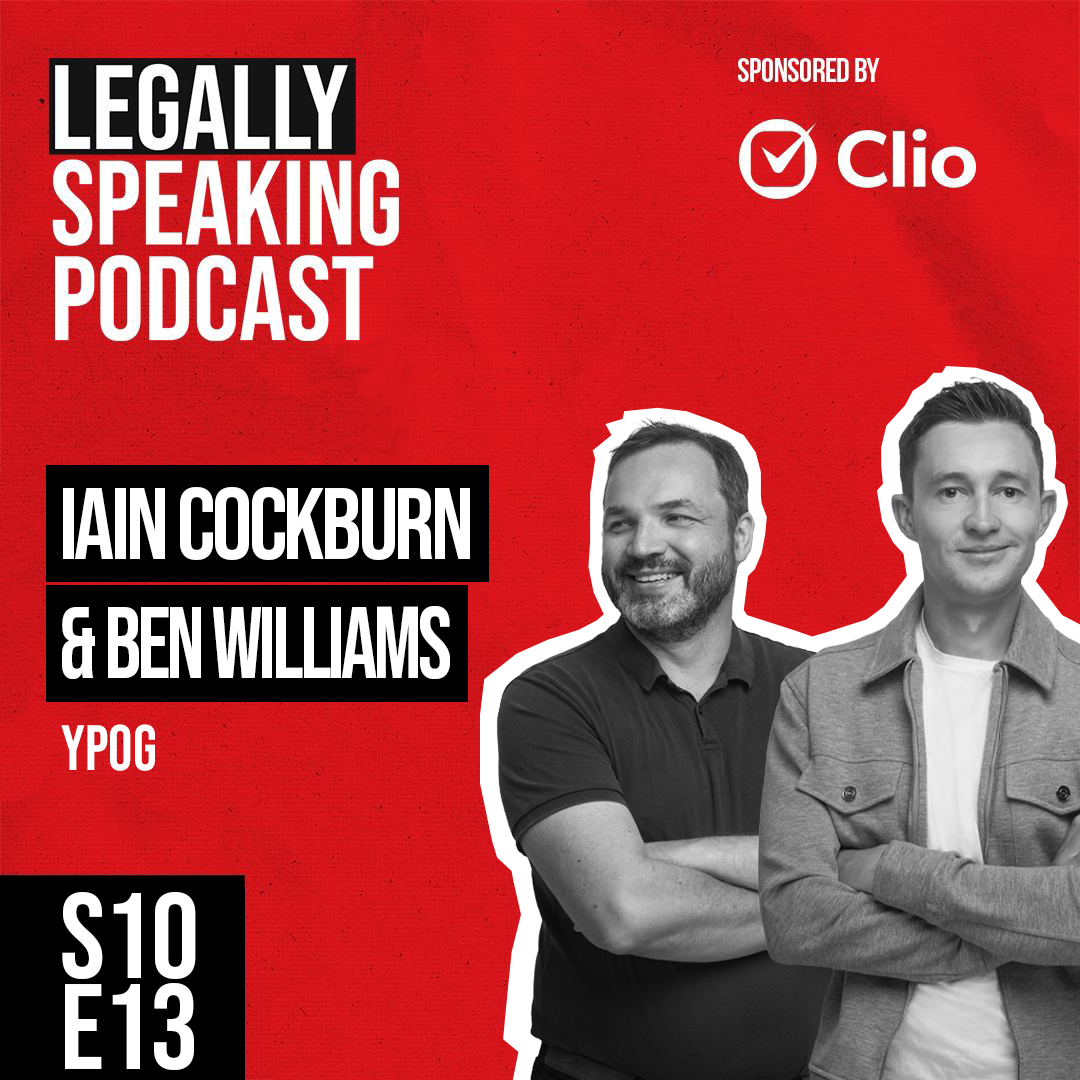
On today’s Legally Speaking Podcast, I’m delighted to be joined by Ben Williams and Iain Cockburn.

Welcome to the fourth episode of Legally on the Move: Professional Training, our brand new miniseries

Welcome to the third episode of Legally on the Move: Professional Training, our brand new miniseries

*DISCLAIMER* All episodes are recorded at certain moments in time and reflect those moments only. The podcast does not support or associate itself with any inappropriate behaviour or actions that may have occurred after recording.