Menopause at Work: How Leaders Can Support Women & Build Better Workplaces – Dr Lucy Mather – S10E34
“The organisations that will thrive in 2027 will not be the ones with the most

Welcome to Clio Con Clips 2025, recorded live from Boston and proudly sponsored by Clio, the world’s leading legal technology company transforming the legal experience for all.
In this minisode, we get to speak with Ronnie Gurion. Ronnie is the Chief Operating Officer (COO) of Clio, where he oversees global operations, strategy and organisational scaling for one of the world’s leading legal technology companies. With an impressive background at major tech innovators like Uber and Airbnb, Ronnie brings deep expertise in guiding high-growth organizations through transformative expansion. At Clio, he’s played a pivotal role in maintaining the company’s award-winning culture, driving international growth and leading strategic moves such as the acquisitions of vLex and ShareDo—marking Clio’s bold entry into the enterprise legal market. Known for his hands-on leadership style and focus on long-term impact over short-term gains, Ronnie exemplifies Clio’s mission to transform the legal experience for all.
So why should you be listening in?
You can hear Rob and Ronnie discussing:
– How Clio Balances Growth with Focus and Culture
– Enterprise Ambitions: Inside Clio’s Bold Leap Beyond SMB Law
– The Culture and Hiring Philosophy Behind Clio’s Success
– How Ronnie Builds Winning Mindsets for Long-Term Impact
– Charting the Future: Diversification, Integration, and the Road to IPO
Connect with Ronnie Gurion here – https://www.linkedin.com/in/rgurion
Transcript
Legally Speaking Podcast sponsored by Clio (00:00)
Welcome to Clio Con Clips 2025, recorded live from Boston and proudly sponsored by Clio, the world’s leading legal technology company, transforming the legal experience for all. I’m your host, Rob Hannah. And over this special legally speaking podcast series, we’ll be bringing you exclusive conversation with brilliant minds behind Clio. The innovators, strategists, visionaries driving one of the most transformative companies in legal tech.
Across these interviews, we’ll explore how Clio is uniting brilliance across teams, technology and communities worldwide. From AI and data to leadership, culture and the future of client experience. You’ll hear from people shaping what’s next for law and redefining what’s possible for legal professionals everywhere. So whether you’re a lawyer, technologist or leader passionate about innovation, you’re in the right place.
This ClioCon Clips 2025 is where brilliance meets purpose and the future of law takes shape. Let’s get into it.
Welcome to the Legally Speaking podcast recording live here in Boston for our ClioCon Clips 2025 series sponsored by Clio and I’m joined by name, title and organization. Hey, I’m Ronnie Gurion. I’m the chief operating officer of Clio. Very excited to be here today. And it’s a real pleasure to welcome you back on the show. It’s been a tremendously huge year yet again for Clio. Before we dive into that and ClioCon, I’d love to know a fun fact that folks may not know about you here at ClioCon, Ronnie. ⁓
Let’s see, I guess one thing is I have three passports and I’m getting a fourth in the process of so I’m a spy in my alter ego. That’s just greedy. Well, I got my UK passport but then when Brexit happened I figured ⁓ I have the ability to get a EU one so getting that one for more flexibility. Good for you. And you definitely get around the world, that’s for sure. And you’ve helped scale Clio into one of the most successful tech platforms in the legal industry, there is no doubt.
What’s been your biggest focus operationally this year? Good question. mean, in general, I would just say as we’ve continued to scale, it’s around how do we make sure we stay focused as an organization, that we’re aligned on a discrete number of really key initiatives, that we put weight behind them. So we are ambitious to try to tackle numerous things, but we don’t get spread too thin, and that we do so in as organized and coordinated a manner as possible.
So how do we scale the org, what’s the org structure, what’s the business cadence? Kind of just how do we really think about that holistically so that we can be as successful as possible? Yeah, and I mean it’s been a tremendous story. I mean I remember sitting down in Austin last year with many Cleons having the interview and the theme was Amplify Your Impact and 12 months on, you’ve absolutely done that as an organization yourselves. I mean Jack’s keynote, he talked about the flywheel effect and those inputs and I mean there’s been Vlex, there’s been ShareDo, there’s been a hell of a lot in a 12 month period. And this year’s theme is all about united brilliance.
How do you unite brilliance across global teams to maintain innovation and agility? You’re asking hard questions, When we get the most senior people on who are making these decisions, we want to know. I think as you scale, there’s different stages of scale. And what are you optimizing for? What’s the focus? I joined four years ago. When I first got here, it was about how do we bring in new talent where we needed to amplify or build out new functions? How do we put those teams in place?
put in the right cadence for the business to know how to operate at the next level of scale. think as you get bigger now, we’re probably almost three times, if not more, in terms of number of people. And with that, as we’ve expanded, now you have more products, more regions, more business units. You really need to be careful to not let bureaucracy and let fiefdoms kind of creep in. So we spend a lot of time on making sure that we are all really, both culturally,
⁓ from a metrics and incentivization and just from objectives we’re aligned on a discrete number of things that show up in annual planning, quarterly, know, OKRs, ⁓ MBRs, and then the way that we kind of come together. So there’s a lot of intangibles in that, but that ultimately is going to be necessary for us to continue to succeed and not get bogged down. And, you I’m very conscious that as we get bigger and even more complex with ShareDo and Vlex, that’s top of mind for me.
and Jack and the team, just how do we structure ourselves to both diversify the business but also not lose that really great culture and coordination and singular focus on everybody really just rowing towards what makes Clio successful as opposed to what makes my business unit or my P &L or this or that. And that’s really hard to do. And so far, I think we’ve nailed it. And we look for that in leaders. We don’t tolerate that behavior when we see it. And we kind of coach and guide people towards that culture. And it really helps us.
And that’s what I find so inspiring. We’ve had the pleasure of collaborating with Clio since 2021 and you’ve experienced exponential growth and exciting acquisitions, firsts here, there and everywhere for everything in the market. Now servicing obviously small to high, but you’ve never lost that culture. The people, they truly buy into the mission to transform the legal experience of all. And that has to be credit to yourself, Jack, and all of the senior team feeding that down because Clion’s on the ground here. They really believe in what Clio is trying to achieve and it’s just super inspiring.
And you yourself, Ronnie, you’ve come from some huge organizations, super impressive background, Uber, Airbnb, I could go on. And how have those sort of organizations, if at all, helped you manage the hyper growth here at Clio? Well, I think what you see, and at other places I’ve worked too, is when you, ⁓ you you have to have the right idea. Yeah. Which is actually not the hard part. And then you have to like be urgent, but be patient. You.
You’re not going to see success on day one, but you kind of build and you put enough weight behind something that you give it real chance to succeed. And then where you see shoots of green, early success, it’s about doubling down quickly, having that conviction. And we’ve seen that with our international expansion, with mid-market. We now have over 1,500 mid-market firms. That’s grown massively since ⁓ over the last few years, several years. ⁓
I think with enterprise, with ShareDo and Vlex, we see that those are great businesses that have really strong foundations and we’re ready to really invest behind those. And we’ve had great meetings with a lot of enterprise customers here at ClioCon this year, which is a new kind of audience for us bringing here at ClioCon and I think that’s key. So I think where you see, you don’t want be scattershot, but where you get really choiceful and you see success early.
Having the confidence and conviction to know you don’t have it all figured out but invest behind it, if you put right people behind it, think it’s just compounded. And you look back after three or four years, you go, oh my God, we’ve gone from a startup idea or a very small team to now a really meaningful part of the business. And you’re seeing that in multiple avenues of the business and that’s really what’s needed to sustain our growth. Yeah, and I want to double down on enterprise. Myself, I’ve been sort headhunting, recruiting in big law for well over a decade and I’m very excited about Clio’s play.
⁓ I said to Kurt actually, CFO of the organization, I wasn’t surprised when Clio did this because with the mission to transform the legal experience for all, of course you’re coming for the whole market. I was excited. But from your perspective, the launch of Clio Enterprise has required a lot of structural changes within the organization. So how did you actually prepare it so well for that shift? Because it seems seamless from the outside looking in. first of all, I I think it’s early days.
you know, the Vlex acquisition hasn’t officially closed yet. So we’ve been doing a lot of planning for how we do plan to integrate it, which we will do. And with ShareDo already in tow, that is a, you know, that’s a hundred percent enterprise focused business. They do great in the UK and in Australia. They have not focused on the U S market to date. part of the acquisition is bringing ShareDo into the U S which we have announced now as Clio operate. And we’ve, we’ve got a growing pipeline of interested customers. think that platform is really unique.
So I would say that’s one of my main focuses for the next year is actually to stand up this new ⁓ Clio Enterprise division that Jack talked about and unveiled in the keynote. We’re putting in the right organizational structure. We’re investing a lot behind that, both existing resources but also a lot of new resources to really ⁓ accelerate that push because we know that
There’s a lot of great capabilities that we have that are relevant for the enterprise, but we need to approach it in a different manner, different sales, different CS, ⁓ different level of product development that is going to be necessary. There’s some things that can amplify across both small and mid-size law and big law, but we’re not being like cavalier or unaware or arrogant to think that what we’ve done well at this point can just walk into enterprise. We really want to listen and understand.
getting that enterprise, I we’ve done a good job phase one, but there’s a ton more to do and that’s gonna be for me and rest of the team, ⁓ one of our main focuses here in the coming couple months and quarters. And it’s a focus, but I know you’re not also neglecting the solos and the mid-size because you’ve had huge successes and I know you’re doubling down on that, but I do just want to stick with the enterprise.
for a moment because I found Jack spoke with real conviction in his keynote around we’re not just dipping our toe in we’re coming for this absolutely and so you know it’s all success it’s all exciting but Ronnie you’re in a very high pressure stressful role I don’t want to sort of suggest five years time because there’s so many moving parts in the world we’re in but looking at what you’re trying to achieve in enterprise what’s going to be your greatest challenge over the next 12 months in enterprise specifically it’s too bold it’s getting the right organizational structure in place
So where do we really have dedicated resources focused on enterprise, which functions make sense to truly 100 % dedicate? Where do we want to have shared resources that kind of span across Clio, and then how do we set those up in the right way, and how do we get the teams working optimally well together, and we’re adding a lot of net new heads, so a lot of ramping of hiring the right talent, getting the team ramped up, et cetera. So that’s one. I think the other one is just the, and they go hand in hand, right? The branding. A lot of people,
think like Jack will say sometimes we did too good of a job branding Clio as the platform for small law. mean it was great for the last 17 years and we faced that when we wanted to go into mid-market. I think we’ve overcome that now and people understand our product is really well suited for mid-market and it’s doing incredibly well there and it’s even a bigger leap now to go and make that pitch to ⁓ enterprise. Now I think the benefit is the company’s at a stature now that even two, three years ago would have been harder. I think now
more and more people see the success and the great traction we’ve done. So I think there’s a very much eagerness and an openness to exploring it, but they have to learn about Clio. And then we have to ⁓ prove that out, that we understand how to work with enterprise, it’s a different type of customer base and needs, and just that branding and that relationship will take time, given the cycles, the buying cycles.
in enterprise are obviously much longer. It’s a lot longer process. know, it’s years rather than months and so forth. Absolutely. One thing I want to talk about is hiring because it’s very clear, you know, Clio is hiring humans. We’re in this AI world, but there is a real push to get quality talent as you have done for many years through the door. people that have been inspired by these series of interviews, we’ve spoken to people across the organization. What do you look for in terms of traits for people who do well within Clio? I mean, you talked about earlier, you’re a great partner of ours and
You see firsthand the culture. It’s probably the greatest culture of any of the companies that I’ve worked at. I’m older, I’ve worked at a lot of than some of our younger clients. I’m just amazed at the passion, the conviction, the energy, the optimism, the can-do attitude, the collaboration. I mean, those are all kind of buzzwords, but man, I come home and I just feel like very lucky to work at a culture. And I give a lot of credit to Jack and the early team. It was a great culture already when I got here.
Luckily we’ve been able to maintain it over the last four years that I’ve been here. But that precedes, I that’s from the earliest days and I think that’s from the founders on. So we look for that cultural alignment. And then I always look for people who’ve, at the leadership level in particular, who ⁓ operated at scale but really, really want to get their hands dirty. Everybody says they want to get their hands dirty but sometimes when they come in you realize they’re just delegators. That’s not gonna work at Clio. We’re moving so fast, doing so many things and new things.
it takes our senior folks to really get into the guts of the decisions and then set the teams up for success. So, but we have to know the vision, what scale looks like, what is, you know, a hundred million, a billion dollar, you know, business line or product line look like and how do we get there? And when we brought in those people, we see them transform a function and elevate it in 30, 60 days time. And it can, even a function that’s already operating well, they can supercharge it. So.
That’s kind of what I look for. And when you walk out of an interview and you go…
I have to hire that person. If you don’t feel like you have to hire that person, you really should just keep looking. If you know, know. And if you’re unsure, it’s probably not the one. And what I get inspired by all the clear arms as well is a clear growth mindset. And Jack said this in one of his keynotes as well. Stop asking what if. Start asking what is the opportunity? What is the opportunity if we win the enterprise game? What is the opportunity? Not what if we fail at this? And I love that whole approach and that whole ethos. And that’s been driven. And Ronnie, since you’ve come in, since we’ve had the pleasure of working together, I mean, you’ve been a huge firepower for the success.
of clear. How does that feel for you personally in terms of joining the organization and seeing what’s been achieved since you’ve come on board? Because hats off to the credit, the work you’ve put in. Well thank you for that. I mean it was a great company when I joined. One of the things I look back on my career on when I think about opportunities is the difference between joining a true leadership company versus even the number two or number three, which is an enviable position to be in. And I’ve worked at both number ones and also successful companies, but that are two or three.
And it is a very different mindset usually because first of all, most of the value accrues to the leaders across most industries. And then more so than that, besides value, you’re on this innovation growth, leading edge mindset as opposed to a lot of times you get quite focused on competitive, closing the gap type of mindset. I looked at, Cleo was already in a leadership position when I got here and then it was questions, can we maintain it, can we extend it? And I think we’ve done a great job of that.
luckily over the last four years. yeah, I do take a lot of… So my point is it came into a great company. That was one of the things I screened for when I was deciding if I was going to take on a new opportunity. And joining a leader was one of the criteria that I was excited about. And that has afforded us this opportunity to continue to do that. So yeah, it’s been awesome. And I really credit it to a lot of the… The team underneath me is some real world class leaders that have just done great work.
Yeah, and I say it time and time again, we is greater than me. And my late grandfather, who ran a very successful law firm in his own right in the UK, always used to say to me, laddie, anyone can be successful. It’s far harder to stay successful. So I think you coming in and continuing that post has been really, really exciting. And I also talk a lot about COI, the cost of an action and not so much focusing always on the ROI. So for you, Ronnie, in your role, how do you define success beyond financial metrics? And what does operating brilliantly mean to you at Clio? I used to give a speech a few times internally on
this notion of like this winning mindset and grit, which are interlinked. And there’s a lot of research that shows when you have that ⁓ mindset, ⁓ organizations can, organizations that have that ⁓ succeed time and time again. You why are some sports franchises successful for 40, 50 years and others, no matter who the coach is, who the general manager is, or who they draft, they fail. there’s lots of other examples like that. And so for me, it’s the intangibles around
Are we working on the right things? Do we have the right culture? And are we thinking long enough term? We have great financial results, thankfully, but we don’t get micro-obsessed. Many times, in just my four years here, we’ll say we’re going to sacrifice the plan because there’s an opportunity to invest. And we’ll go back to the board and we’ll say, here’s a business case. We’re going to make a major investment in an area, and here’s why. And as long as it’s well thought out, maybe we succeed here, maybe we succeed a little bit lower.
We have a track record of generally driving a lot of improvement. Maybe the forecast is off, maybe it’s under, but you know you’re moving in the right direction. And you have the right time frame. So are you thinking two, three, four years out and not so obsessed with this month or this quarter? And luckily, we have the track record that our board and our management team has the flexibility and the autonomy to make those decisions. And that is important. Otherwise, you get very constrained in short-term financial results. And you cannot, it’s very limiting.
So we want to keep that mindset. Jack always talks about that and so do I. ⁓ To be a true growth company, you have to continually focus on the results, the financial results, but not let it… ⁓
box you in too much. I think Clio always comes back to the North Star, that mission, and I think that helps you with guiding the way you take those decisions and the way that you operate. I mean it’s been a huge, huge four years, 12 months for Clio. I mean I know I can’t get the exact answer out of you because there’ll be things you can’t share, but what excites you most about Clio’s growth trajectory going into 2026? I ⁓ think it’s just the diversification of the business. ⁓ know, mid-market is on fire.
Our core SMB business is doing incredibly well. The product innovations that Jack showed ⁓ that go across both the new initiatives but also the improvements in our legacy platform were more robust and I think high impact than ever before. So I think we’re really gonna see the, how do we keep our eye on the ball on the core and optimize that. And then look, this enterprise thing is not gonna be easy, it’s not gonna be short. That’s gonna take a lot of time for me and the team but. ⁓
These are the two biggest ⁓ acquisitions we’ve ever done. We’ve not been a really acquisitive company. It’s been almost all organic with some small tuck-in point solutions in the past. I’ve spent a lot of time on the integration personally ⁓ over last several months, and that’s been great. And I’ll continue to be really heavily involved. So just making sure that the large amount of money that we’ve deployed for both ShareDue and Vlex are going to be well spent and that we…
realize and put ourselves on this trajectory to, like you said, looking forward three or four years where we’re going to be really, really meaningful in the enterprise space and continue to serve the whole spectrum of law firms, which is, like you said, very much tied to our mission. I’m the first to do it, which is exciting. Yeah. And there’s three letters that I want to ask you, which again, you’ll probably be bit coy in your answer, but it’d be remiss of me not to talk about it given where you sit within Clio, and that’s IPO. Is that sort of?
Tell me what you can in terms of your thoughts or the direction of travel for Clio when it comes to all things IPO. Well, I’ve been at a number of companies that have gone public and that were public. ⁓ It’s a good milestone. know, not too many companies have the ability. Can you be a 100 year company without IPO? Sure. There’s lots of private companies. ⁓ In today’s world? In today’s world.
Well, 100 years is a long time. I don’t know. Ask me about it. But I think you can be a 50-year company for sure. I mean, there are… ⁓ I think it’ll…
Yeah, I don’t think an IPO is a requirement. There’s lots of paths to value. ⁓ But I think we look at it as let’s build a really strong business that has the internal rigor, both in terms of execution, predictability, and systems that an IPO is an option, if and when it makes sense for the business and our board and shareholders and employees. And if we do our, it’ll be a great milestone.
It really doesn’t change that much. I everybody says that, like that’s the pat answer, but I’ve been at companies that we went public, it was great for like a day, was donuts and balloons and things like that. And then you show up, you’re like, I still got to do my job, you know? it’s, in some respects, it actually adds some complexity, significant amount of complexity. That’s why companies are staying private longer. So ⁓ it’ll be great if and when that’s the right thing for us to do, but it’s not something that I really spend much time.
thinking about, you know, we do need to think about liquidity to investors and to employees and things like that. That’s to me like the main thing that that over time companies who stay private need to ⁓ resolve and there are lots of mechanisms and lots of examples of companies that are private for 20 years or longer and very successful and address those factors. So that’s the main thing. Ultimately, you know, people do need to capitalize on the value of their equity and ⁓ there’s multiple paths to doing that.
Yeah, absolutely. Well, I appreciate you sharing that running. I appreciate you spending time with me. And I started with some tough questions. I’m going to zoom out before we close and just get your thoughts. Is there a highlight or moment of ClioCon 2025 you’ve enjoyed particularly? Well, I think Jack’s keynote, were lots of moments. I think there was a lot of gasp. There was a lot of people I talked to last night who kind of made the comment like, this just literally changes everything for our firm. It’s going to force us to rethink everything about how we operate.
And I think that’s the sentiment that that keynote provided. I don’t say that like just with hyperbole. I think, you know, this is a different keynote. This felt like a really important historic moment. And I don’t speak in like those types of hyperbole often, but I actually do think when we look back in a few years, this will be the moment that pivoted the whole nature of Clio and by extension.
I think they’ll have a lot of knock-on effects. I think there’ll be a lot of competitive moves that will need to happen. think, and what excites me is ⁓ what we have with the really scale LPM, which has taken 17 years to build, and there’s a massive amount of technology and functionality and capabilities there. The research database that Villex has built over 20 years, over 1.2 billion documents, 110 countries. There’s only like two or three.
three real scale research platforms in the world and not really a lot of other people behind that. And then really leading AI and the ability to weave that together into a single cohesive platform is, it’s almost like, it looks like oh, it’s a perfect amount of chess moves that get put together but when you’re inside a company a lot of times it’s much more chaotic than that and so it, and I’d say that wasn’t strategically put.
put together but we’re very fortunate now to find ourselves in this position so how do we really position this as I think the fulcrum of a new era in legal tech that these unique assets affords us the right to go and hopefully deliver at scale and improve upon and integrate seamlessly so that’s a long-winded answer but I think this is a really historic Clio con yeah and I echo what you said shared there because I think even the way that Jack came out from his keynote it was a super special time
Ronnie, thank you so much for joining me here on the Legally Speaking Podcast. It’s been an absolute blast, but from all of us, for now, over and out. Thank you for listening to this week’s episode. If you like the content here, why not check out our world leading content and collaboration hub, The Legally Speaking Club over on Discord. Go to our website, www.legallyspeakingpodcast.com, there’s a link to join our community there. Over and out.
You may also tune in on Goodpods, Apple Podcasts, Spotify, or wherever you get your podcasts!
Give us a follow on X, Instagram, LinkedIn, TikTok and Youtube.
Finally, support us with BuyMeACoffee.
🎙 Don’t forget to join our Legally Speaking Club Community where we connect with like-minded people, share resources, and continue the conversation from this episode.
Sponsored by Clio – the #1 legal software for clients, cases, billing and more!
💻 www.legallyspeakingpodcast.com
📧 info@legallyspeakingpodcast.com
Disclaimer: All episodes are recorded at certain moments in time and reflect those moments only.
“The organisations that will thrive in 2027 will not be the ones with the most
“If you can see me, you can be me.” – Elaine Banton What happens
“They will be the ones who see the trends just before everyone else does.” –
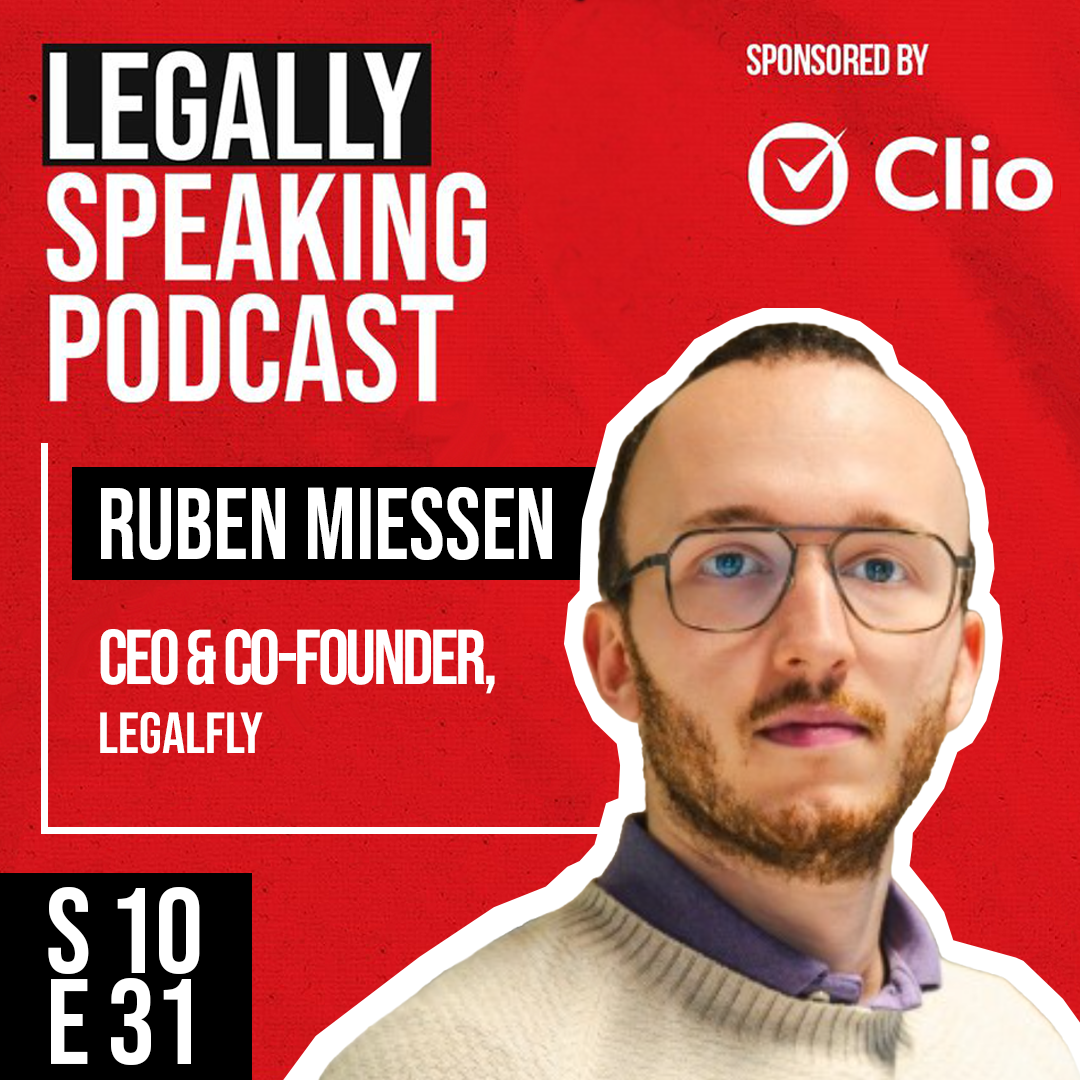
On today’s Legally Speaking Podcast, I am delighted to be joined by Ruben Miessen. Ruben

Run the same contract through the same AI system 20 times. Should a lawyer expect the
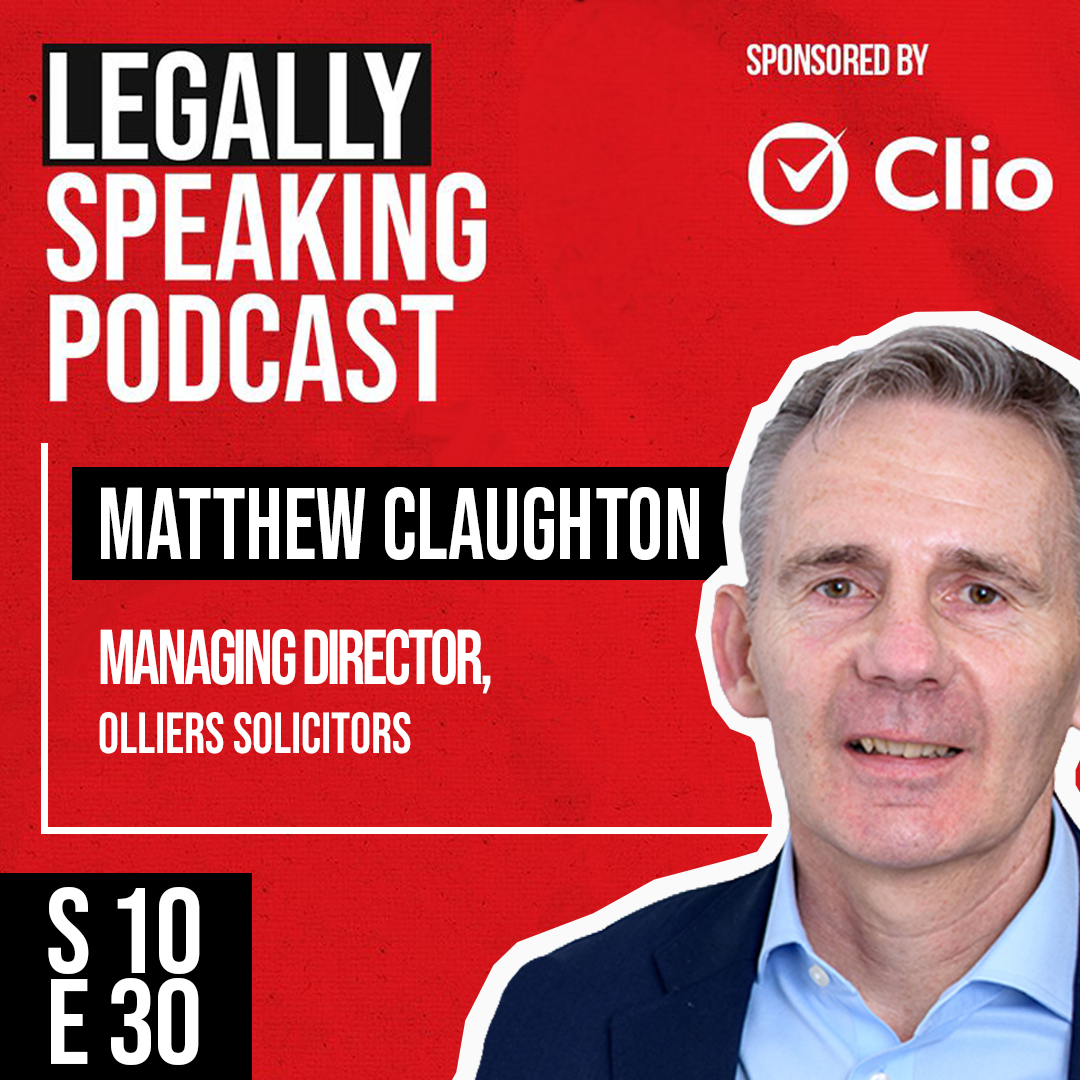
On today’s Legally Speaking Podcast, I am delighted to be joined by Matthew Claughton. Matthew
